Toggle light / dark theme

Get the latest international news and world events from around the world.

Log in for authorized contributors

The Syntellect Hypothesis: Five Paradigms of the Mind’s Evolution: Tuynman PhD, Antonin, Vikoulov, Alex M: 9781733426145: Amazon.com: Books

Celebrating a 7-year anniversary of the first edition of my book The Syntellect Hypothesis (2019)! I can’t help but feel like I’m watching a long-launched probe finally begin to transmit back meaningful data. What started as a speculative framework—half philosophy, half systems theory—has aged into something uncannily timely, as if reality itself had been quietly reading the manuscript and taking notes. In those seven years, AI has gone from clever tool to cognitive co-actor, collective intelligence has accelerated from metaphor to measurable force, and the idea of a convergent, self-reflective Syntellect no longer feels like science fiction so much as a working hypothesis under active experimental validation.

Looking back, the book captured a moment just before the curve went vertical. Looking forward, it reads less like a prediction and more like an early cartography of a terrain we’re now actively inhabiting. The signal is stronger, the noise louder, and the questions sharper—but the core intuition remains intact: intelligence doesn’t merely grow, it integrates. And once it does, history stops being a line and starts behaving more like a phase transition.

Here’s what Google summarizes about the book: The Syntellect Hypothesis: Five Paradigms of the Mind’s Evolution by Alex M. Vikoulov is a book that explores the idea of a future phase transition where human consciousness merges with technology to form a global supermind, or “Syntellect”. It covers topics like digital physics, the technological singularity, consciousness, and the evolution of humanity, proposing that we are on the verge of becoming a single, self-aware superorganism. The book is structured around five paradigms: Noogenesis, Technoculture, the Cybernetic Singularity, Theogenesis, and Universal Mind.

Key Concepts.

Syntellect: A superorganism-level consciousness that emerges when the intellectual synergy of a complex system (like humanity and its technology) reaches a critical threshold. Phase Transition: The book posits that humanity is undergoing a metamorphosis from individual intellect to a collective, higher-order consciousness.

Five Paradigms: The book is divided into five parts that map out this evolutionary journey: Noogenesis: The emergence of mind through computational biology. Technoculture: The rise of human civilization and technology. The Cybernetic Singularity: The point of Syntellect emergence. Theogenesis: Transdimensional propagation and expansion. Universal Mind: The ultimate cosmic level of awareness.

Themes and Scope.

Tracking Extreme Solar Activity Across Three Solar Rotations

“When we see a region on the sun with an extremely complex magnetic field, we can assume that there is a large amount of energy there that will have to be released as solar storms,” said Dr. Louise Harra.


How can astronomers observe and study the Sun’s activity in the most efficient way despite the Sun and Earth orbiting each other at different speeds? This is what a recent study published in Astronomy & Astrophysics hopes to address as a team of scientists investigated new methods for studying the Sun with the goal of better understanding its activity and how it influences Earth.

For the study, the researchers collected data from the Sun using NASA’s Solar Dynamics Observatory spacecraft and the European Space Agency’s Solar Orbiter, which orbits the Sun once every six months and is fixed on the nearside of the Sun towards Earth, respectively. The goal of the study was to observe the solar active region called NOAA 13,664, which is one of the most misunderstood and active regions observed over the last 20 years.

During the 94-day study period, lasting from April to June 2024, the researchers successfully observed a full cycle of activity from NOAA 13,664, including an initial 20-day buildup of energy, peaking approximately one month after initiation, followed by a wind-down period lasting approximately two months. These results could help scientists better understand the magnetic field activity of the Sun and predict future solar activity.

Pain-sensing neurons kick-start immune responses that drive allergies and asthma

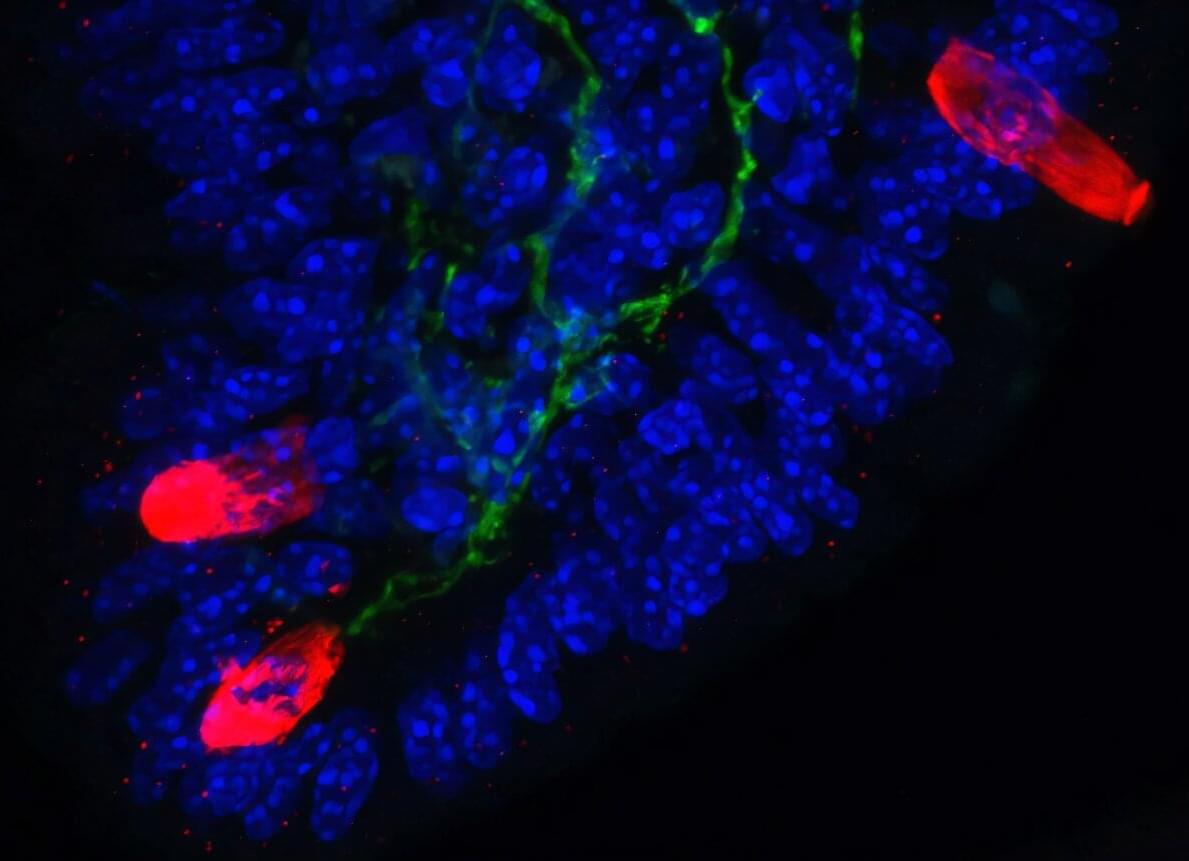
Pain-sensing neurons in the gut kindle inflammatory immune responses that cause allergies and asthma, according to a new study by Weill Cornell Medicine. The findings, published in Nature, suggest that current drugs may not be as effective because they only address the immune component of these conditions, overlooking the contribution of neurons.

“Today’s blockbuster biologics are sometimes only 50% effective and when the treatments do work, they sometimes lose their efficacy over time,” said senior author Dr. David Artis, director of the Jill Roberts Institute for Research in Inflammatory Bowel Disease and the Michael Kors Professor in Immunology at Weill Cornell.

While the idea may be new to the field, Dr. Artis has been thinking about the role the nervous system may play in allergies and asthma for about two decades. For example, many of the symptoms that characterize these conditions, like itching and wheezing, are known to be neuronally controlled. “That was one of the clues that prompted us to look closer for a connection,” Dr. Artis said.

New BMI uses AI to reveal hidden metabolic disorders

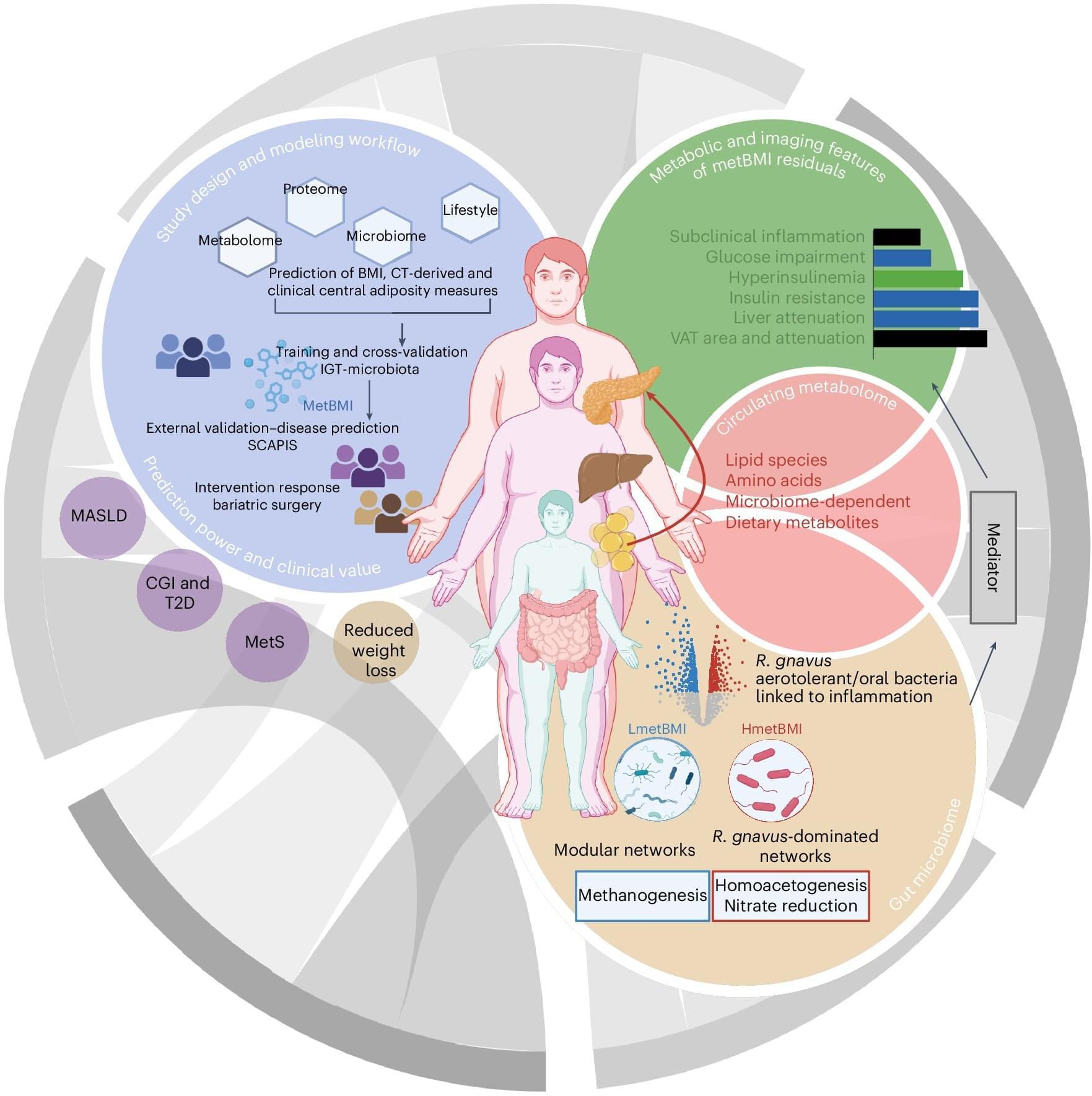
Researchers at Leipzig University and the University of Gothenburg have developed a novel approach to assessing an individual’s risk of metabolic diseases such as diabetes or fatty liver disease more precisely. Instead of relying solely on the widely used body mass index (BMI), the team developed an AI-based computational model using metabolic measurements. This so-called metabolic BMI shows that people of normal weight with a high metabolic BMI have up to a fivefold higher risk of metabolic disease. The findings have been published in the journal Nature Medicine.

The conventional body mass index, calculated using height and weight, may indicate overweight but does not reflect how healthy or unhealthy body fat actually is. According to BMI classifications, up to 30% of people are considered to be of normal weight but already show dangerous metabolic changes. Conversely, there are individuals with an elevated BMI whose metabolism remains largely unremarkable. This discrepancy can lead to at-risk patients being identified and treated too late.

For the current scientific study, the international research team analyzed data from two large Swedish population studies involving a total of almost 2,000 participants. In addition to standard health and lifestyle parameters, extensive laboratory data from blood samples and analyses of the gut microbiome were collected. Based on this dataset, the researchers developed a computational model that predicts metabolic BMI.

US engineers are defying gravity by cutting through entire mountains in the Andes and creating giant roads attached to extreme cliffs, deep tunnels, and suspended pillars

US engineers are defying gravity by cutting through mountains in the Andes and creating giant roads with tunnels, suspended pillars, and colossal machines.

Distinct AI Models Seem To Converge On How They Encode Reality

“The endeavor of science is to find the universals,” Isola said. “We could study the ways in which models are different or disagree, but that somehow has less explanatory power than identifying the commonalities.”

Other researchers argue that it’s more productive to focus on where models’ representations differ. Among them is Alexei Efros, a researcher at the University of California, Berkeley, who has been an adviser to three of the four members of the MIT team.

“They’re all good friends and they’re all very, very smart people,” Efros said. “I think they’re wrong, but that’s what science is about.”

Researchers extract DNA from 25 Killer whales off the coast of Japan — and make “crucial” new discovery

Their in-depth DNA analysis also showed that resident killer whales shared the same haplotype (group of inherited genes) while the transients had eight different haplotypes making them more genetically diverse. This finding suggests that transient killer whales used Hokkaido as a refuge during the last Ice Age, the researchers say.

“Clarifying the ecological characteristics of killer whales is crucial for achieving coexistence with them,” says first author Momoka Suzuki, Kyoto University, in a statement.

Understanding the diet and behaviour of orcas in Japanese waters gives conservationists important information that can help protect the animals from threats. “They are deeply entwined with human activities such as tourism and fisheries in Hokkaido,” adds Suzuki.

/* */