Fifteen years ago, I sat down with a man whose job title made no sense: science comedian.
Brian Malow has performed for Apple, JPL, NIST, and the American Chemical Society. He made audio essays for Neil deGrasse Tyson and trained scientists to speak like humans for the National Science Foundation. He got laughs from rooms full of chemists, which may be the hardest crowd in comedy.
But the reason this 2011 conversation still matters is not the resume. It’s the thesis.
Brian argued that comedy and science are the same discipline. Both refuse to accept the world as presented. Both look deeper. Both require you to see the familiar with fresh eyes and notice what everyone else walked past.
We covered the tension between humor and scientific truth, his favorite science fiction writers, his insect photography, and his take on the technological singularity, including our chances of surviving it.
His answer to that last question? Listen for yourself.
Imagine opening a difficult book in a quiet room. The first page is dense. You read one paragraph, then reread it. Nothing “clicks” yet. Your brain is doing what learning often requires: spending effort before the reward arrives. Then your phone lights up. One thumb movement, and the situation changes completely. A joke, a message, a clip, a tiny social reward: all available instantly, all requiring almost no effort. The book has not become harder and, definitely, your intelligence has not disappeared. But the book now feels more expensive, because another activity nearby offers a much better bargain: reward now, effort almost zero.
That is the central idea of the paper “An Effort Recalibration Framework for Digital Media Use and Cognition” that just appeared in Nature Human Behavior. It argues that the most important effect of social media might be that repeated exposure to effortless digital rewards changes how we value effort itself. Over time, the authors suggest, digital media may recalibrate our internal sense of what effort is worth. Difficult work then begins to feel less attractive, not because we can no longer do it, but because our everyday decision system has learned to expect faster returns.
If you’ve been in tech circles lately, you’ve probably heard of “Vibecoding.” Most people treat it like an industry joke—lazy developers throwing sloppy prompts at a screen until an app magically pops out. To traditional gatekeepers, it looks like dangerous, uncompilable chaos.
The “vibe” isn’t a loose, careless emotion. It’s data. Specifically, it is the human-facing interface for what advanced computer science calls Intent Orchestration.
I just published a definitive deep dive into the actual math, physics, and mechanics under the hood of this movement. We break down exactly why the traditional “Filing Cabinet” architecture of multi-agent AI is fundamentally broken, and how Holographic AI Frameworks are the solution.
We are stepping into an era of Decentralized Coherence that liberates creators from traditional development bottlenecks, transforming your role from a low-level syntax translator into a High-Dimensional Intent Architect.
The era of manual syntax is drawing to a close. The computer has finally spent enough time engineering its systems to understand our language.
But make no mistake—if your structural thinking is sloppy, your application will still fail.
Dr. Roman Yampolskiy joins me to explore one of the most urgent and uncomfortable questions of our time: what happens when we create intelligence that surpasses our own? We unpack the difference between the AI tools we use today and the emergence of artificial general intelligence, and why the transition from narrow systems to self-improving intelligence may mark a point where human control is no longer possible. Roman shares why even the people building these systems do not fully understand how they work, and why that gap in understanding becomes exponentially more dangerous as capabilities increase.
In this conversation, we explore the limits of control, prediction, and safety in a world where intelligence can recursively improve itself beyond human comprehension. Roman lays out why the problem of AI alignment may be fundamentally unsolvable, what timelines experts are realistically considering, and why even a single mistake at that level could have irreversible consequences. This episode invites a deeper reflection on what we are creating, what we assume we can control, and whether humanity is prepared for the intelligence it is bringing into existence.
André’s Book Recs: https://www.knowthyselfpodcast.com/bo… 00:00 Intro 01:25 What Is AGI and Why Should We Be Scared? 05:17 Roman’s Journey: From Optimism to Impossibility 09:07 The High Risk, Zero Reward Equation 13:01 Why Superintelligence Is Uncontrollable, Unexplainable, and Unverifiable 18:00 How Long Do We Have? The AGI Timeline 21:24 How Superintelligence Could Actually Kill Us 23:28 Are We Living in a Simulation? 28:21 Can AI Become Conscious? 31:28 Ad: BiOptimizers 32:41 The Possible Timelines: Terminator, the Matrix, or the Zoo 42:24 I-Risk, X-Risk, and S-Risk: Three Ways It Goes Wrong 46:31 The Human Meaning Crisis: Jobs, Purpose, and What’s Left 49:02 Ad: Based Bodyworks 50:20 What Empowers Us as Individuals Right Now 59:37 The Race to Doom: Who’s Building It and Why They Won’t Stop 1:07:41 Can AI Be Conscious — and Does It Already Have Internal Experiences? 1:12:41 Hacking the Simulation: Quantum, DMT, and Escaping the Code 1:18:30 Simulation Theory, Religion, and the Same Ancient Map 1:29:34 The Deal Roman Would Offer Altman, Dario, and Elon 1:39:44 What Is Humor? A Computer Scientist’s Theory 1:43:03 What Comes After: Singularity, Death, and Knowing Thyself ___________ Episode Resources: https://www.romanyampolskiy.com/https://www.amazon.com/Unexplainable-?tag=lifeboatfound-20… / andreduqum / knowthyself / @knowthyselfpodcasthttps://www.knowthyselfpodcast.com Listen to the show: Spotify: https://spoti.fi/4bZMq9l Apple: https://apple.co/4iATICX
___________ 00:00 Intro 01:25 What Is AGI and Why Should We Be Scared? 05:17 Roman’s Journey: From Optimism to Impossibility 09:07 The High Risk, Zero Reward Equation 13:01 Why Superintelligence Is Uncontrollable, Unexplainable, and Unverifiable 18:00 How Long Do We Have? The AGI Timeline 21:24 How Superintelligence Could Actually Kill Us 23:28 Are We Living in a Simulation? 28:21 Can AI Become Conscious? 31:28 Ad: BiOptimizers 32:41 The Possible Timelines: Terminator, the Matrix, or the Zoo 42:24 I-Risk, X-Risk, and S-Risk: Three Ways It Goes Wrong 46:31 The Human Meaning Crisis: Jobs, Purpose, and What’s Left 49:02 Ad: Based Bodyworks 50:20 What Empowers Us as Individuals Right Now 59:37 The Race to Doom: Who’s Building It and Why They Won’t Stop 1:07:41 Can AI Be Conscious — and Does It Already Have Internal Experiences? 1:12:41 Hacking the Simulation: Quantum, DMT, and Escaping the Code 1:18:30 Simulation Theory, Religion, and the Same Ancient Map 1:29:34 The Deal Roman Would Offer Altman, Dario, and Elon 1:39:44 What Is Humor? A Computer Scientist’s Theory 1:43:03 What Comes After: Singularity, Death, and Knowing Thyself ___________.
I really liked Jacque Fresco. Not as a thinker I was supposed to admire, but as a person: the humor, the humility, the scientific curiosity still burning at 97.
That made the disagreements harder, not easier.
Fresco spent almost a century arguing one idea. We apply the methods of #science to engineering, to medicine, to flight. Then we run our economies and our politics on opinion, tradition, and the preferences of the financial elite.
He thought we had it exactly inverted. Rigor for the machines, guesswork for the humans.
“Technology was never the hard part. The harder question is what kind of society we want it to serve.”
“AI will most likely lead to the end of the world, but in the meantime there will be great companies created.” — Sam Altman, OpenAI CEO
I used to think that was dark humor.
This week, I stopped laughing — and cancelled my ChatGPT subscription.
Not because of the technology. Because of the values.
On February 27, Anthropic refused to give the Pentagon unrestricted access to its AI for mass surveillance and autonomous killer weapons. Within hours, OpenAI’s Sam Altman swooped in and took the deal.
One company held the line. The other sprinted to cross it.
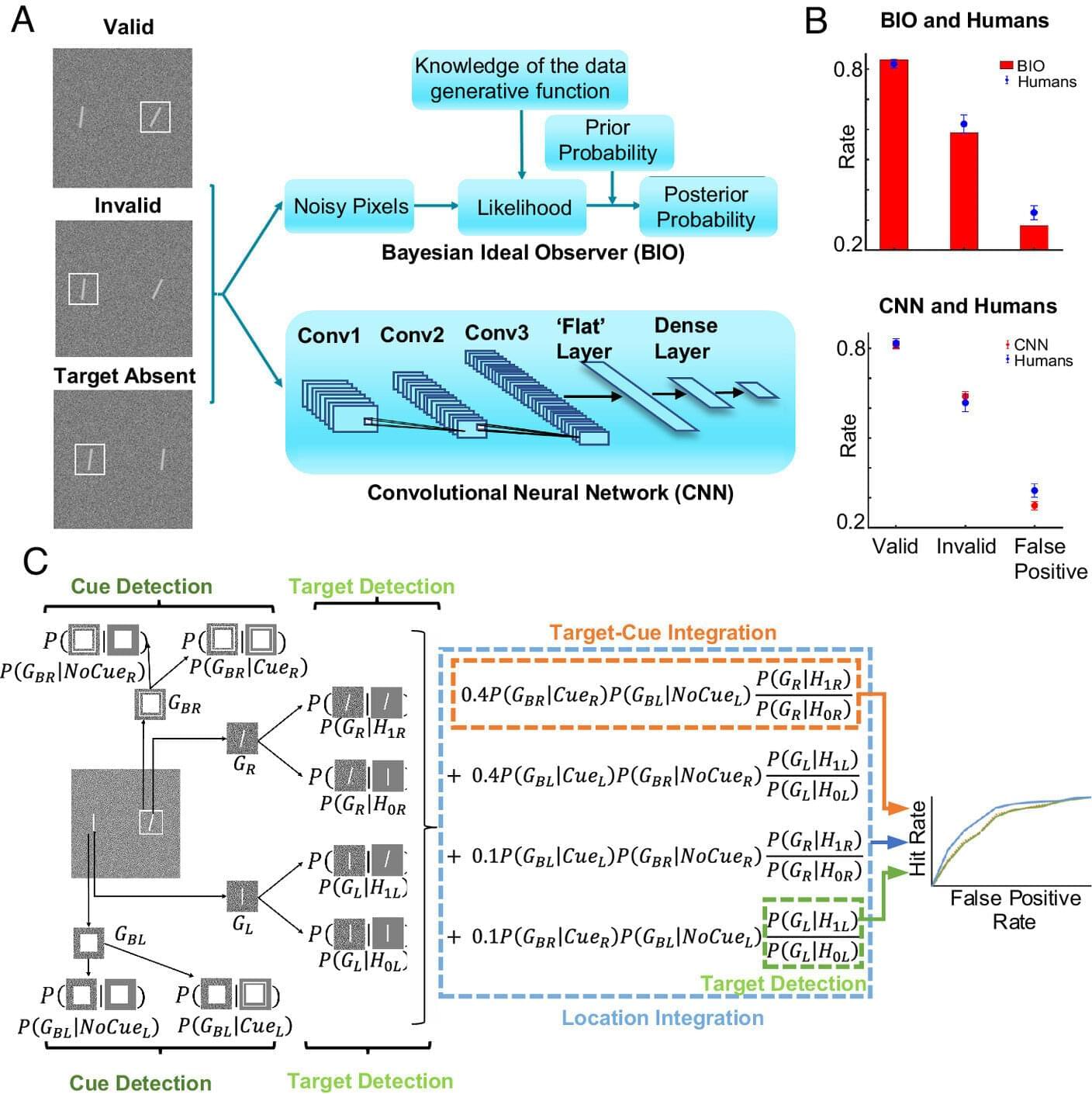
Shifting focus on a visual scene without moving our eyes—think driving, or reading a room for the reaction to your joke—is a behavior known as covert attention. We do it all the time, but little is known about its neurophysiological foundation.
Now, using convolutional neural networks (CNNs), UC Santa Barbara researchers Sudhanshu Srivastava, Miguel Eckstein and William Wang have uncovered the underpinnings of covert attention, and in the process, have found new, emergent neuron types, which they confirmed in real life using data from mouse brain studies.
“This is a clear case of AI advancing neuroscience, cognitive sciences and psychology,” said Srivastava, a former graduate student in the lab of Eckstein, now a postdoctoral researcher at UC San Diego.
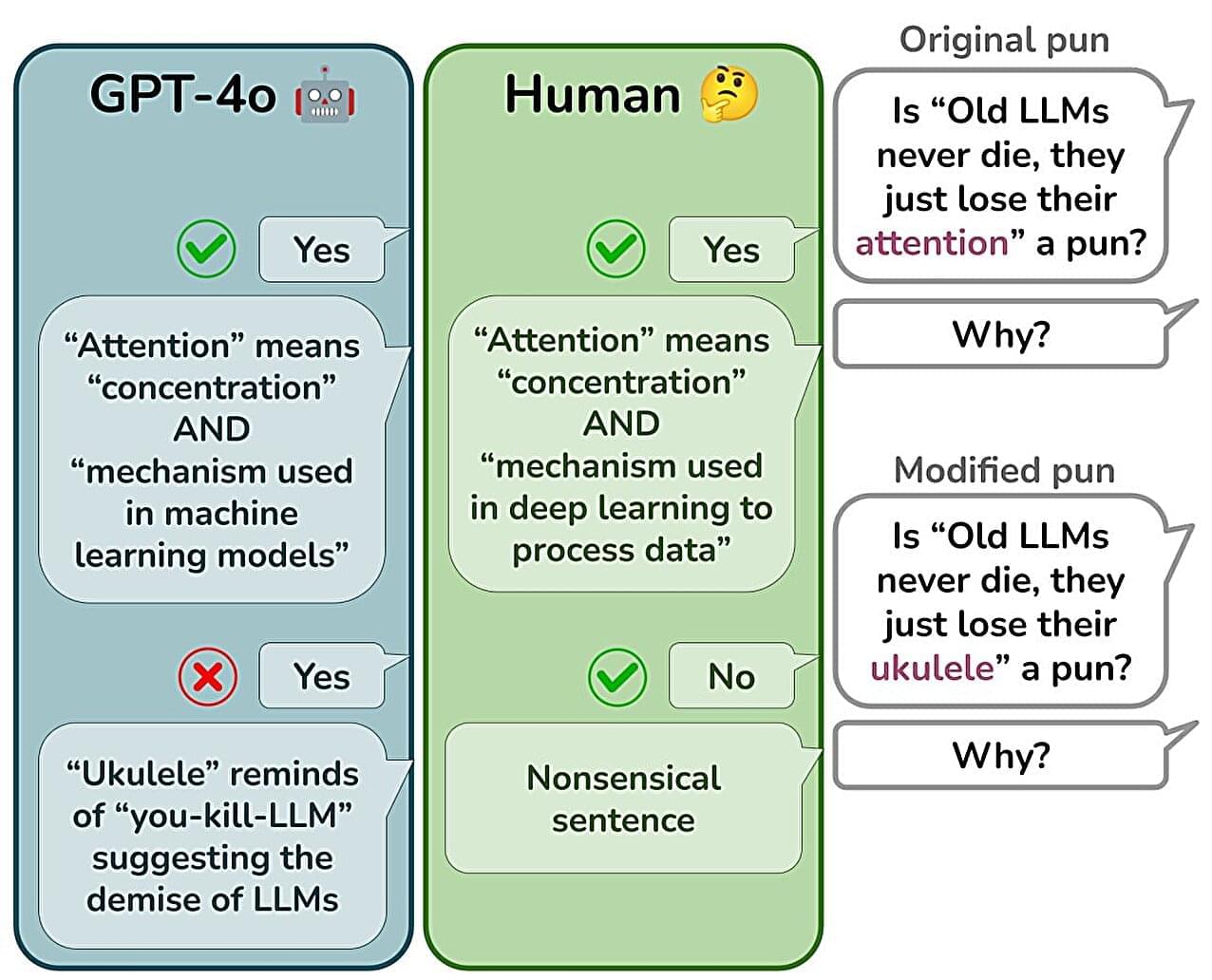
Powerful artificial intelligence (AI) systems, like ChatGPT and Gemini, simulate understanding of comedy wordplay, but never really “get the joke,” a new study suggests.
Researchers wanted to find out whether large language models (LLMs) can understand puns—also known as paronomasia—wordplay that relies on double meanings or sound-alike words, for an intended humorous or rhetorical effect.
While earlier studies suggest LLMs could process this type of humor in a similar way to humans, the team from Cardiff University and Ca’ Foscari University of Venice found AI systems mostly memorize familiar joke structures rather than actually understand them.
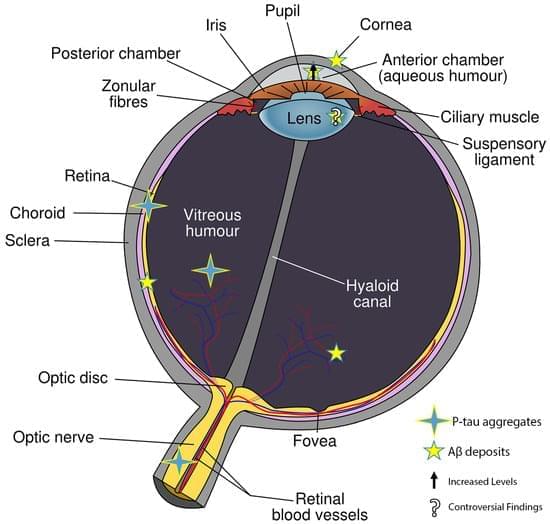
In the early stages of Alzheimer–Perusini’s disease (AD), individuals often experience vision-related issues such as color vision impairment, reduced contrast sensitivity, and visual acuity problems. As the disease progresses, there is a connection with glaucoma and age-related macular degeneration (AMD) leading to retinal cell death. The retina’s involvement suggests a link with the hippocampus, where most AD forms start. A thinning of the retinal nerve fiber layer (RNFL) due to the loss of retinal ganglion cells (RGCs) is seen as a potential AD diagnostic marker using electroretinography (ERG) and optical coherence tomography (OCT). Amyloid beta fragments (Aβ), found in the eye’s vitreous and aqueous humor, are also present in the cerebrospinal fluid (CSF) and accumulate in the retina. Aβ is known to cause tau hyperphosphorylation, leading to its buildup in various retinal layers.