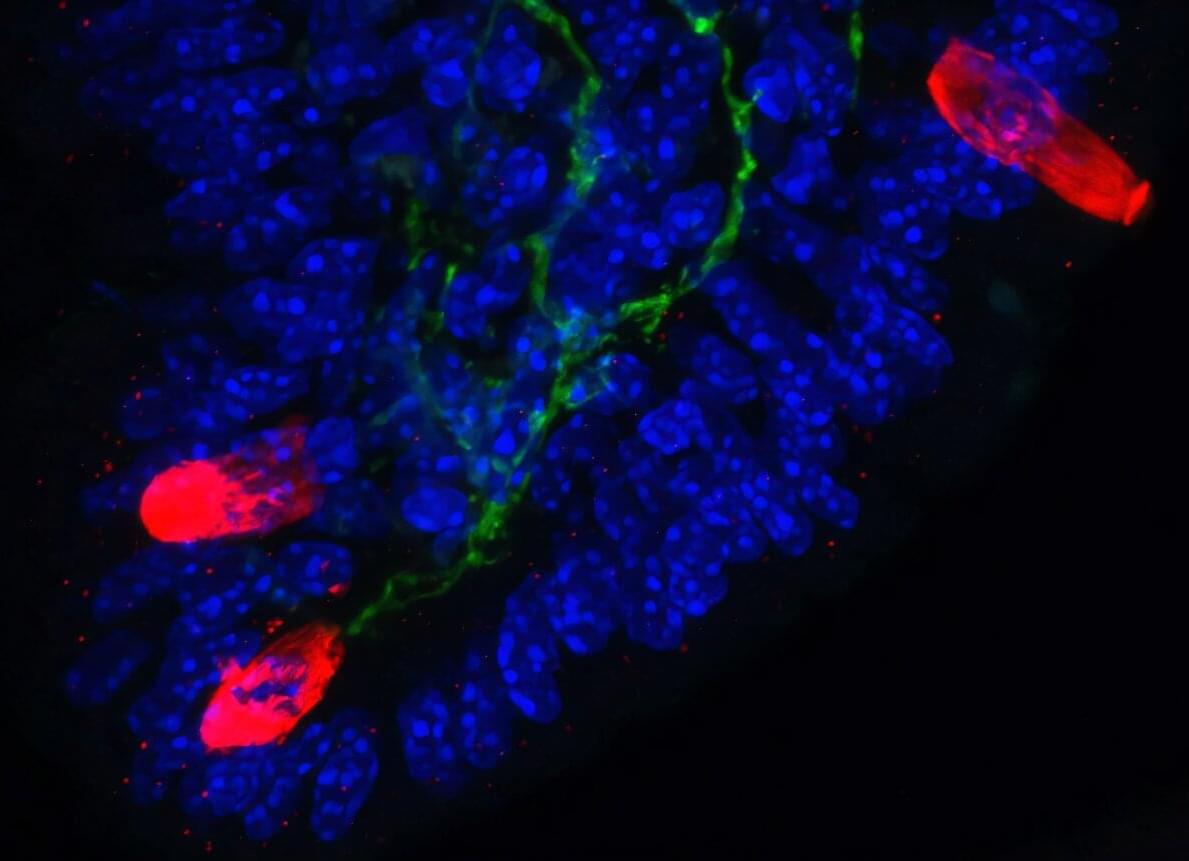
Pain-sensing neurons in the gut kindle inflammatory immune responses that cause allergies and asthma, according to a new study by Weill Cornell Medicine. The findings, published in Nature, suggest that current drugs may not be as effective because they only address the immune component of these conditions, overlooking the contribution of neurons.
“Today’s blockbuster biologics are sometimes only 50% effective and when the treatments do work, they sometimes lose their efficacy over time,” said senior author Dr. David Artis, director of the Jill Roberts Institute for Research in Inflammatory Bowel Disease and the Michael Kors Professor in Immunology at Weill Cornell.
While the idea may be new to the field, Dr. Artis has been thinking about the role the nervous system may play in allergies and asthma for about two decades. For example, many of the symptoms that characterize these conditions, like itching and wheezing, are known to be neuronally controlled. “That was one of the clues that prompted us to look closer for a connection,” Dr. Artis said.