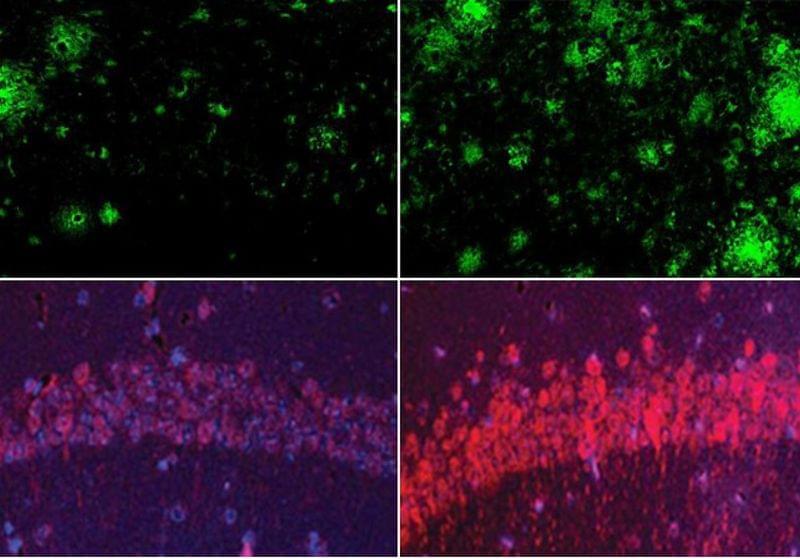
This study investigated the role of a low-frequency Nav1.8 variant, c.618A G (p. I206M), in the pathogenesis of persistent ocular pain after corneal refractive surgery.
Background and Objectives.
Sheng et al. present “” via https://bit.ly/4spB5XM (Original research, GI cancer section).
Why do targeted therapies stop working? Using spatial transcriptomics, this study reveals how tumour heterogeneity, immune escape and metabolic shifts drive resistance in HER2-positive gastric cancer. A must-read for anyone interested in precision oncology and treatment optimisation.
Background Human epidermal growth factor receptor 2 (HER2; ERBB2) is overexpressed or amplified in 15–20% of gastric cancers (HER2+ GC). Within individual HER2+ GCs, HER2/ ERBB2 expression is often variable. Although HER2 therapeutic targeting improves outcomes for HER2+ GC patients, acquired resistance is frequent.
Objective To spatially interrogate HER2+ GC interpatient and intrapatient heterogeneity and resistance mechanisms associated with HER2-targeting agents (trastuzumab, trastuzumab deruxtecan (T-DXd)).
Design Spatial transcriptomic analysis (GeoMx Digital Spatial Profiler) was applied to 1,500 regions of interest in 30 GCs—these contained 15 HER2+ GCs treated with trastuzumab and T-DXd subsequently. Analysis of patient-matched samples with acquired trastuzumab or T-DXd resistance revealed escape mechanisms.
A theoretical study reveals how to control and drive a quantum system without causing its decoherence.
Quantumness is famously fragile. Decoherence, particle loss, and other dissipative processes typically destroy delicate quantum superpositions, causing open quantum systems to behave classically. This universal, inevitable fate suggests that, even when a system’s constituents are fully quantum, its nonequilibrium critical points could be described by classical universality classes. That is, the system could belong to a group whose behavior near a critical point is identical and scale invariant regardless of microscopic details. In a new theoretical study, Rohan Mittal and his collaborators at the University of Cologne in Germany have overturned this expectation for open systems of fermions [1]. They identified a particular symmetry, which, if present, blocks most of the noise channels that would ordinarily wash out quantum behavior at large scales.
In a development that could shift our basic understanding of fluid mechanics, researchers from Drexel University have reported that, given the right circumstances, it is possible to induce a simple liquid to fracture like a solid object. Recently published in the journal Physical Review Letters, the research shows how viscous liquids can suddenly break if stretched with enough force.
The fracturing behavior suggests that viscosity—a liquid’s resistance to flowing—may play a more prominent role in its mechanical properties than previously understood. It also raises new possibilities for how liquids might be manipulated in everything from hydraulics to 3D printers to blood vessels.
“Our findings show that if pulled apart with enough force per area, a simple liquid—a liquid that flows—will reach what we call a point of ‘critical stress,” when it will actually fracture like a solid. And this is likely true for all simple liquids, including common examples, such as water and oil,” said Thamires Lima, Ph.D., an assistant research professor in Drexel’s College of Engineering, who helped to lead the research. “This fundamentally changes our understanding of fluid dynamics.”
Planetary surface missions currently operate cautiously. On Mars, communication delays between Earth and rovers (typically between four and 22 minutes), as well as data transfer constraints due to uplink and downlink limitations, force scientists to plan operations in advance. Rovers are designed for energy efficiency and safety, and to move slowly across hazardous terrain.
As a result, exploration is typically limited to only a small portion of the landing site, with rovers typically traveling up to a few hundreds of meters per day, which makes it difficult to collect geologically diverse data.
In a study published in Frontiers in Space Technologies, a team led by Dr. Gabriela Ligeza, former Ph.D. student from the University of Basel and now a postdoctoral researcher at the European Space Agency (ESA), tested a different approach: a semi-autonomous robotic explorer which can investigate multiple targets one-by-one and collect data without constant human intervention.
An international team of researchers built a highly sensitive quantum microscope and used it to directly observe, for the first time at room temperature, how electrons subtly interact with each other in graphene—confirming a decades-old theoretical prediction with remarkable precision. The research is published in the journal Nano Letters. The team was led by Dmitri Efetov, Professor of Experimental Solid State Physics at LMU München’s Faculty of Physics and MCQST co-coordinator for Research Area Quantum Matter.
In recent years, “moiré materials”—atomically thin, two-dimensional layered structures such as graphene—have emerged as one of the most exciting frontiers in condensed matter physics. By stacking these atomic layers with a slight rotational misalignment, researchers create interference patterns that fundamentally reshape how electrons move. This simple twist can unlock entirely new quantum phases, including superconductivity and correlated insulating states, making moiré systems a powerful platform for exploring emergent physical phenomena.
Studying these systems, however, has traditionally come with significant technical hurdles. Conventional devices must be assembled with extreme precision, relying on fixed twist angles, painstakingly assembled with precision often better than a tenth of a degree. Even then, imperfections such as strain and disorder can obscure the underlying physics.
Quantum physicists at ANU have observed atoms entangled in motion. “It’s really weird for us to think that this is how the universe works,” says Dr. Sean Hodgman from the ANU Research School of Physics. “You can read about it in a textbook, but it’s really weird to think that a particle can be in two places at once.”
Their experiment using helium atoms represents a major advancement over similar experiments using photons, which are particles of light. Unlike photons, helium atoms have mass and experience gravity. The research is published in Nature Communications.
“Experimentally, it’s extremely hard to demonstrate this,” says lead author and Ph.D. researcher, Yogesh Sridhar. “Several people have tried in the past to show these effects, and they have always come short.”
Silicon is ubiquitous in modern electronics, and now it is becoming increasingly useful in quantum computing. In particular, silicon’s compatibility with existing chip technology and its long coherence times in silicon-based spin qubits make it a promising material for scalable quantum computing. A new study, published in Nature Nanotechnology, has demonstrated silicon’s use in a logical quantum processor, representing the first of its kind.
Quantum computers are highly sensitive to errors from environmental noise, creating hurdles for practical quantum computation. To help suppress these errors, information can be encoded in logical qubits using fault-tolerant quantum computation (FTQC). Prior to this study, silicon had not been used for logical operations in FTQC.
“In silicon-based quantum processors, frequency crowding and cross-talk further exacerbate the errors as the system scales. To address these errors, logical encoding stands as the only viable solution by redundantly storing quantum information across multiple physical qubits. While logical qubits and operations have been successfully demonstrated in platforms such as superconducting circuits, neutral atoms, nitrogen-vacancy centers and trapped ions, their implementation in silicon-based spin qubits poses notable technical challenges,” the study authors write.
Physicists have developed a new theoretical framework which unifies a wide array of seemingly unrelated “Mpemba effects”: counterintuitive cases where systems driven further from equilibrium relax faster than those closer to it. Reporting their results in Physical Review X, researchers led by John Goold at Trinity College Dublin show that both classical and quantum versions of the effect can be understood using the same underlying logic—resolving a long-standing conceptual puzzle.
In 1963, 13-year-old Tanzanian student Erasto Mpemba noticed that when he placed an ice cream mixture in the freezer while it was still hot, it froze faster than the other, initially cooler mixtures in the freezer. His observation was later confirmed in 1969 through a study involving Mpemba, together with physicist Denis Osborne.
Since then, effects analogous to the Mpemba effect have been observed in transitions ranging from crystallizing polymers to transitions in magnetic materials. Yet despite close experimental scrutiny, the mechanisms underlying the effect remained elusive.
Biomolecular condensates are tiny, droplet-like structures made up of molecules that help organize key processes in living organisms. Because they are so small and constantly changing, it has been difficult for scientists to measure their physical properties or control how they behave. Leiden researchers at the Mashaghi Lab have now discovered a surprising new way to shape and control tiny droplets of molecules found in living organisms. The breakthrough could lead to smarter biomaterials, improve drug delivery and even new insights into the emergence of life on Earth. The work is published in Nature Communications.
“Our lab works at the interface of biophysics, molecular engineering and medicine,” says Alireza Mashaghi. “We explore how molecular interactions drive the emergent properties of biological materials.”
Inside the condensates, Mashaghi and his team triggered a reaction normally associated with DNA damage from UV light (like that seen in skin cancer). Known as thymine dimer formation, this process causes two neighboring thymine bases to bond together. By harnessing this reaction as a molecular “switch” within the condensates, the researchers were able to alter the internal connectivity of the molecules, allowing them to control how the condensates behave.