Toggle light / dark theme

Get the latest international news and world events from around the world.

Log in for authorized contributors

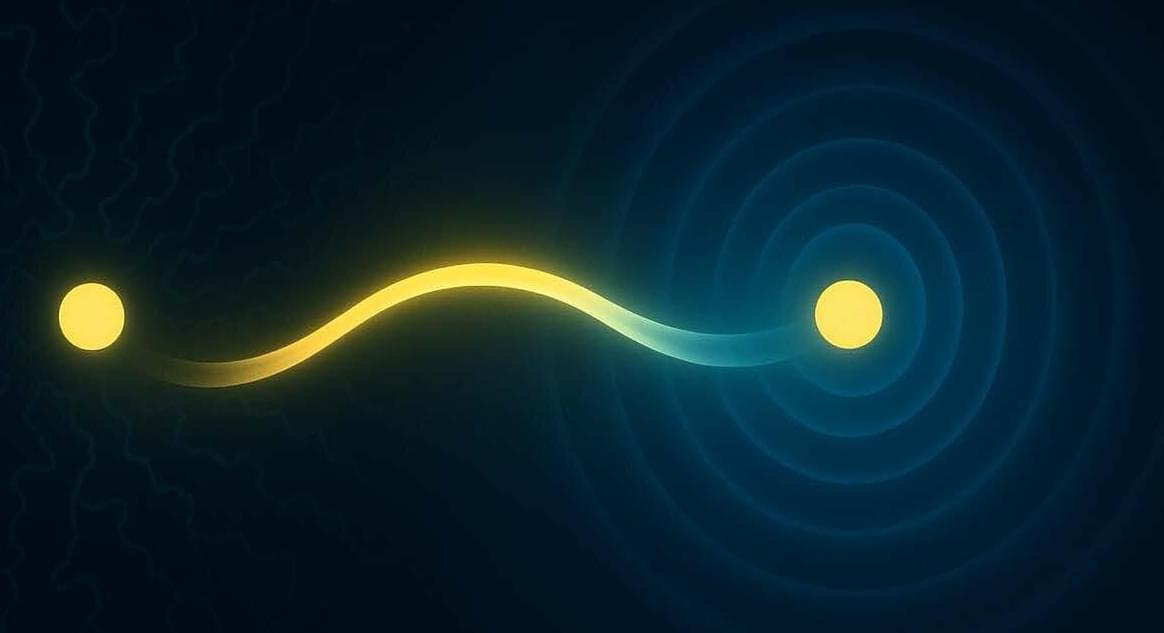
Hunting for dark matter axions with a quantum-powered haloscope

Axions are hypothetical light particles that could solve two different physics problems, as they could explain why some nuclear interactions don’t violate time symmetry and are also promising dark matter candidates. Dark matter is a type of matter that does not emit, reflect or absorb light, and has never been directly observed before.

Axions are very light particles theorized to have been produced in the early universe but that would still be present today. These particles are expected to interact very weakly with ordinary matter and sometimes convert into photons (i.e., light particles), particularly in the presence of a strong magnetic field.

The QUAX (Quest for Axions/QUaerere AXion) collaboration is a large group of researchers based at different institutes in Italy, which was established to search for axions using two haloscopes located in Italy at Laboratori Nazionali di Legnaro (LNL) and Laboratori Nazionali di Frascati (LNF), respectively.

AI model uses social media posts to predict unemployment rates ahead of official data

Social media posts about unemployment can predict official jobless claims up to two weeks before government data is released, according to a study. Unemployment can be tough, and people often post about it online.

Researcher Sam Fraiberger and colleagues recently developed an artificial intelligence model that identifies unemployment disclosures on social media. The work is published in the journal PNAS Nexus.

Data from 31.5 million Twitter users posting between 2020 and 2022 was used to train a transformer-based classifier called JoblessBERT to detect unemployment-related posts, even those that featured slang or misspellings, such as “I needa job!” The authors used demographic adjustments to account for Twitter’s non-representative user base, then forecast US unemployment insurance claims at national, state, and city levels.

Simple wipe test reveals hidden PFAS contamination on firefighter protective gear

The flames die down. The sirens fade. Firefighters peel off their gear, thinking the danger has passed. But in the quiet aftermath, another enemy lingers, an invisible film of “forever chemicals” clinging to jackets, pants and masks.

Researchers at Sylvester Comprehensive Cancer Center, part of the University of Miami Miller School of Medicine, have developed a way to see what the eye cannot.

A simple wipe test detected invisible cancer-linked “forever chemicals” on every set of firefighter gear examined, including breathing masks, according to new research from Sylvester Comprehensive Cancer Center, part of the University of Miami Miller School of Medicine. The non-destructive method offers fire departments a practical way to identify and reduce exposure to per-and polyfluoroalkyl substances (PFAS), chemicals tied to increased cancer risk that can linger on gear long after a fire is out.

High risk of sleep apnea linked to poorer mental health in adults over 45

Researchers at Ottawa Hospital Research Institute and University of Ottawa found that high risk of obstructive sleep apnea was associated with approximately 40% higher odds of a composite poor mental health outcome at baseline and follow-up among adults aged 45–85 years in the Canadian Longitudinal Study on Aging.

Identifying factors associated with mental health outcomes is an important goal on several fronts. Mental health conditions rank among the leading contributors to global disease burden, with anxiety and depressive disorders described as most common. Individuals living with mental health conditions face higher risks of cardiometabolic diseases, unemployment, homelessness, disability, and hospitalizations. Economically, mental disorders carry an estimated $1 trillion annual global cost in lost productivity.

Obstructive sleep apnea (OSA) involves repeated upper airway narrowing during sleep. Disturbed breathing can break up sleep (sleep fragmentation), trigger a stress response in the nervous system (sympathetic activation), and cause episodes of low oxygen in the blood (intermittent hypoxemia).

Too much screen time too soon? Study links infant screen exposure to brain changes and teen anxiety

Children exposed to high levels of screen time before age 2 showed changes in brain development that were linked to slower decision-making and increased anxiety by their teenage years, according to new research by Asst. Prof. Tan Ai Peng and her team from A*STAR Institute for Human Development and Potential (A*STAR IHDP) and National University of Singapore (NUS) Yong Loo Lin School of Medicine, using data from the Growing Up in Singapore Towards Healthy Outcomes (GUSTO) cohort.

New robotic skin lets humanoid robots sense pain and react instantly

If you accidentally put your hand on a hot object, you’ll naturally pull it away fast, before you have to think about it. This happens thanks to sensory nerves in your skin that send a lightning-fast signal to your spinal cord, which immediately activates your muscles. The speed at which this happens helps prevent serious burns. Your brain is only informed once the movement has already started.

If something similar happens to a humanoid robot, it typically has to send sensor data to a central processing unit (CPU), wait for the system to process it, and then send a command to the arm’s actuators to move. Even a brief delay can increase the risk of serious damage.

But as humanoid robots move out of labs and factories and into our homes, hospitals and workplaces, they will need to be more than just pre-programmed machines if they are to live up to their potential. Ideally, they should be able to interact with the environment instinctively. To help make that happen, scientists in China have developed a neuromorphic robotic e-skin (NRE-skin) that gives robots a sense of touch and even an ability to feel pain.

Passengers’ brain signals may help self-driving cars make safer choices

Cars from companies like Tesla already promise hands-free driving, but recent crashes show that today’s self-driving systems can still struggle in risky, fast-changing situations.

Now, researchers say the next safety upgrade may come from an unexpected source: The brains of the people riding inside those cars.

In a new study appearing in Cyborg and Bionic Systems, Chinese researchers tested whether monitoring passengers’ brain activity could help self-driving systems make safer decisions in risky situations.

New sensor measures strain, strain rate and temperature with single material layer

Researchers from the Institute of Metal Research (IMR) of the Chinese Academy of Sciences have developed an innovative flexible sensor that can simultaneously detect strain, strain rate, and temperature using a single active material layer, representing a significant advance in multimodal sensing technology.

The study, published in Nature Communications, addresses the longstanding challenge of conventional sensors requiring complex multilayer designs that integrate different materials for distinct sensing functions. These traditional approaches often involve complicated signal acquisition and external power supplies, limiting their reliability in continuous monitoring applications.

Led by Prof. Tai Kaiping, the researchers designed the sensor based on a specially designed network of tilted tellurium nanowires (Te-NWs). Through material and structural engineering, they overcame a fundamental limitation where thermoelectric and piezoelectric signals could not be collected in the same direction within conventional materials. In this unique architecture, both signals are simultaneously detected and output in the out-of-plane direction.

New AI model accurately grades messy handwritten math answers and explains student errors

A research team affiliated with UNIST has unveiled a novel AI system capable of grading and providing detailed feedback on even the most untidy handwritten math answers—much like a human instructor.

Led by Professor Taehwan Kim of UNIST Graduate School of Artificial Intelligence and Professor Sungahn Ko of POSTECH, the team announced the development of VEHME (Vision-Language Model for Evaluating Handwritten Mathematics Expressions), an AI model designed specifically to evaluate complex handwritten mathematics expressions.

The research is published on the arXiv preprint server.

What’s inside Mexico’s Popocatépetl volcano? Scientists obtain first 3D images

In the predawn darkness, a team of scientists climbs the slope of Mexico’s Popocatépetl volcano, one of the world’s most active and whose eruption could affect millions of people. Its mission: figure out what is happening under the crater.

For five years, the group from Mexico’s National Autonomous University has climbed the volcano with kilos of equipment, risked data loss due to bad weather or a volcanic explosion and used artificial intelligence to analyze the seismic data. Now, the team has created the first three-dimensional image of the 17,883-foot (5,452-meter) volcano’s interior, which tells them where the magma accumulates and will help them better understand its activity, and, eventually, help authorities better react to eruptions.

Marco Calò, professor in the UNAM’s Geophysics Institute’s vulcanology department and the project leader, invited The Associated Press to accompany the team on its most recent expedition, the last before its research on the volcano will be published.

/* */