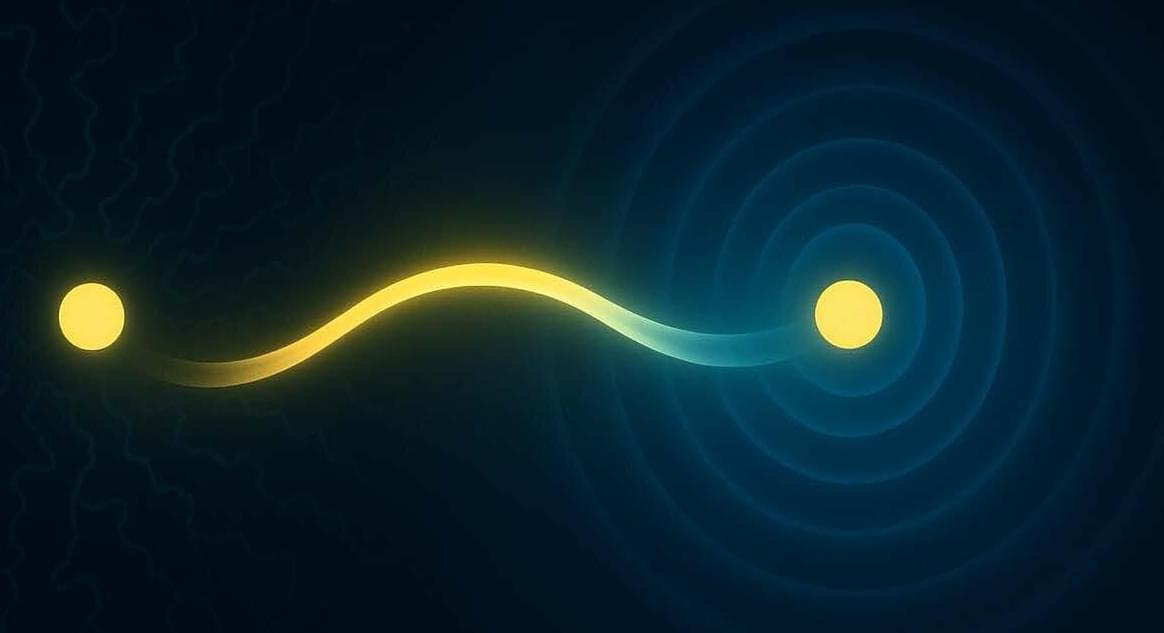
A new unified theory connects two fundamental domains of modern quantum physics: It joins two opposite views of how a single exotic particle behaves in a many-body system, namely as a mobile or static impurity among a large number of fermions, a so-called Fermi sea.
This new theoretical framework was developed at the Institute for Theoretical Physics of Heidelberg University. It describes the emergence of what is known as quasiparticles and furnishes a connection between two different quantum states that, according to the Heidelberg researchers, will have far-reaching implications for current quantum matter experiments.