The ubiquity of smart devices—not just phones and watches, but lights, refrigerators, doorbells and more, all constantly recording and transmitting data—is creating massive volumes of digital information that drain energy and slow data transmission speeds. With the rising use of artificial intelligence in industries ranging from health care and finance to transportation and manufacturing, addressing the issue is becoming more pressing.
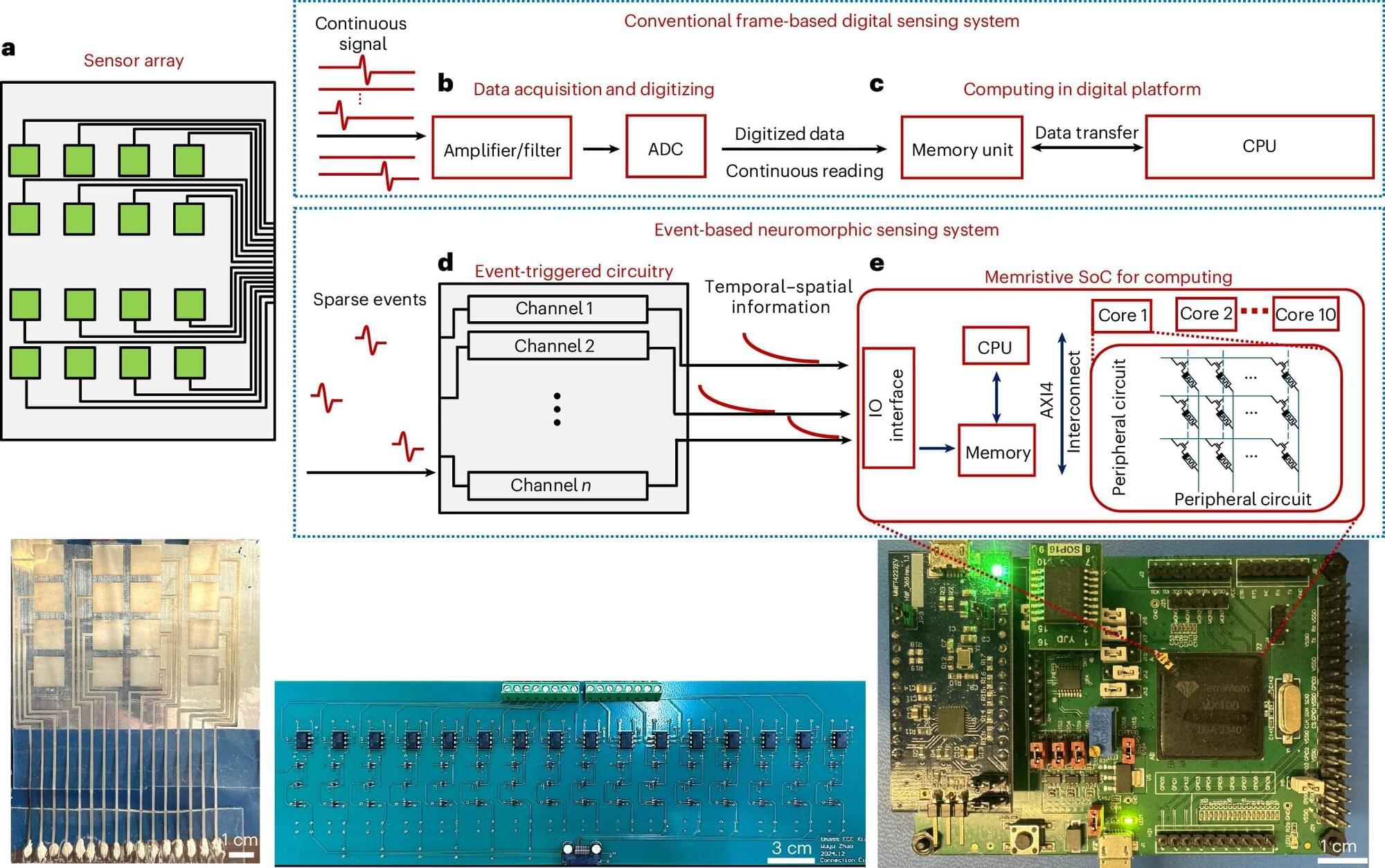
A research team led by the University of Massachusetts Amherst aims to address the problem with new technology that uses old-school analog computing: an electrical component known as a memristor.
“Certainly, our society is more and more connected, and the number of those devices is increasing exponentially,” says Qiangfei Xia, the Dev and Linda Gupta professor in the Riccio College of Engineering at UMass Amherst. “If everyone is collecting and processing data the old way, the amount of data is going to be exploding. We cannot handle that anymore.”