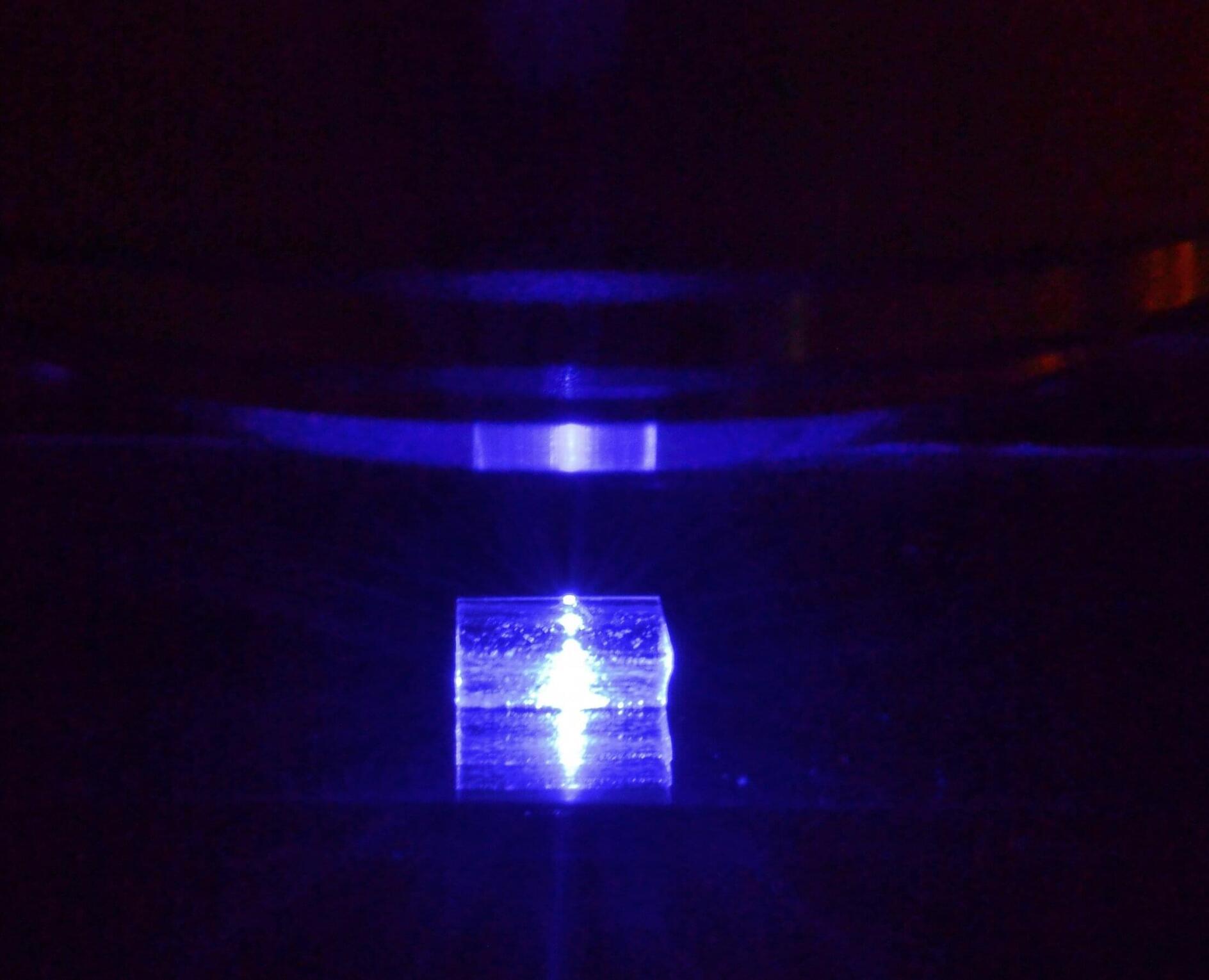
Do cosmic radiation doses near the moon differ significantly from those received by astronauts in low Earth orbit? Experimental lithium fluoride detectors, installed aboard the Orion spacecraft during the Artemis I mission, have now made it possible to obtain preliminary estimates.
As the Orion capsule of the uncrewed Artemis I mission orbited the moon in late November and early December 2022, more than 10,000 small crystals, embedded within two human phantoms, were collecting data on cosmic radiation doses. Among them were several dozen experimental fluorescent lithium fluoride detectors, developed at the Institute of Nuclear Physics of the Polish Academy of Sciences (IFJ PAN) in Cracow.
A method for reading the information stored in these detectors, providing insights into radiation doses and the properties of the detectors themselves, has now been presented in the journal Radiation Measurements.