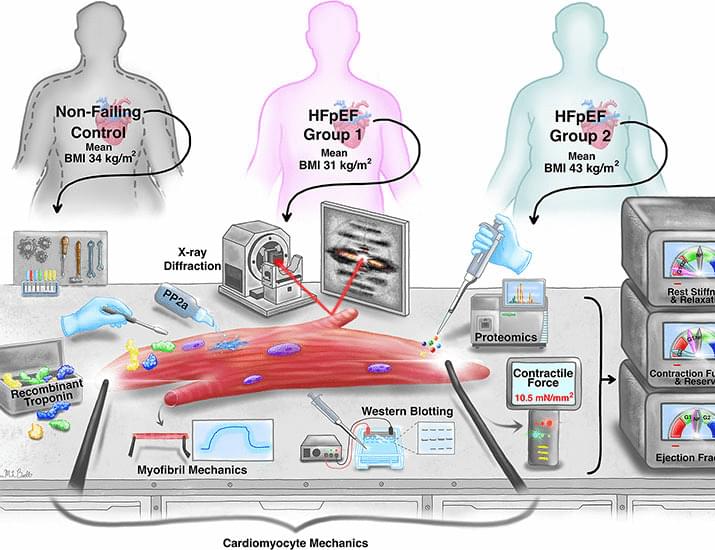
Heart failure with preserved ejection fraction (HFpEF) causes substantial morbidity and mortality and has few effective therapies. Its phenotype has changed over time, with morbid obesity and metabolic defects supplanting hypertension and cardiac hypertrophy. We reveal that cardiomyocytes from patients with severe obesity and HFpEF have very depressed contractile reserve, including reduced calcium-and length-stimulated tension, power, and myosin activation compared with less-obese HFpEF and nonfailing (NF) controls with or without obesity but similar to those with advanced HF and reduced ejection fraction. Myocyte defects correlate with body mass index and exercise hemodynamics in patients with HFpEF but not NF and appear reversible upon weight loss. Increased troponin I phosphorylation at threonine 181 occurs only in heart failure with obesity, contributing to sarcomere dysfunction.