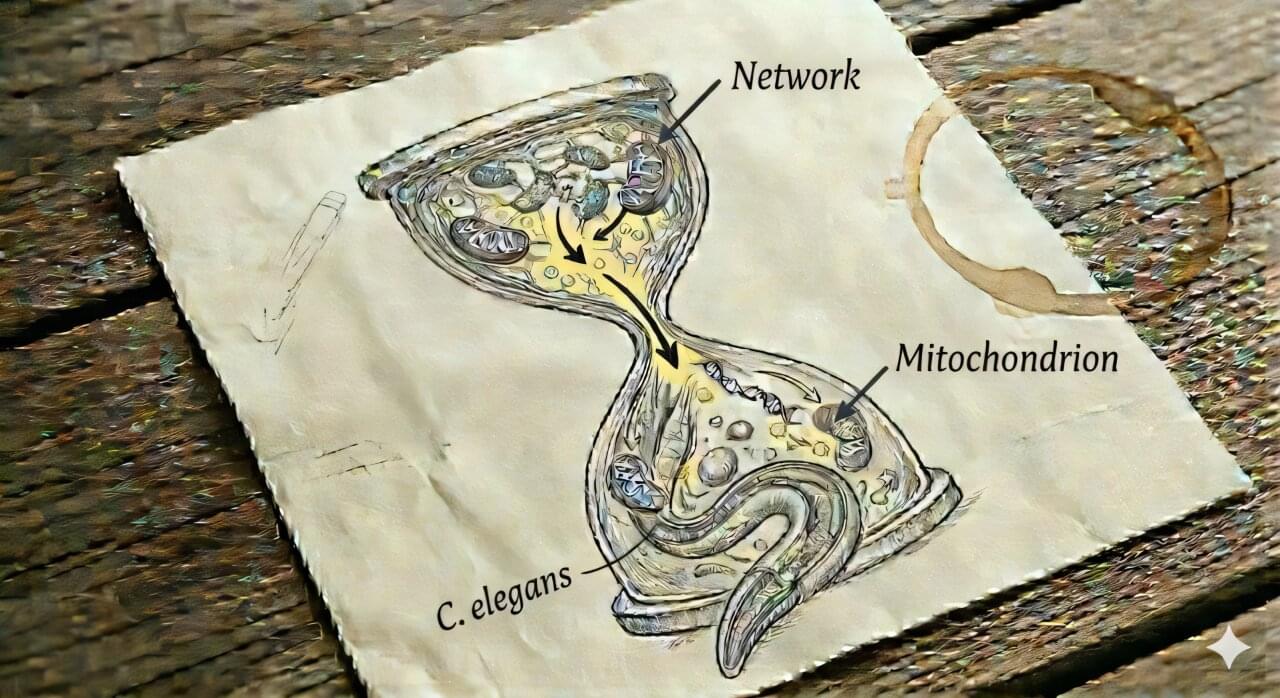
Why do cells age—and why do we lose our energy and vitality as we get older? This question is one of the central challenges of modern biomedicine. The focus is particularly on mitochondria—tiny cellular organelles long known as the cell’s powerhouses but now understood as dynamic control centers that not only produce energy, but also coordinate cellular communication, adaptation, and many of the processes essential for life.
They supply us with the energy that our body needs for movement, growth, and repair processes. But as we age, these powerhouses begin to slow down. It has long been known that their function declines with age. But until now, the mechanisms driving this gradual decline have been poorly understood.
Focus on membrane lipids For a long time, it was assumed that genetic damage within the mitochondria themselves was primarily responsible. A study now published in Nature Communications by an international research team led by Dr. Maria Ermolaeva of the Leibniz Institute on Aging—Fritz Lipmann Institute (FLI) in Jena provides a surprising answer to this question: A key factor appears to be the imbalance in the structure of the mitochondrial network, which is caused by the absence of a major lipid in the membrane composition.