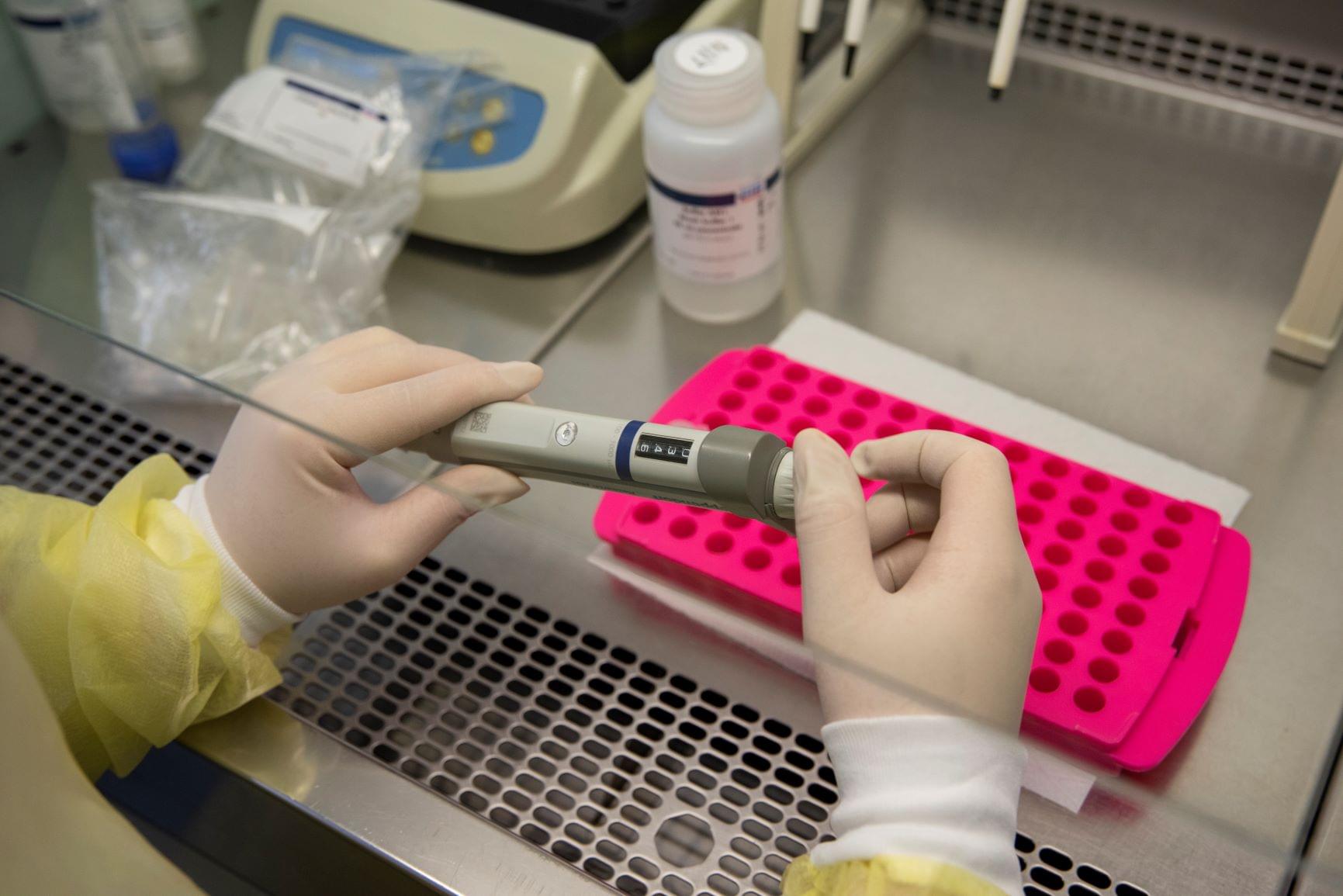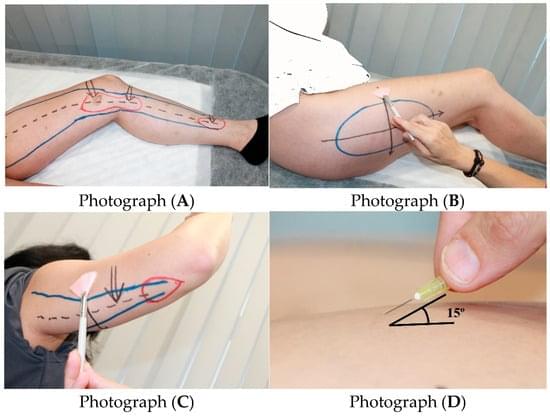
Researchers are uncovering how sweat could become a powerful tool for real-time health monitoring.
Researchers studying Yellowstone’s depths discovered that small earthquakes can recharge underground microbial life.
The quakes exposed new rock and fluids, creating bursts of chemical energy that microbes can use. Both the water chemistry and the microbial communities shifted dramatically in response. This dynamic may help explain how life survives in deep, dark environments.
A large portion of earth’s life lives underground.
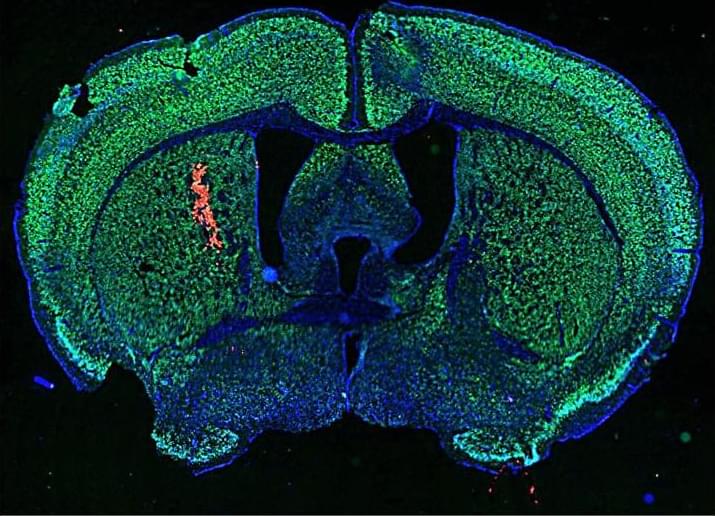
New ultra-detailed imaging exposes the hidden structure and behavior of chromatin condensates — and hints at how their failures may drive disease.
U.S. prosecutors have charged two Virginia brothers arrested on Wednesday with allegedly conspiring to steal sensitive information and destroy government databases after being fired from their jobs as federal contractors.
Twin brothers Muneeb and Sohaib Akhter, both 34, were also sentenced to several years in prison in June 2015, after pleading guilty to accessing U.S. State Department systems without authorization and stealing personal information belonging to dozens of co-workers and a federal law enforcement agent who was investigating their crimes.
Muneeb Akhter also hacked a private data aggregation company in November 2013 and the website of a cosmetics company in March 2014.
A maximum severity vulnerability, dubbed ‘React2Shell’, in the React Server Components (RSC) ‘Flight’ protocol allows remote code execution without authentication in React and Next.js applications.
The security issue stems from insecure deserialization. It received a severity score of 10/10 and has been assigned the identifiers CVE-2025–55182 for React and CVE-2025–66478 (CVE rejected in the National Vulnerability Database) for Next.js.
Security researcher Lachlan Davidson discovered the flaw and reported it to React on November 29. He found that an attacker could achieve remote code execution (RCE) by sending a specially crafted HTTP request to React Server Function endpoints.
Threat actors have been exploiting a command injection vulnerability in Array AG Series VPN devices to plant webshells and create rogue users.
Array Networks fixed the vulnerability in a May security update, but has not assigned an identifier, complicating efforts to track the flaw and patch management.
An advisory from Japan’s Computer Emergency and Response Team (CERT) warns that hackers have been exploiting the vulnerability since at least August in attacks targeting organizations in the country.
The Predator spyware from surveillance company Intellexa has been using a zero-click infection mechanism dubbed “Aladdin,” which compromised specific targets by simply viewing a malicious advertisement.
This powerful and previously unknown infection vector is meticulously hidden behind shell companies spread across multiple countries, now uncovered in a new joint investigation by Inside Story, Haaretz, and WAV Research Collective.
The investigation is based on ‘Intellexa Leaks’ — a collection of leaked internal company documents and marketing material, and is corroborated by technical research from forensic and security experts at Amnesty International, Google, and Recorded Future.
China’s AI industry is evolving at a rapid pace, to the point where domestic chip manufacturers are expected to outproduce regional demand, and NVIDIA CEO has warned about the ‘Chinese AI diffusion’ in place.
Ever since China has moved towards focusing on the adoption of domestic AI solutions, the region has seen a massive rise in chip production, since companies like Huawei, Cambricon, Biren, and many others are coming up with AI chips, with the ‘promise’ of replacing NVIDIA’s tech stack entirely. Based on an analysis by Bernstein (via Jukan), it is estimated that China’s AI chip supply is expected to rise significantly over the years, potentially surpassing domestic demand by 2028. This indicates that the nation has plans to move its tech stack towards the global market. NVIDIA’s CEO Jensen Huang has labeled this move as the AI ‘Belt & Road’ Initiative.
Out of all the Chinese AI firms competing, it is expected that Huawei will capture a whopping 50% share by 2026, significantly shrinking NVIDIA’s lead in the region. One of the main bottlenecks faced by firms like Huawei is the lack of semiconductor production capabilities. However, it appears that the firm plans to address this issue soon, through its own fab buildout, which will be facilitated by collaboration with local governments, as well as companies like SMIC. Similarly, Huawei also faces an HBM capacity problem, but based on Bernstein’s estimates, it is expected that all supply constraints will be addressed.