Toggle light / dark theme

Get the latest international news and world events from around the world.

Log in for authorized contributors

Rapid method uncovers hidden structures in materials—including elusive quasicrystals

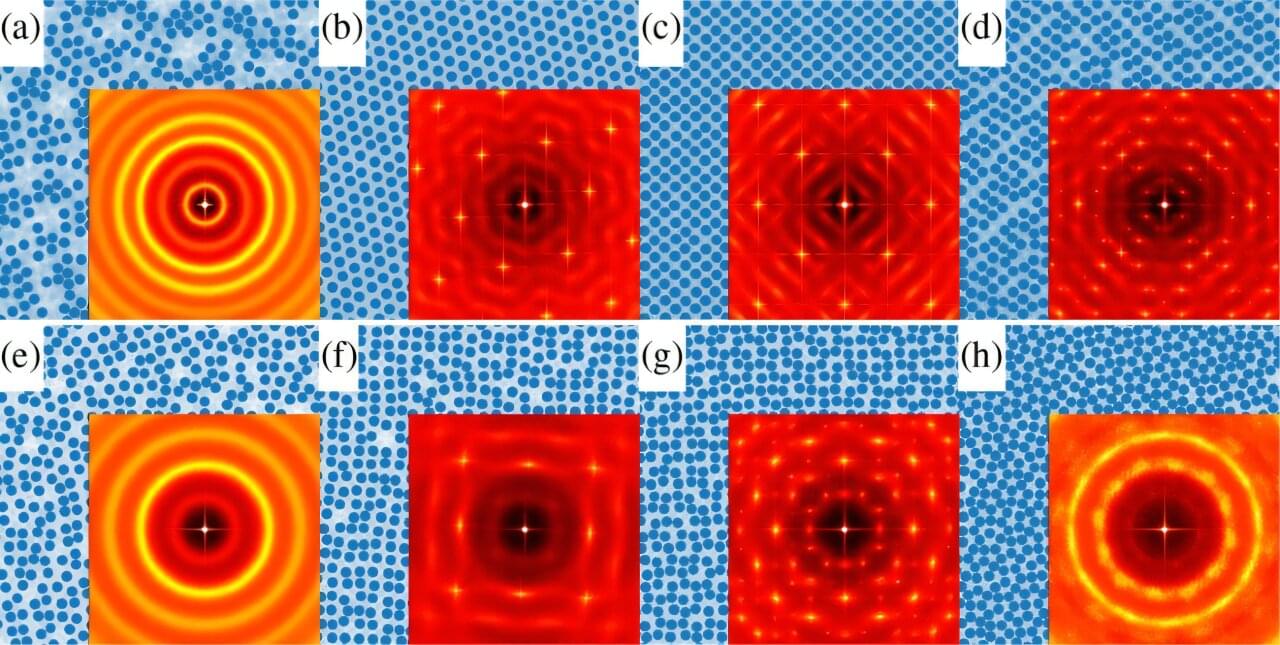
An international team of scientists, including researchers from Loughborough University, has developed a method to dramatically speed up the discovery and design of advanced materials. The study, published in Physical Review Letters, shows how the new approach can map complex phase diagrams in as little as a day—rather than weeks or months—and pinpoint where important structures, including crystals and quasicrystals, are likely to form.

The method will enable scientists to “scout ahead” and identify where promising structures are likely to form and the conditions needed to create them, rather than using a trial-and-error approach. It could help accelerate the development of advanced materials and technologies that harness the unique properties of quasicrystal structures.

“Our approach is a day’s work for an expert—it’s much faster,” said Professor Andrew Archer, an expert in applied mathematics and theoretical physics at Loughborough University and one of the paper’s authors.
Record-breaking photonics approach traps light on a chip for millions of cycles

For years, scientists have dreamed of using atomically thin van der Waals (vdW) materials to build faster, more efficient photonic chips. These materials can be stacked and tuned with extraordinary precision, opening possibilities far beyond those of conventional technologies. The challenge is that they are extremely fragile, making them notoriously difficult to shape with standard nanofabrication tools.

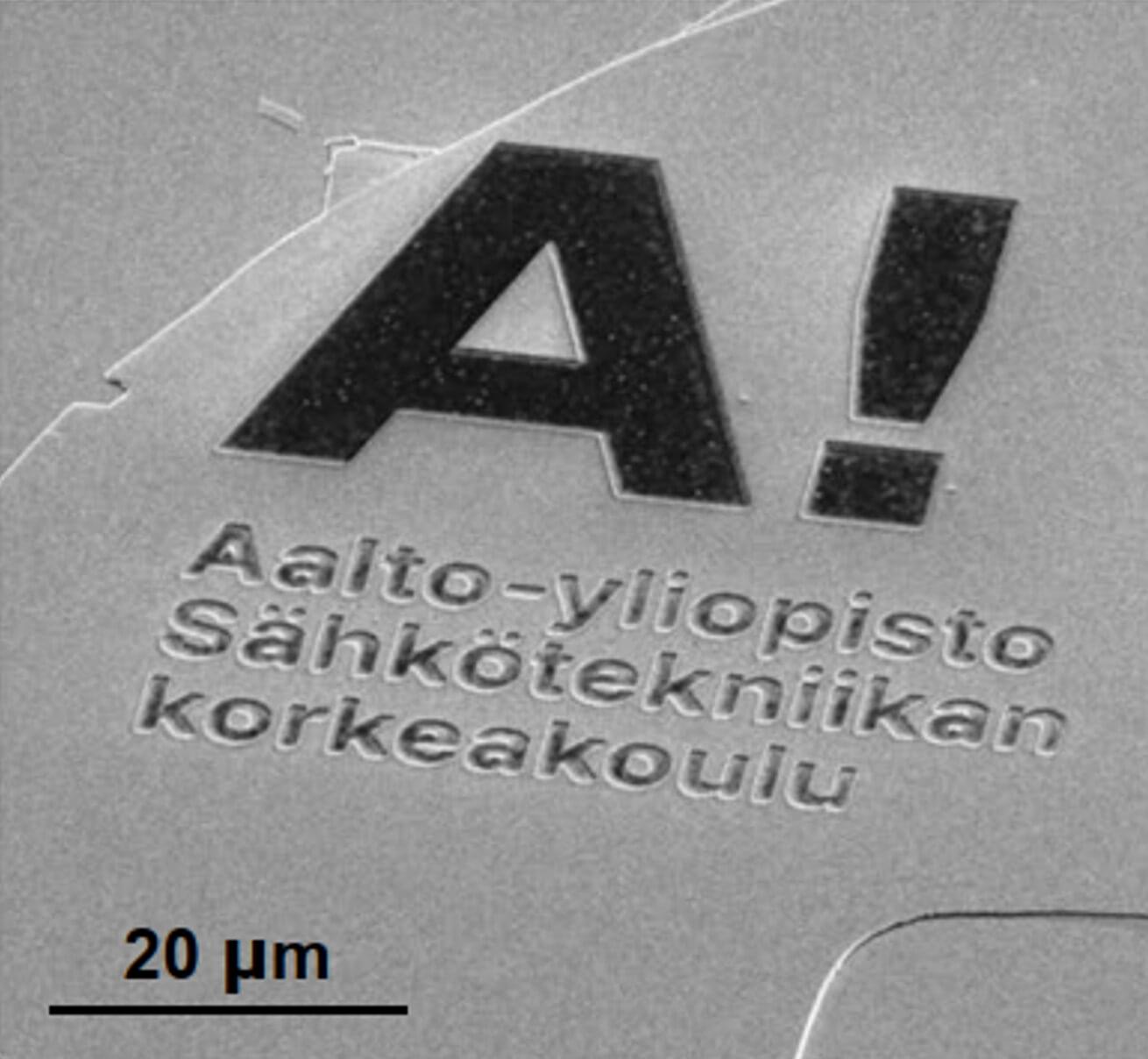
Now, an international team of researchers including scientists from Aalto University has overcome this long-standing barrier. By developing a method for what can be described as nanoscale surgery, they were able to sculpt these delicate materials without destroying them, achieving record-breaking performance in the process.

Published in Nature Materials, the work marks an important step forward for vdW materials, shifting them from passive coatings toward becoming the active building blocks of future photonic and quantum devices.

High-resolution imaging captures cavity-induced density waves in a quantum gas

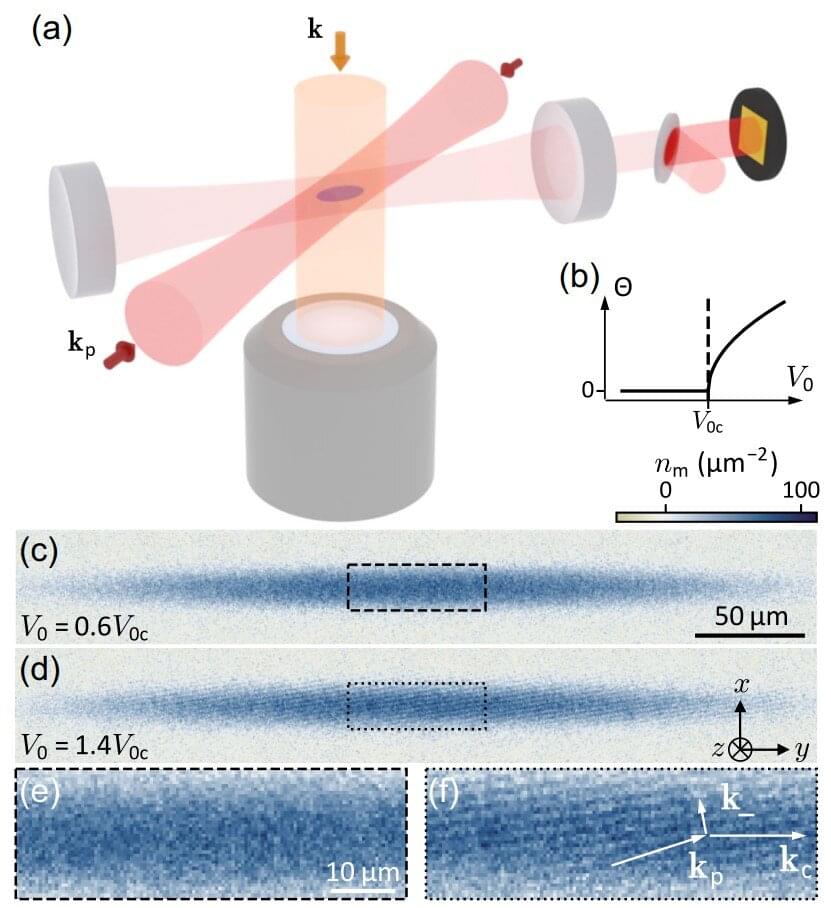
A new study, published in Physical Review Letters, reports that scientists have successfully imaged the formation of cavity-induced density waves induced by laser light in an ultracold quantum gas. Previously, only global signals, such as photon leakage or the peak in energy deposition of a fast charged particle (Bragg peaks), have been used to detect this kind of ordering. Prior to this study, there had been no direct, high-resolution in situ imaging of cavity-induced density-wave order in ultracold gases.

When laser light is arranged so that it bounces back and forth between two mirrors, light waves become trapped and create what is referred to as an optical cavity. This creates standing waves or amplifies light through resonance. When atoms in an ultracold unitary Fermi gas are placed in an optical cavity, they can absorb and emit this light. Unitary Fermi gases exist in a strongly interacting state where the wave scattering length makes interactions independent of the specific atomic details.

Light emitted by atoms in the gas can be absorbed by other atoms. This exchange of photons creates further interactions between the atoms that can cause a self-rearrangement into a periodic pattern within the gas, referred to as a density wave. This self-organization occurs above a critical threshold, called the superradiant phase transition, where the exchange of photons enables simultaneous, collective interaction among all atoms.

Scientists May Have Found the Key to Jupiter and Saturn’s Moon Mystery

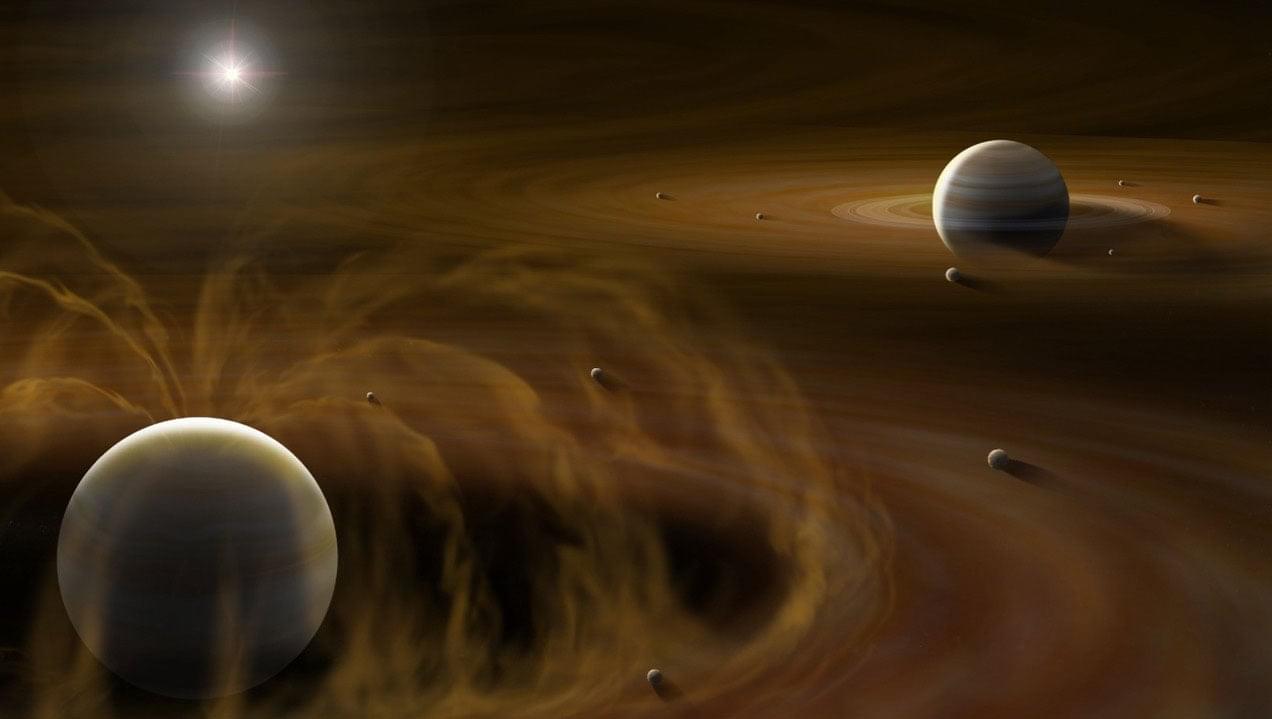
Jupiter and Saturn, the two largest planets in our Solar System, also host the most extensive systems of moons. Jupiter is currently known to have more than 100 moons, while Saturn, along with its prominent ring system, has more than 280.

Despite these large numbers, their moon systems are very different. Jupiter has four major moons, including Ganymede, the largest moon in the Solar System. Saturn, on the other hand, is dominated by a single standout moon, Titan, which ranks as the second largest.

Because both planets are gas giants, scientists have long tried to understand why their satellite systems developed so differently. Existing theories of moon formation offer some explanations, but recent research on stellar magnetic fields suggests those ideas may need revision. One key question involves magnetic accretion and whether an inner cavity can form in Jupiter’s circumplanetary disk, the accumulation of material orbiting a planet from which satellites may form.

A New Chapter in Chemistry? Scientists Uncover New Way Metals Bind Oxygen

Iron plays a central role in how the body uses oxygen. In hemoglobin, it binds dioxygen, a pair of oxygen atoms, allowing blood to carry oxygen to tissues. But this is only part of the story. Iron-oxo compounds, which contain iron bonded to oxygen in a highly reactive form, also drive critical chemistry in the liver, where enzymes rely on them to break down medications and toxins.

Rice University chemist Raúl Hernández Sánchez set out to explore whether oxygen could react with other metals, particularly those in the lowest region of the periodic table known as the f-block. This group includes lanthanides in the upper row and actinides below.

He proposed that if lanthanides could bond with oxygen, they might form reactive lanthanide-oxo compounds. These compounds could serve as synthetic alternatives to iron-oxo systems and give chemists new ways to study small-molecule reactions linked to biology.

/* */