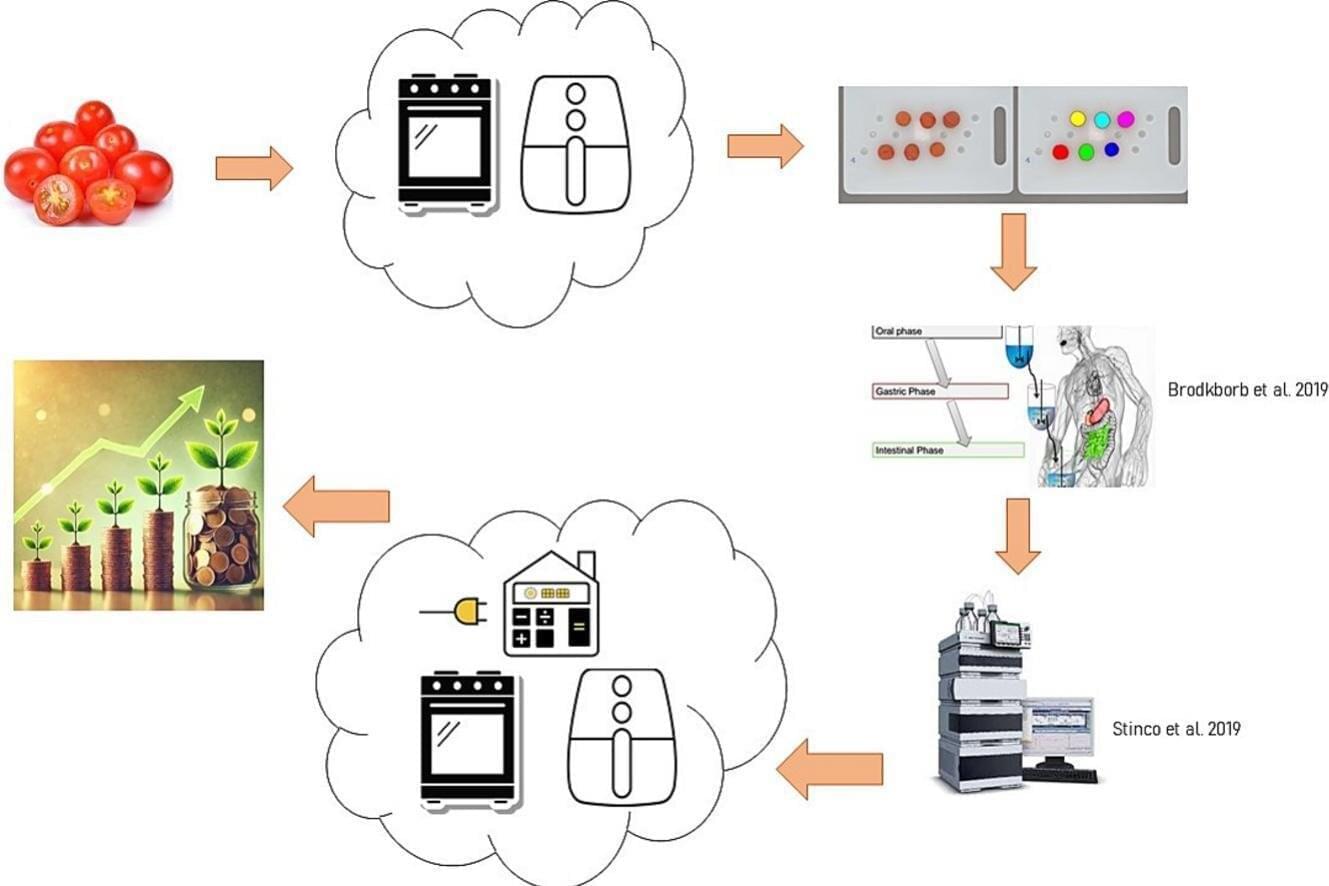
Researchers at the University of Seville’s Food Color and Quality Laboratory have studied the effects of different cooking methods used for tomatoes and carrots (in the oven, microwave or air fryer, among others) on the amount of carotenoids that are potentially available for absorption by the body following the digestion of these foods. According to the study, the bioavailability index varies significantly depending on how these foods are cooked. Carotenoids are compounds of great importance due to their positive health effects.
In the case of carrots, the bioavailability of total carotenoids increased ninefold when cooked in the oven. For tomatoes, the highest bioavailability values were obtained by cooking them in either an air fryer (190 °C for 10 minutes) or a conventional oven (180 °C for 20 minutes). There were no significant differences between the two methods. Although the increase in bioavailability was more modest (a 1.5-fold increase), it was also significant compared to raw tomatoes.
The researchers also highlight that the increases in the bioavailability of the vitamin A precursor carotenoids in tomatoes (α-carotene and β-carotene) ranged from 26 to 38 times and 46 to 71 times, respectively, compared with those in raw carrots. Cooking is, therefore, a sometimes-overlooked strategy for combating vitamin A deficiency, one of the world’s most serious nutritional problems.