For many people, “protein” is the key element of a food order. However, beyond the preferred choice of meats or plant-based alternatives, proteins encompass a large class of complex biomolecules whose chemical structure is encoded in our genes. Proteins have critical functions in living cells; they help repair and build body tissues, drive metabolic reactions, maintain pH and fluid balance, and keep our immune systems strong.
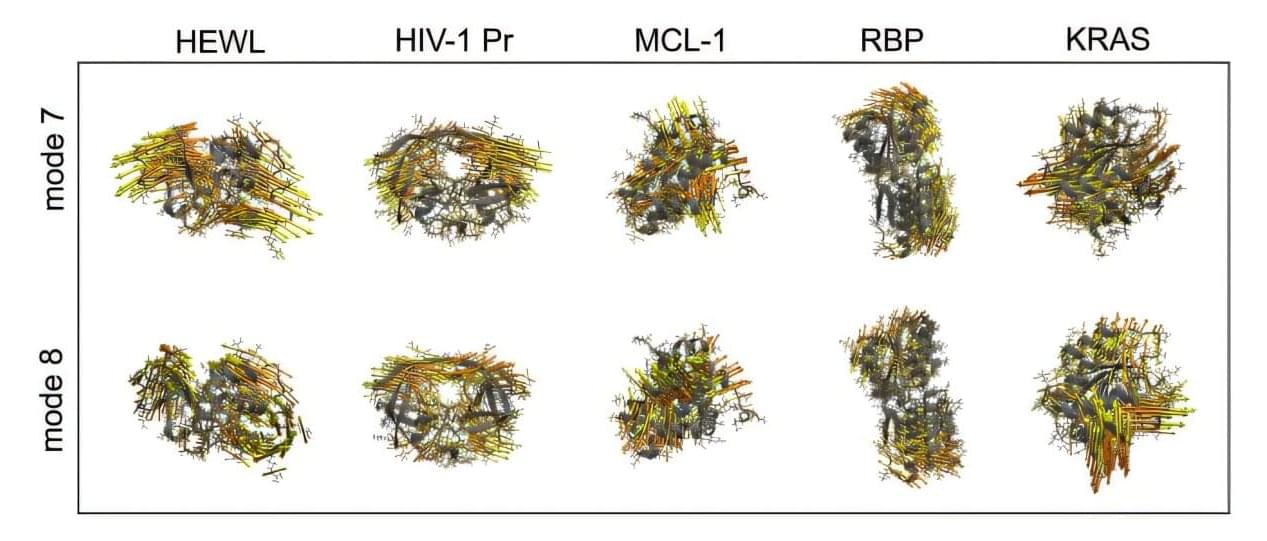
To perform their important functions, many proteins have a dynamic molecular structure capable of adopting multiple conformations. For a long time, scientists have suspected that proteins don’t change shape at random. Instead, they seem to move according to deep, slow rhythms—like a building that sways gently in the wind rather than shaking violently.
Those slow rhythms guide how a protein bends, twists, and shifts between its different forms. If one could understand those rhythms, one might be able to predict—and even hurry along—the protein’s movements.