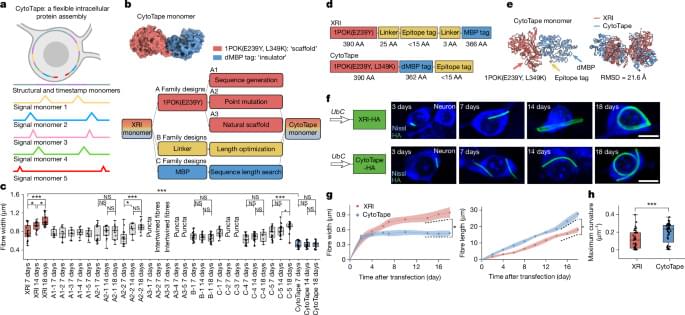
An intracellular protein-based recorder called CytoTape is capable of tracking cell activities over weeks and at scale.
Physicist Jim Al-Khalili explores the incomprehensible scale of the universe. A cosmic journey into the laws of gravity, relativity, and the formation of supergalaxies. Discover how the largest structures shape our understanding of the cosmos itself.
Director: Tim Usborne.
Writers: Jim Al-Khalili, Tim Usborne.
Stars: Prof. Jim Al-Khalili (Physicist, Presenter)
Genre: Science Documentary, Physics, Cosmology.
Country: United Kingdom.
Language: English Also Known As: Secrets of Size: Going Big (BBC)
Release Date: 2022
Filming Location: United Kingdom / Various International Locations.
Synopsis:
In this second episode of the fascinating series Secrets of Size, Professor Jim Al-Khalili takes us on a cosmic journey into the immensity, exploring the largest scale of the universe.
We leave behind the quantum realm to focus on the forces that govern the largest structures: gravity and relativity. Al-Khalili explains how these laws shape the existence of galaxies, galaxy clusters, and the immense supergalaxies.
The episode reveals the incomprehensible scale of the cosmos, where time and space are distorted, and how the study of these giants allows us to understand the origin, evolution, and perhaps the ultimate destiny of the universe itself.


Biomedical engineers from Brown University have developed a new wound dressing material that releases antibiotic drugs only when harmful bacteria are present in a wound. In the new study, published in the journal Science Advances, the researchers show that the material could help rapidly clear wound infections to accelerate healing while reducing the unnecessary use of antibiotics—a major driver of antibiotic resistance and hard-to-treat “superbug” infections that claim tens of thousands of lives worldwide each year.
The new material is a smart hydrogel loaded with an antibiotic cargo that can be placed directly on a wound under a bandage. The hydrogel is sensitive to an enzyme produced by many different types of harmful bacteria.
When the enzyme is present, the hydrogel starts to degrade, releasing the antibiotics trapped inside. But when no harmful bacteria are present, the hydrogel stays intact, safely locking its antibiotic cargo away.
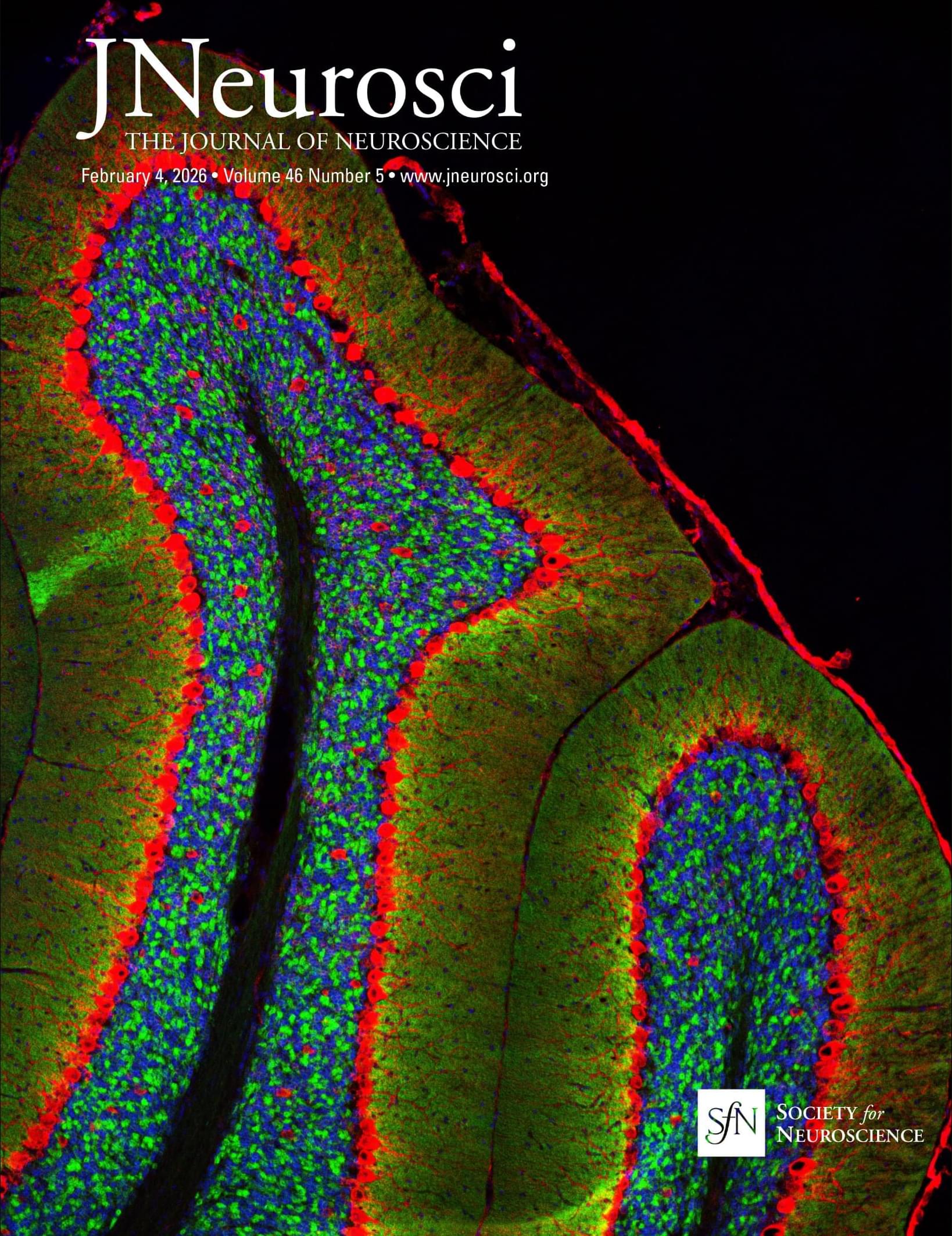
Small-molecule enhancement of METTL3 S-palmitoylation as a therapeutic strategy for osteoarthritis.
METTL3 undergoes S-palmitoylation, which promotes cytoplasmic phase separation to facilitate mRNA translation and maintain its stability. We identify a small molecule that enhances this modification, providing a mechanistic basis for a potential osteoarthritis therapy.
Facilitating precision therapy in Prostate Cancer…
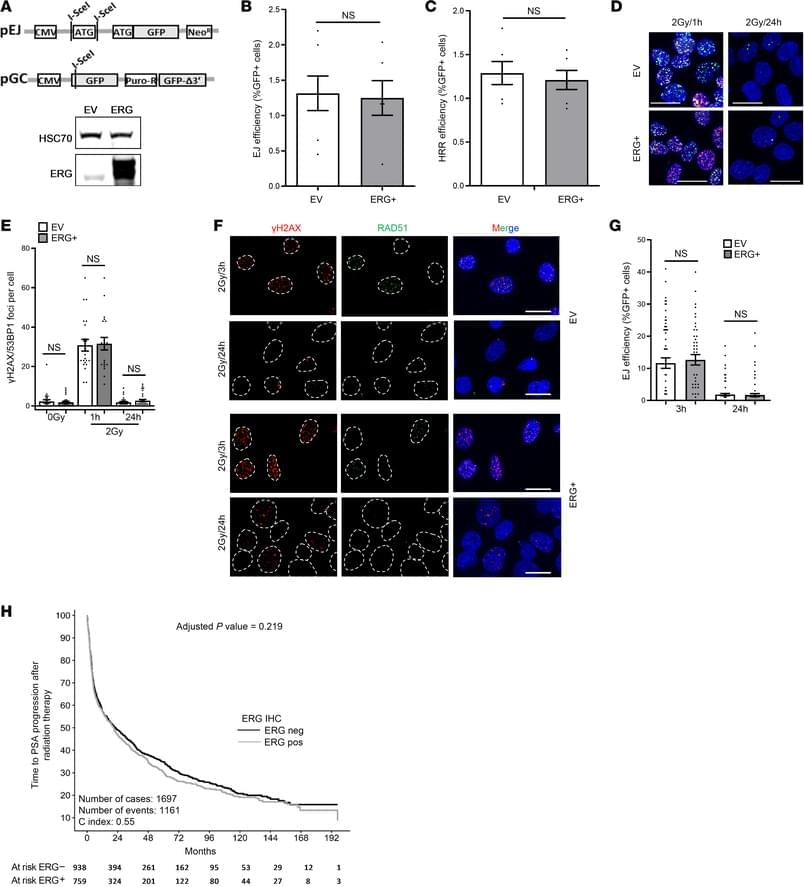
https://doi.org/10.1172/JCI194949 Wael Y. Mansour & team discover ERG overexpression as a biomarker for identifying patients with prostate cancer who can benefit from PARPi-based radiosensitization, enhancing radiotherapy efficacy and reducing toxicity. The image: Samples of an ERG-positive PCa tumor following irradiation and PARP inhibition reveal a bystander effect; p53-binding protein 1 foci (red) in ERG-positive (green) and ERG-negative cells; nuclei (blue).
1Department of Radiotherapy and Radiooncology and.
2Mildred Scheel Cancer Career Center HaTriCS4, University Medical Center Hamburg-Eppendorf, Hamburg, Germany.
3Pharmacology and Experimental Oncology Unit, Cancer Biology Department, National Cancer Institute, Cairo University, Cairo, Egypt.
Become a Big Think member to unlock expert classes, premium print issues, exclusive events and more: https://bigthink.com/membership/?utm_… Become a Big Think member to unlock expert classes, premium print issues, exclusive events and more: https://bigthink.com/membership/?utm_…
Up next, Sean Carroll explains the biggest ideas in the universe | Full Interview ► • Sean Carroll explains the biggest ideas in…
A century after the birth of quantum mechanics, physicists still argue about what the theory is really describing. Does the wave function represent something real, or just our knowledge? Why does “measurement” appear in the laws of nature at all?
Sean Carroll reveals how quantum mechanics solved one set of problems while creating a deeper one.
© Freethink Media Inc., All Rights Reserved.
Go Deeper with Big Think:
Become a Big Think member to unlock expert classes, premium print issues, exclusive events and more: https://bigthink.com/membership/?utm_…
Preorder Jim Al-Khalili’s forthcoming book, On Time: The Physics That Makes the Universe, here: https://www.amazon.com/Time-Physics-T?tag=lifeboatfound-20…
Up next.
Brian Cox: The quantum roots of reality | Full Interview ► • Brian Cox: The quantum roots of reality |…
Time feels obvious, but physics tells a stranger story about its existence: Theoretical physicist Jim Al-Khalili explores why our sense of time may be incredibly misleading, including the idea that past, present, and future might all exist at once.
0:00 Chapter 1: Does time flow?
2:42 Why Time Feels Faster as We Age.
3:56 Time and Change in Philosophy and Physics.
5:28 Einstein and the End of Absolute Time.
6:19 Time in the Equations of Physics.
7:50 Chapter 2: How do we reconcile quantum field theory with the general theory of relativity?
12:10 Evidence for Time Dilation: Muons.
14:29 Gravity Slows Time: General Relativity.
19:22 Space-Time and the Block Universe.
21:55 Does Time Really Exist?
26:33 The Debate: Eternalism vs Presentism.
34:12 Chapter 3: Is There a “Now”?
40:40 Chapter 4: Why Does Thermodynamics Have a Direction in Time?
49:38 Quantum Entanglement and the Direction of Time.
55:10 Did Time Begin at the Big Bang?
45:00 Will Time End?
1:05:40 Chapter 5: Is Time Travel Possible?

In the early stages of the HMBD-001 clinical trial, Ingram and his team focused primarily on the drug’s safety and tolerability, as well as building a dataset that could support clear decisions about where the medicine could help patients most. In early clinical evaluations, HMBD-001 has shown encouraging signals, and the trials have expanded beyond London to multiple international sites.
In January, Ingram and team announced that the first patient had been dosed with HMBD-501. The first clinical trial for HMBD-501 is currently recruiting cancer patients in the United States and Australia. Soon, more patients will begin receiving HMBD-501 as it enters clinical testing.
The expansion of HMBD-501 clinical trials is a chance to learn more about one of biology’s biggest problems and how to solve it. But it wouldn’t have been possible if the Hummingbird Bioscience team hadn’t asked the important questions in their lab in Singapore.
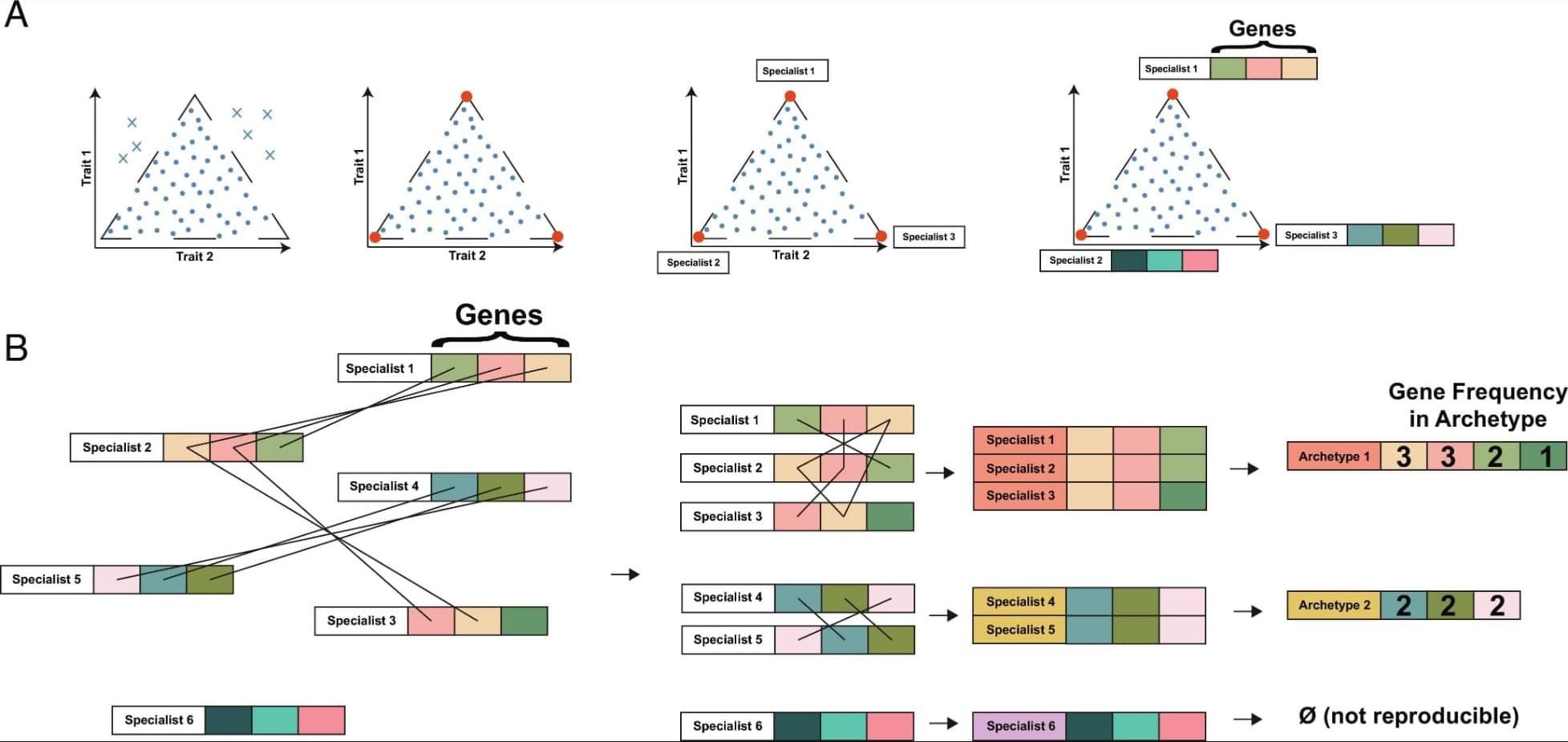
This pattern is the signature of Pareto optimality, a mathematical concept describing how competing objectives create a “frontier” of optimal solutions. Just as you can’t make a car both maximally fast and maximally fuel-efficient without compromise, cells can’t simultaneously optimize all biological functions. A cell might specialize in energy production, defense, or growth—but rarely all three equally.
We hypothesized that the phenotypic variation within cell types is explained by multiobjective optimization and used Tabula Sapiens to test this hypothesis. The Tabula Sapiens Atlas v1 is a single-cell RNA sequencing dataset containing 456,101 high-quality single cell transcriptomes processed via droplet microfluidic emulsion, covering 58,870 genes across 174 cell types, 25 tissues, and 15 donors (16). We applied quality control filters to remove outlier cells on several metrics, yielding 309,193 cells across 173 cell types, 24 tissues, and 14 donors, SI Appendix, Fig. S1 and Table S1. Cell type abundance filters left 110 cell types across the same number of tissues and donors, yielding 440 distinct donor-tissue-cell type strata for analysis (15, 17).
The only assumption we make in this analysis is that fitness is an increasing function of performance (14). Then, if there is a trade-off in performing multiple tasks, optimal phenotypes (i.e., those that maximize fitness) must lie in a region described by convex combinations of points that each maximize a single task’s performance (14). This region is called the Pareto front. Any pruning mechanism that removes nonoptimal phenotypes would restrict observed phenotypes to the Pareto front; pruning is a pervasive strategy across biology, and there could be a host of pruning mechanisms in multicellular organisms.
This approach does not require any assumptions about underlying regulatory dynamics or interactions among units. The Pareto front simply describes the region of optimal phenotypes, and its vertices are phenotypes each optimal at some task. Etiology and underlying regulatory dynamics can shape the Pareto front, but do not contradict that optimal phenotypes must lie on it (18). The elegance and power of Pareto optimality are that no specific selection mechanism or regulatory dynamics are required to arrive at its conclusions.