Criminal IP (criminalip.io), the AI-powered threat intelligence and attack surface monitoring platform developed by AI SPERA, is now officially integrated into Palo Alto Networks’ Cortex XSOAR.

2025 Year in Review of LLM paradigm changes
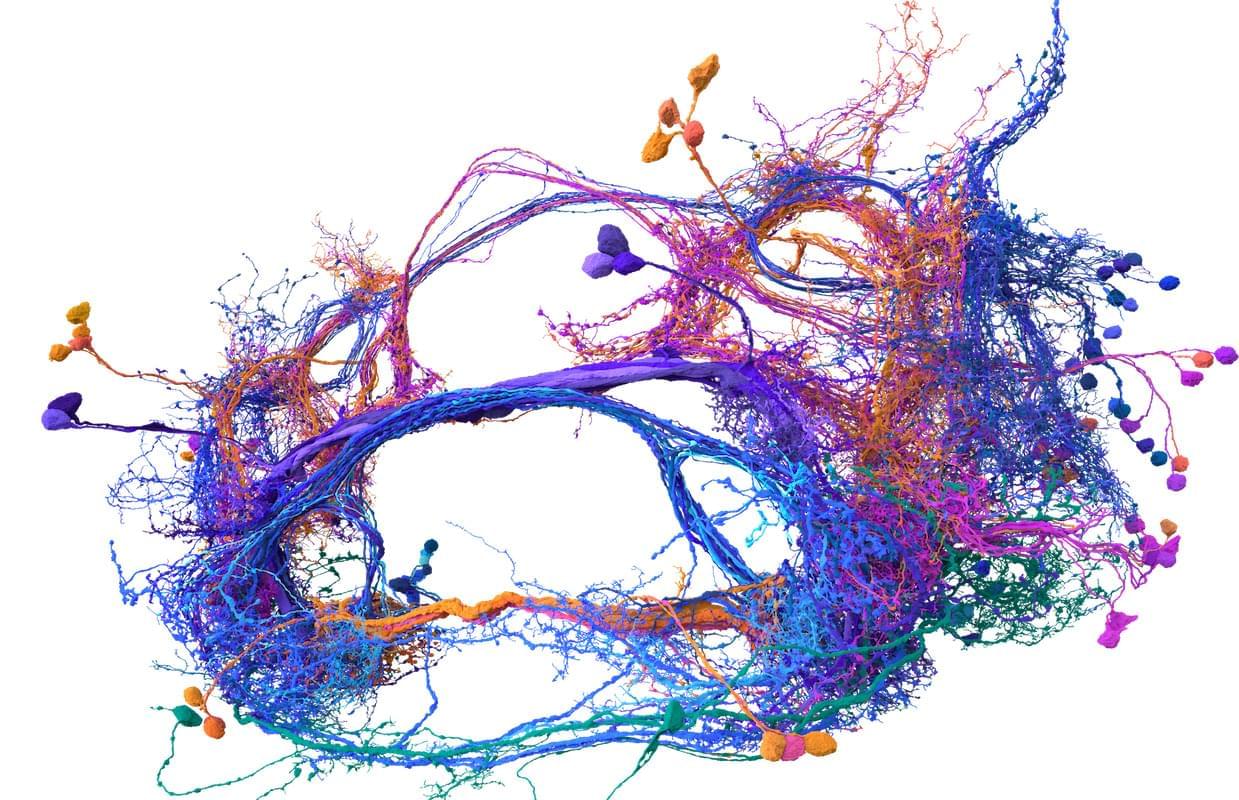
On a Sunday evening earlier this month, a Stanford professor held a salon at her home near the university’s campus. The main topic for the event was “synthesizing consciousness through neuroscience,” and the home filled with dozens of people, including artificial intelligence researchers, doctors, neuroscientists, philosophers and a former monk, eager to discuss the current collision between new AI and biological tools and how we might identify the arrival of a digital consciousness.
The opening speaker for the salon was Sebastian Seung, and this made a lot of sense. Seung, a neuroscience and computer science professor at Princeton University, has spent much of the last year enjoying the afterglow of his (and others’) breakthrough research describing the inner workings of the fly brain. Seung, you see, helped create the first complete wiring diagram of a fly brain and its 140,000 neurons and 55 million synapses. (Nature put out a special issue last October to document the achievement and its implications.) This diagram, known as a connectome, took more than a decade to finish and stands as the most detailed look at the most complex whole brain ever produced.
Meet Memazing.
Translated and dubbed using AI#southkorea #newstoday #samsung☞ Subscribe to MBN YouTube ☞ https://goo.gl/6ZsJGT📢 MBN YouTube Community

The humble pocket calculator may not be able to keep up with the mathematical capabilities of new technology, but it will never hallucinate.
The device’s enduring reliability equates to millions of sales each year for Japan’s Casio, which is even eyeing expansion in certain regions.
Despite lightning-speed advances in artificial intelligence, chatbots still sometimes stumble on basic addition.

Through a novel combination of machine learning and atomic force microscopy, researchers in China have unveiled the molecular surface structure of “premelted” ice, resolving a long-standing mystery surrounding the liquid-like layer which forms on icy surfaces.
Detailed in a study in Physical Review X, the approach could also be applied more widely to reveal surface features that are too challenging for existing microscopy techniques to resolve.

Money is supposed to be the reward for effort. Elon Musk thinks it eventually becomes unnecessary paperwork.
While talking with Indian entrepreneur and investor Nikhil Kamath on the “People by WTF” podcast last month, the Tesla and SpaceX CEO and richest man in the world returned to a theme he’s raised before. It’s one he treats less like a theory and more like an inevitability. As artificial intelligence and robotics accelerate, Musk believes society moves past jobs, past income debates, and straight into something stranger.
Prediction Market powered by.
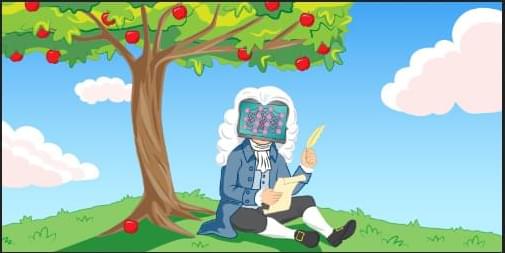
A new artificial neural-network architecture opens a window into the workings of a tool previously regarded as a black box.
Thanks to the extremely large datasets and computing power that have become available in recent years, a new paradigm in scientific discovery has emerged. This new approach is purely data driven, using large amounts of data to train machine-learning models―typically neural networks―to predict the behavior of the natural world [1]. The most prominent achievement of this new methodology has arguably been the AlphaFold model for predicting protein folding (see Research News: Chemistry Nobel Awarded for an AI System That Predicts Protein Structures) [2]. But despite such successes, these data-driven approaches suffer a major drawback in that they are generally “black boxes” that offer no human-accessible understanding of how they make their predictions. This shortcoming also extends to the models’ inputs: It is often desirable to build known domain knowledge into these models, but the data-driven approach excludes that option.
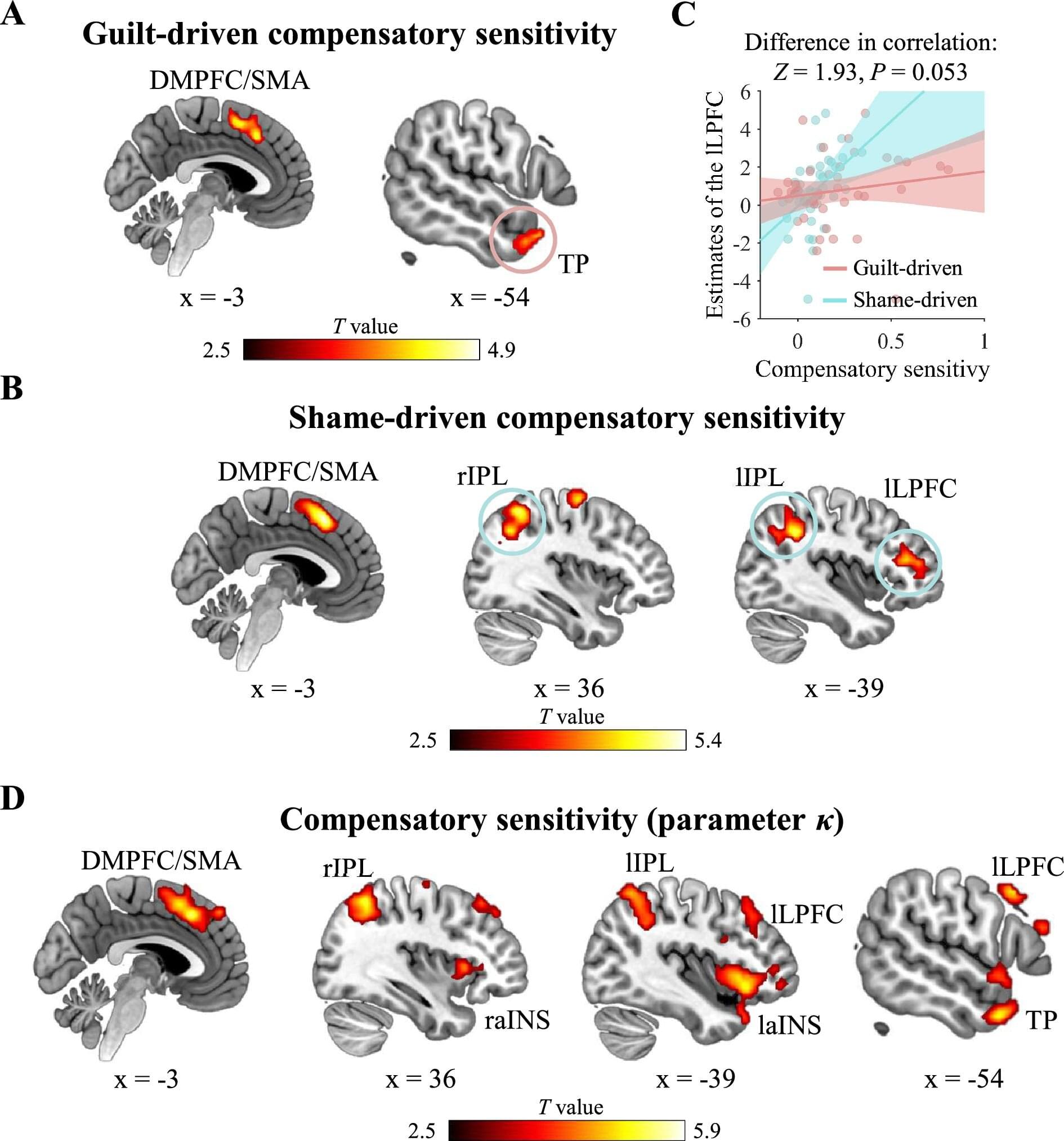
Feelings of guilt and shame can lead us to behave in a variety of different ways, including trying to make amends or save face, cooperating more with others or avoiding people altogether. Now, researchers have shed light on how the two emotions emerge from cognitive processes and in turn guide how we respond to them.
Their study is published in eLife. The editors say it provides compelling behavioral, computational and neural evidence to explain the cognitive link between emotions and compensatory actions. They add that the findings have broad theoretical and practical implications across a range of disciplines concerned with human behavior, including psychology, neuroscience, public policy and psychiatry.