A method that relies on hitting materials with neutrons can measure how much quantum entanglement hides within them, which could enable new kinds of quantum technology

A team from The University of Texas at Austin reviews recent advances in dilute noble metal films for infrared optics and plasmonics: https://bit.ly/4s9XHKR
To address a growing need for a sub-wavelength and nanophotonic optical infrastructure to support quantum applications, dilute noble metals provide a high-optical-quality approach for nanophotonics at long wavelengths.
With further research, their potential applications can even include mid-IR sensing, optoelectronics, and quantum photonics at long wavelengths.
The infrared optical response of noble metals is traditionally considered perfect electrical conductor (PEC)-like due to the noble metals’ exceptionally large electron concentrations, and thus large (and negative) real permittivity. While PEC-like behavior is ideal for a broad range of applications, for instance mirrors, gratings, and wavelength-(and macro-) scale resonators and antennas, the utility of noble metals for nanoscale (sub-diffraction-limit) physics at long wavelengths is limited. However, in ultra-low volume (dilute) metal films, such as those with nanometer-scale thicknesses or lithographic dilution (subwavelength perforation), the thin films’ sheet conductivity is massively reduced, enabling light to penetrate and interact with the films much more efficiently. This avails the infrared of a host of opportunities for noble-metal-based plasmonics, with the potential for nanoscale (deep subwavelength) confinement and strong light-matter interaction, otherwise prohibited with noble metals in this wavelength range. In this perspective, we review the recent advances in dilute metal films for near-and mid-infrared photonics and plasmonics, and discuss the advantageous properties of these optical thin films for potential applications in sensors, detectors, sources, and nonlinear and quantum optics.
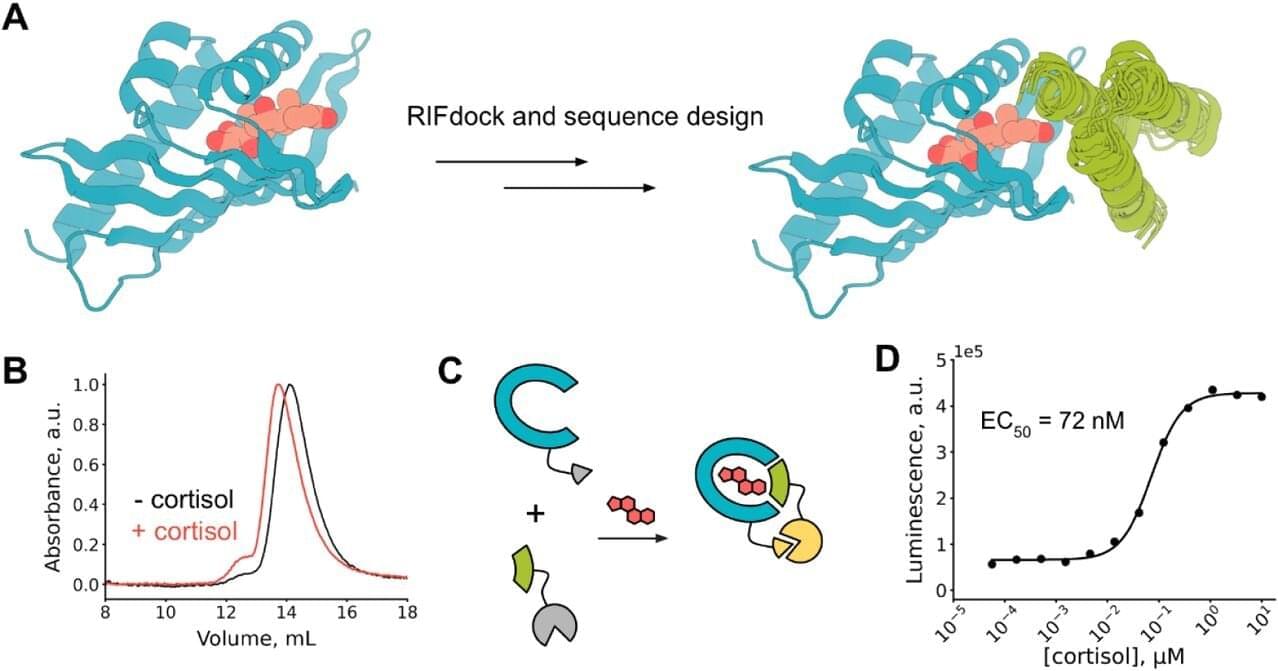
Professor Gyu Rie Lee of the Department of Biological Sciences successfully designed artificial proteins that selectively recognize specific compounds using AI through joint research with Professor David Baker. The research, published in the journal Nature Communications, is characterized by using AI to design proteins that recognize specific compounds from scratch (de novo) and implementing them as functional biosensors.
While the conventional approach mainly involved searching for natural proteins or modifying some of their functions, this research is highly significant in that it “custom-built” proteins with desired functions through AI-based design and even completed experimental verification.
In particular, the research team successfully designed a protein that selectively recognizes the stress hormone cortisol and implemented an AI-designed biosensor based on it. This is evaluated as a case that extends beyond protein design to actual measurable sensor technology, solving the long-standing challenge of small-molecule recognition in the field of protein design.
Peripheral nerve injuries, often caused by traumatic events such as car accidents, falls or battlefield injuries, can leave patients with long-term weakness, numbness or loss of function. Despite surgery and advances in understanding and treating nerve injuries, many patients don’t get all their movement or feeling back.
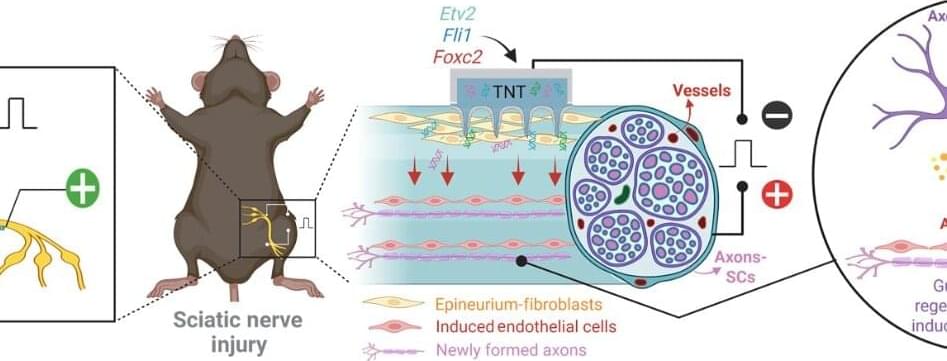
Researchers at The Ohio State University College of Medicine and College of Engineering developed a new way to improve healing after severe nerve injuries by helping the body grow new blood vessels where the nerve is repairing itself. The new approach combines nerve graft surgery with tissue nanotransfection (TNT), a novel non-viral gene therapy developed at The Ohio State University.
Scientists used TNT to deliver three specific genes (Etv2, Fli1 and Foxc2) that tell cells to help form new blood vessels. These genes were applied via a very quick electrical pulse to nerve grafts used during surgery in mice with severe nerve injuries.

However, research is increasingly showing that these so-called synonymous codons are not truly equal. Some codons make mRNA molecules more stable and easier for cells to translate into proteins, making them more efficient. Others, considered non-optimal, lead to weaker translation and are more likely to be broken down. Until now, scientists have not fully understood how human cells recognize and respond to these less efficient codons.
Scientists Search for the Cell’s “Quality Control” System
To investigate this question, a research team from Kyoto University and RIKEN, led by Osamu Takeuchi and Takuhiro Ito, carried out a series of experiments aimed at uncovering how cells handle codon efficiency.



The Cost: You don’t need a supercomputer to stay safe. A standard off-chain GPU and a few hundred dollars can “harden” your transaction against a multi-billion dollar quantum machine.
A way to enable Quantum Safe Bitcoin transactions that is available today. — avihu28/Quantum-Safe-Bitcoin-Transactions.