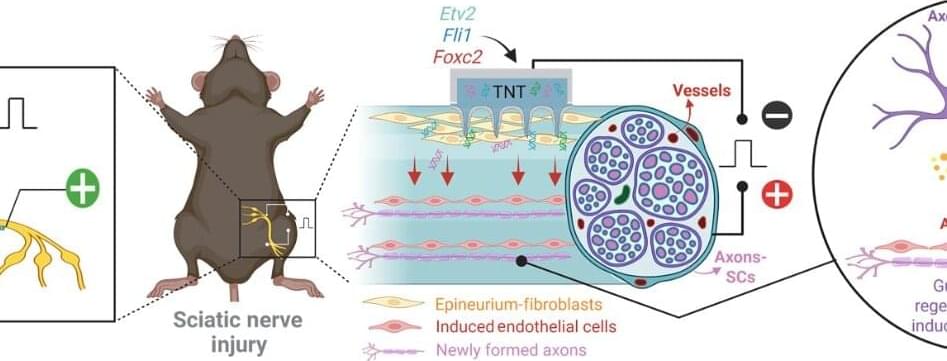
Peripheral nerve injuries, often caused by traumatic events such as car accidents, falls or battlefield injuries, can leave patients with long-term weakness, numbness or loss of function. Despite surgery and advances in understanding and treating nerve injuries, many patients don’t get all their movement or feeling back.
Researchers at The Ohio State University College of Medicine and College of Engineering developed a new way to improve healing after severe nerve injuries by helping the body grow new blood vessels where the nerve is repairing itself. The new approach combines nerve graft surgery with tissue nanotransfection (TNT), a novel non-viral gene therapy developed at The Ohio State University.
Scientists used TNT to deliver three specific genes (Etv2, Fli1 and Foxc2) that tell cells to help form new blood vessels. These genes were applied via a very quick electrical pulse to nerve grafts used during surgery in mice with severe nerve injuries.