Toggle light / dark theme

Get the latest international news and world events from around the world.

Log in for authorized contributors

Masters of Imitation: How Hackers and Art Forgers Perfect the Art of Deception

Just as de Hory reused old canvases and pigments to make his paintings appear more authentic, attackers employ similar methods in the digital realm, leveraging trusted tools and credentials to make their malicious activity blend in. And while mimicry-based techniques have long been a staple of the attacker’s playbook, over the past couple of years, they have gotten more sophisticated. Living-off-the-Land (LotL) attacks and AI-augmented attack tooling have raised the bar for fakery. CrowdStrike’s 2026 Global Threat Report states that 81% of attacks are now malware-free, relying instead on legitimate tools and techniques, which is the hallmark of LotL tactics. Spotting these fakes quickly isn’t just an option: it’s one of the best chances to disrupt an attack before it causes real harm.

Autonomous or semi-autonomous, these generate fake identities, code, and mimic behaviors at scale.

De Hory had a complex support network to sell his paintings, involving art dealers and other representatives across many countries and cities. When some potential buyers became suspicious, he started selling his works under a variety of pseudonyms. This is similar to what is now happening with the use of inexpensive AI agents. These aren’t just used to forge believable identities to conduct fraud, but are now used to produce exploit code to exfiltrate secrets and scripts to infect endpoints, forming the basis of a larger-scale attack. Sophisticated, self-learning agents observe network behavior and continuously tune their own traffic, mirroring their patterns to fool anomaly detections. They shift C2 traffic into bursts that coincide with legitimate spikes and manipulate their signals just enough to avoid standing out. And legitimate agents are being used as orchestrators of other exploit tools to automate and scale up attacks.

Scientists Just Broke the Solar Power Limit Everyone Thought Was Absolute

A new “energy-multiplying” solar breakthrough could push efficiency beyond 100% and transform how we capture sunlight.

Solar energy is widely seen as a key tool in reducing reliance on fossil fuels and slowing climate change. The Sun delivers a vast amount of energy to Earth every second, but today’s solar cells can only capture a small portion of it. This limitation comes from a so-called “physical ceiling” that has long been considered unavoidable.

Breakthrough spin-flip technology boosts solar efficiency.

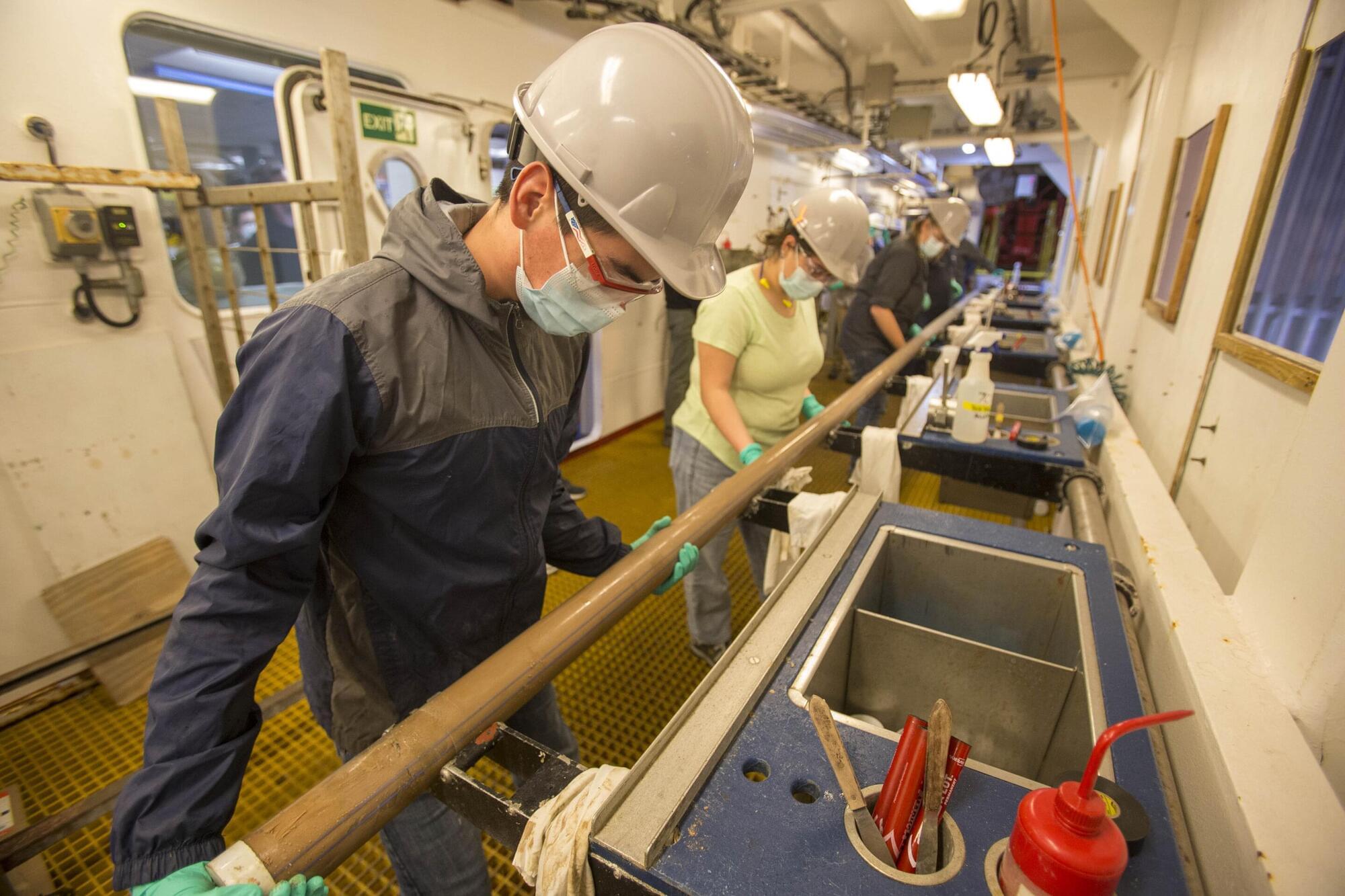
Earth’s 40,000-year tilt cycle links Antarctic ice growth to subtropical productivity

Cycles in the growth and decay of Antarctica’s ice sheets once shaped marine biological productivity thousands of miles away in the subtropical ocean, according to new research led by scientists at the University of Wisconsin-Madison. The study, published in the Proceedings of the National Academy of Sciences, found that the obliquity cycle—a 40,000-year astronomical cycle tied to changes in Earth’s axial tilt—influenced ocean productivity in subtropical latitudes about 34 million years ago, when the Antarctic ice sheet was first expanding.

The finding surprised researchers because the 40,000-year cycle, while an important factor in the conditions at Earth’s poles, typically has a more limited influence on climate and ocean conditions near the equator.

“We generally expect other astronomical cycles to have a greater influence,” says Stephen Meyers, a professor of geoscience at UW-Madison and one of the study’s lead authors.

Extremely rare second-generation star discovered inside ancient relic dwarf galaxy

Discovered in the Pictor II dwarf galaxy, star PicII-503 has an extreme deficiency in iron—less than 1/40,000th of the sun. This signature makes it the clearest example of a star within a primordial system that preserves the chemical enrichment of the universe’s first stars. PicII-503 also has an extreme overabundance of carbon, providing the missing link to connect carbon-enhanced stars observed in the Milky Way halo to an origin in ancient dwarf galaxies.

Astronomers have discovered one of the most chemically primitive stars ever identified—an ancient stellar relic that preserves the chemical imprint of the very first stars in the universe. This star, named PicII-503, resides in the tiny, ultra-faint dwarf galaxy Pictor II. The discovery was enabled by the U.S. Department of Energy-fabricated Dark Energy Camera (DECam), mounted on the U.S. National Science Foundation Víctor M. Blanco 4-meter Telescope, at NSF Cerro Tololo Inter-American Observatory (CTIO) in Chile, a Program of NSF NOIRLab.

Pictor II is located in the constellation Pictor. It contains several thousand stars and is more than ten billion years old. PicII-503 lies on the outskirts of the galaxy, and it contains less iron than any other star ever measured outside of the Milky Way, while also having an extreme overabundance of carbon. These signatures unmistakably match those of carbon-enhanced stars found in the outer reaches of the Milky Way, whose origins have, until now, been a mystery.

NASA’s Curiosity Rover Sees Martian ‘Spiderwebs’ Up Close

For about six months, NASA’s Curiosity Mars rover has been exploring a region full of geologic formations called boxwork, low ridges standing roughly 3 to 6 feet (1 to 2 meters) tall with sandy hollows in between. Crisscrossing the surface for miles, the formations suggest ancient groundwater flowed on this part of the Red Planet later than scientists expected. This possibility raises new questions about how long microbial life could have survived on Mars billions of years ago, before rivers and lakes dried up and left a freezing desert world behind.

The boxwork formations look like giant spiderwebs when viewed from space. To explain the shapes, scientists have proposed that groundwater once flowed through large fractures in the bedrock, leaving behind minerals. Those minerals then strengthened the areas that became ridges while other portions without mineral reinforcement were eventually hollowed out by wind.

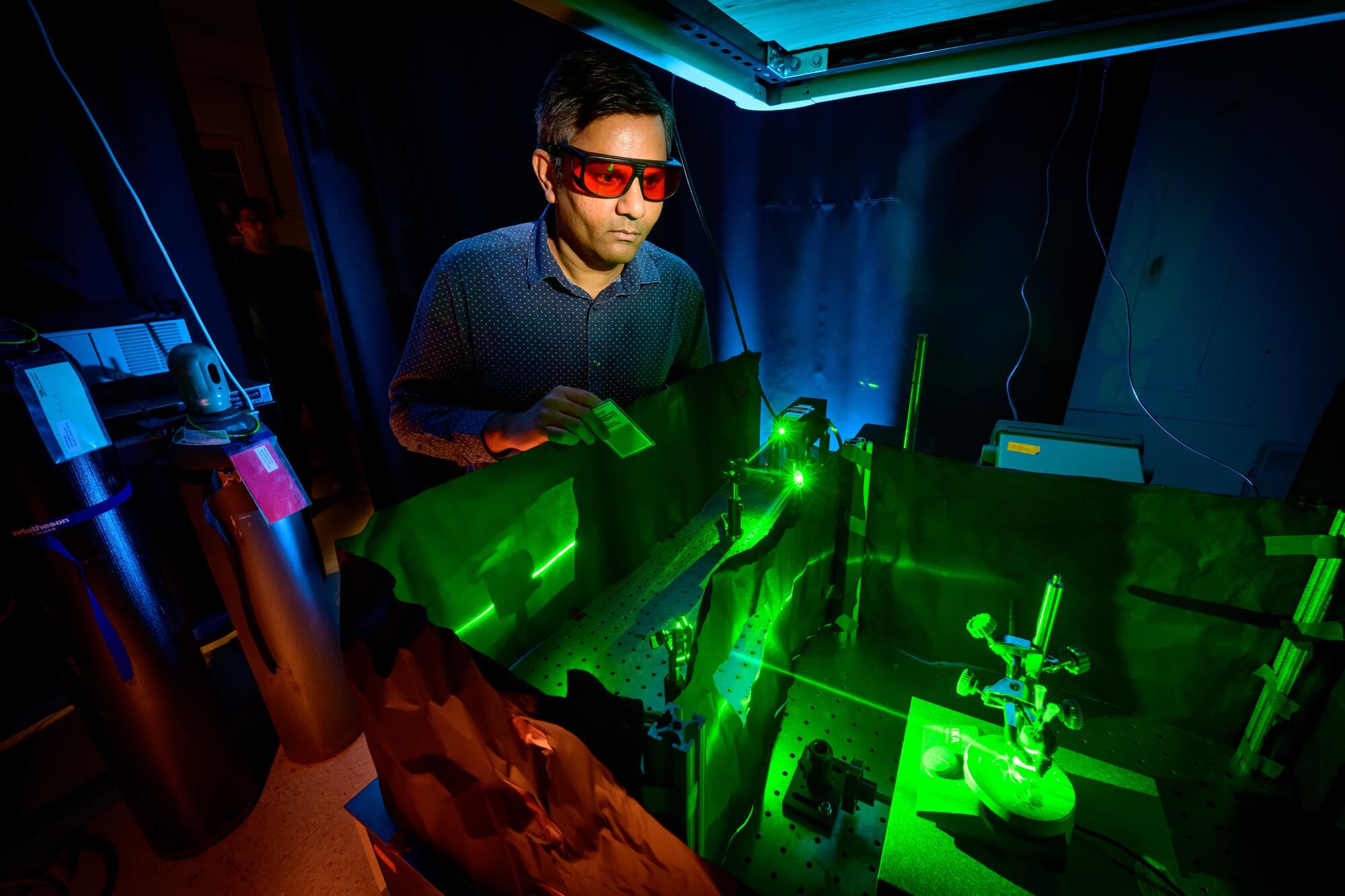
Shrinking the carbon footprint of chemical manufacturing with lasers and solar radiation

Researchers have found a way to use solar energy to power a key chemical reaction that drives many manufacturing industries. This new method can significantly reduce the energy required to run these operations, eliminate harsh oxidizing byproducts and minimize carbon emissions.

Olefin epoxidation is not a process many are familiar with, but the epoxide chemicals it produces are the backbone of the textile, plastic, chemical and pharmaceutical industries. However, the current industry-standard process uses harsh peroxides to facilitate oxidation reactions, which are difficult to dispose of safely and emit carbon dioxide.

Water can be used as an oxidant instead of peroxides, but H2O bonds are difficult to break, requiring high-temperature conditions, making it highly energy-intensive and further contributing to CO2 emissions.

Engineers improve infrared devices using century-old materials

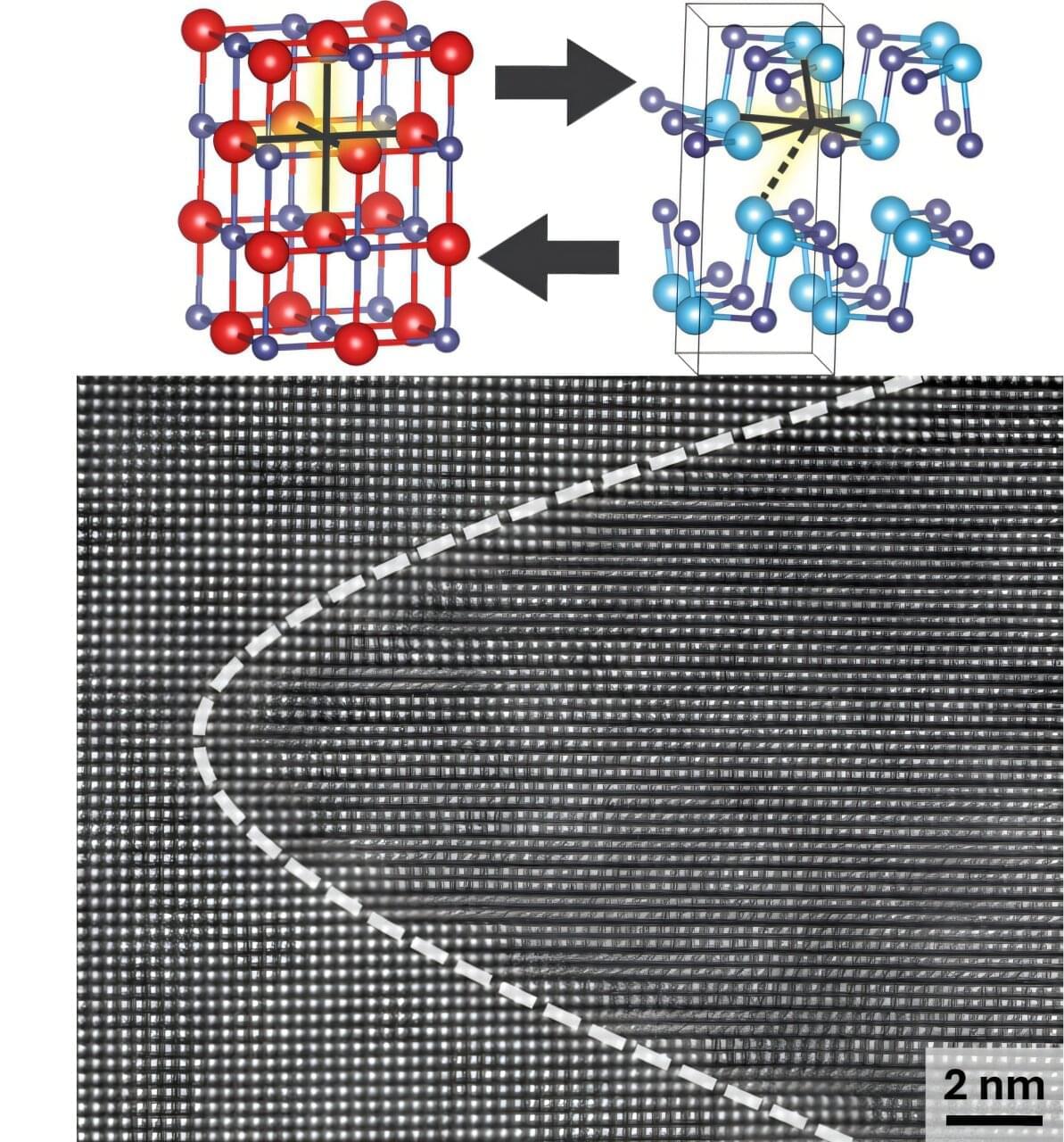
After decades of intense research, surprises in the realm of semiconductors—materials used in microchips to control electrical currents—are few and far between. But with a pair of published papers, materials engineers at Stanford University debut a promising approach to using a well-studied semiconductor to improve infrared light-emitting diodes and sensors. They say the approach could lead to smaller, sleeker, and less expensive infrared technologies for environmental, medical, and industrial uses.

“We taught an old dog new tricks,” said senior author Kunal Mukherjee, an assistant professor of materials science and engineering at the Stanford School of Engineering, putting the work’s importance in perspective. “The so-called IV–VI materials we’re working with—lead selenide and lead tin selenide—are more than a hundred years old. They are among the oldest semiconductors historically recorded. We found a way to integrate them with modern technology to produce a new type of infrared diode and to control the infrared light in important ways.”

The new diode emits infrared light in a desirable range of longer wavelengths (4,000–5,000 nanometers) good for sensing gas in the air (think greenhouse gases in the sky) or in medical settings (think carbon dioxide meters).

Rare Type Icn supernova SN 2024abvb is among the most luminous known

An international team of astronomers has carried out photometric and spectroscopic observations of SN 2024abvb—a recently discovered supernova of a rare Type Icn. The new observational campaign yields important information regarding the properties and nature of this supernova. The study was published February 18 on the arXiv pre-print server.

Supernovae (SNe) are powerful and luminous stellar explosions. They are important for the scientific community as they offer essential clues into the evolution of stars and galaxies. In general, SNe are divided into two groups based on their atomic spectra: Type I and Type II. Type I SNe lack hydrogen in their spectra, while those of Type II showcase spectral lines of hydrogen.

Type Icn SNe are an extreme subtype of interacting stripped-envelope supernovae (SESN). They have strong, narrow oxygen and carbon lines but weak or absent hydrogen and helium lines, presenting additional complications to the stripping mechanism. They have narrow emission features indicative of circumstellar interaction.

APT37 hackers use new malware to breach air-gapped networks

North Korean hackers are deploying newly uncovered tools to move data between internet-connected and air-gapped systems, spread via removable drives, and conduct covert surveillance.

The malicious campaign has been named Ruby Jumper and is attributed to the state-backed group APT37, also known as ScarCruft, Ricochet Chollima, and InkySquid.

Air-gapped computers are disconnected from external networks, especially the public internet. Physical isolation is achieved at the hardware level by removing all connectivity (Wi-Fi, Bluetooth, Ethernet), while logical segregation relies on various software-defined controls, like VLANs and firewalls.

/* */