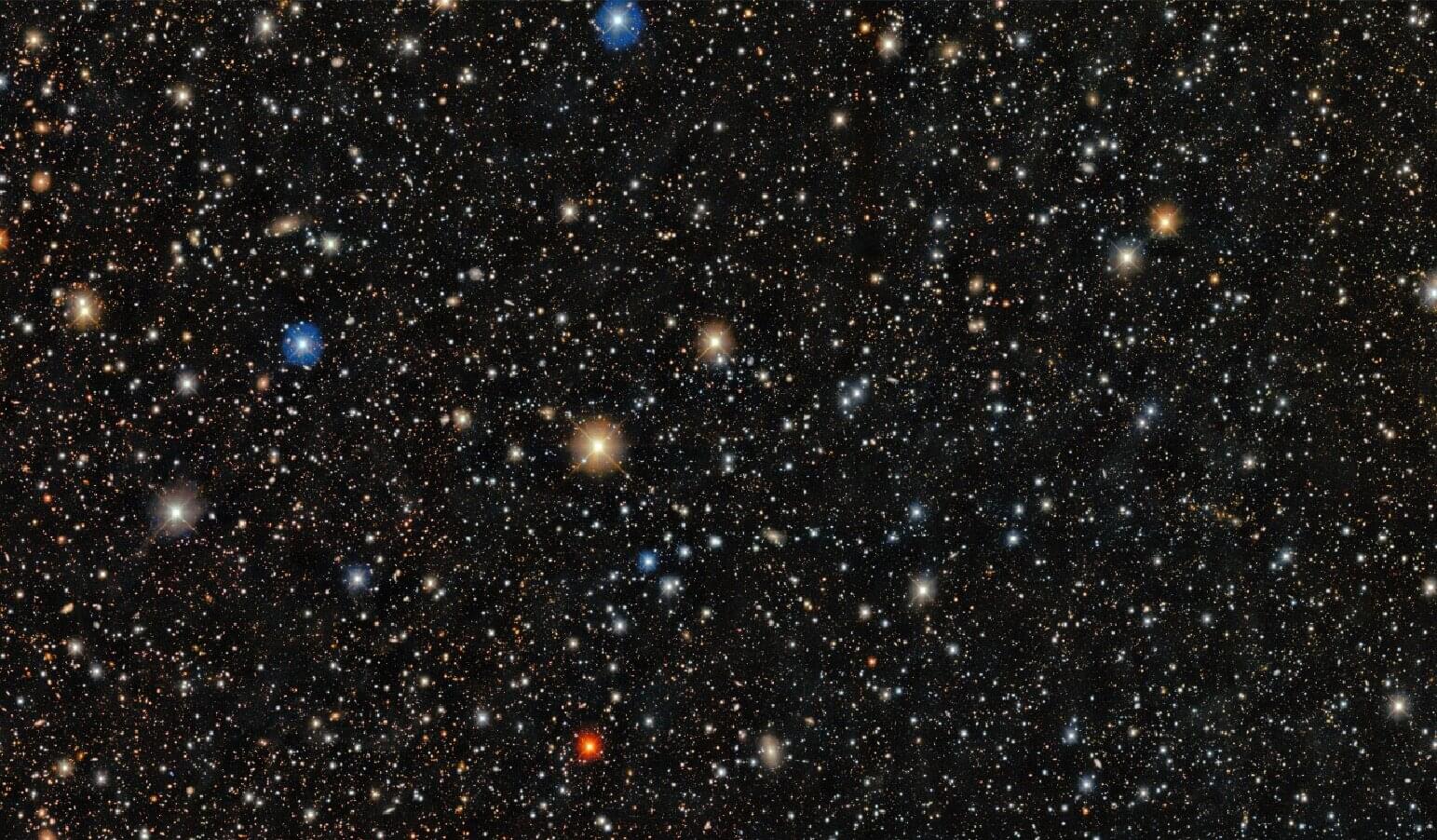
Discovered in the Pictor II dwarf galaxy, star PicII-503 has an extreme deficiency in iron—less than 1/40,000th of the sun. This signature makes it the clearest example of a star within a primordial system that preserves the chemical enrichment of the universe’s first stars. PicII-503 also has an extreme overabundance of carbon, providing the missing link to connect carbon-enhanced stars observed in the Milky Way halo to an origin in ancient dwarf galaxies.
Astronomers have discovered one of the most chemically primitive stars ever identified—an ancient stellar relic that preserves the chemical imprint of the very first stars in the universe. This star, named PicII-503, resides in the tiny, ultra-faint dwarf galaxy Pictor II. The discovery was enabled by the U.S. Department of Energy-fabricated Dark Energy Camera (DECam), mounted on the U.S. National Science Foundation Víctor M. Blanco 4-meter Telescope, at NSF Cerro Tololo Inter-American Observatory (CTIO) in Chile, a Program of NSF NOIRLab.
Pictor II is located in the constellation Pictor. It contains several thousand stars and is more than ten billion years old. PicII-503 lies on the outskirts of the galaxy, and it contains less iron than any other star ever measured outside of the Milky Way, while also having an extreme overabundance of carbon. These signatures unmistakably match those of carbon-enhanced stars found in the outer reaches of the Milky Way, whose origins have, until now, been a mystery.