Toggle light / dark theme

Get the latest international news and world events from around the world.

Log in for authorized contributors

New 3D method maps Paleolithic engravings at submillimeter resolution

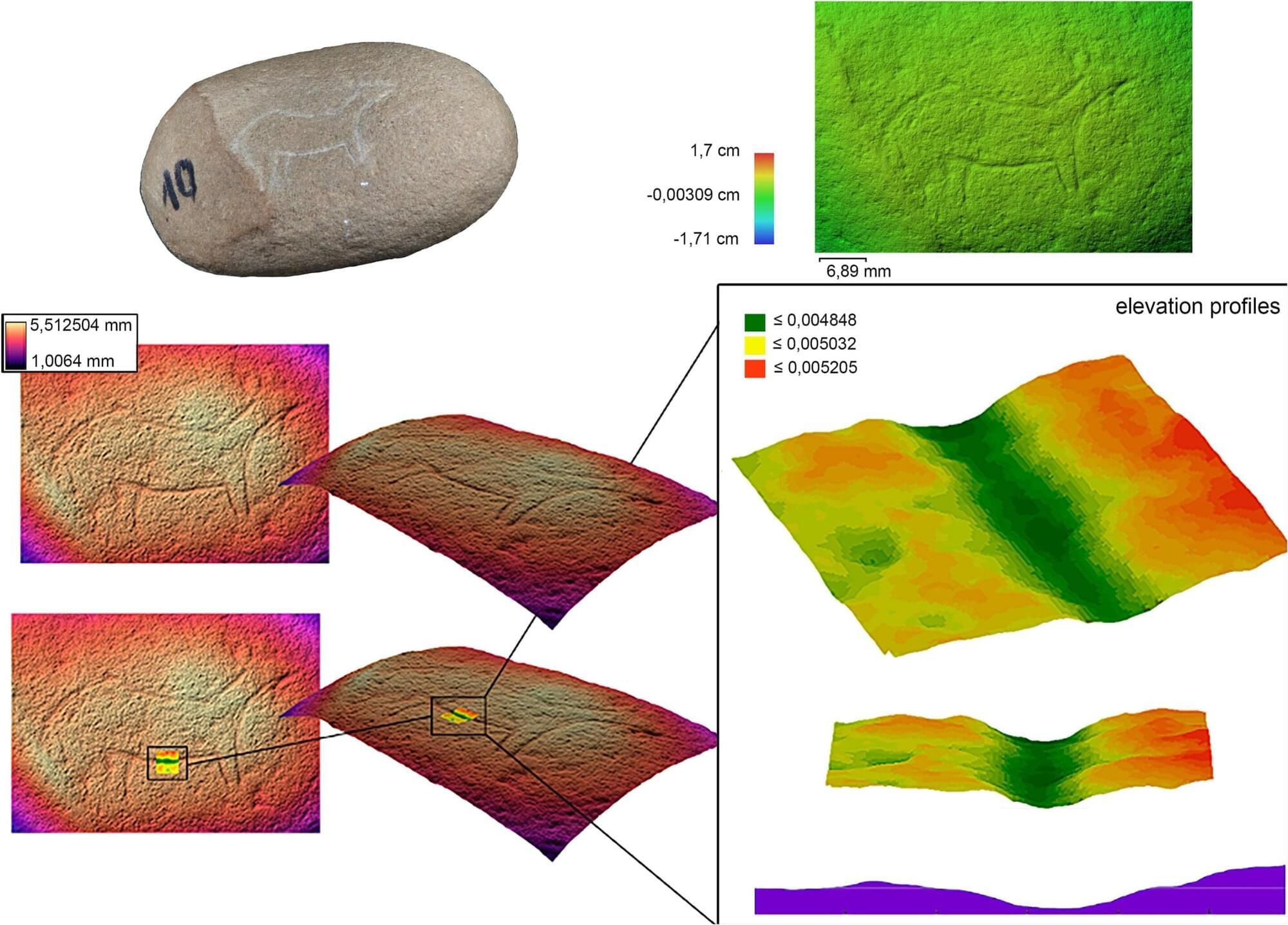
A team of archaeologists from the Universitat Jaume I, the University of Barcelona, and the Catalan Institution for Research and Advanced Studies (ICREA) has developed a new methodology that allows for a much more detailed, precise, and objective analysis of Late Paleolithic portable art pieces. Thanks to this study, the research team was able to review several previously published pieces from Matutano Cave (Vilafamés), a reference site in the Iberian Mediterranean, with greater accuracy and demonstrate that some of the marks previously interpreted as artistic motifs are not anthropic engravings but natural surface reliefs.

Late Paleolithic art is usually characterized by very fine engravings, barely visible to the naked eye, often affected by taphonomic alterations, surface irregularities, and unclear morphologies, which complicates their identification and interpretation. This new methodology allows for a more precise analysis of the remains using photogrammetry and microtopographic analysis techniques.

The results are published in the Journal of Archaeological Science: Reports.
Stabilized iron catalyst could replace platinum in hydrogen fuel cells

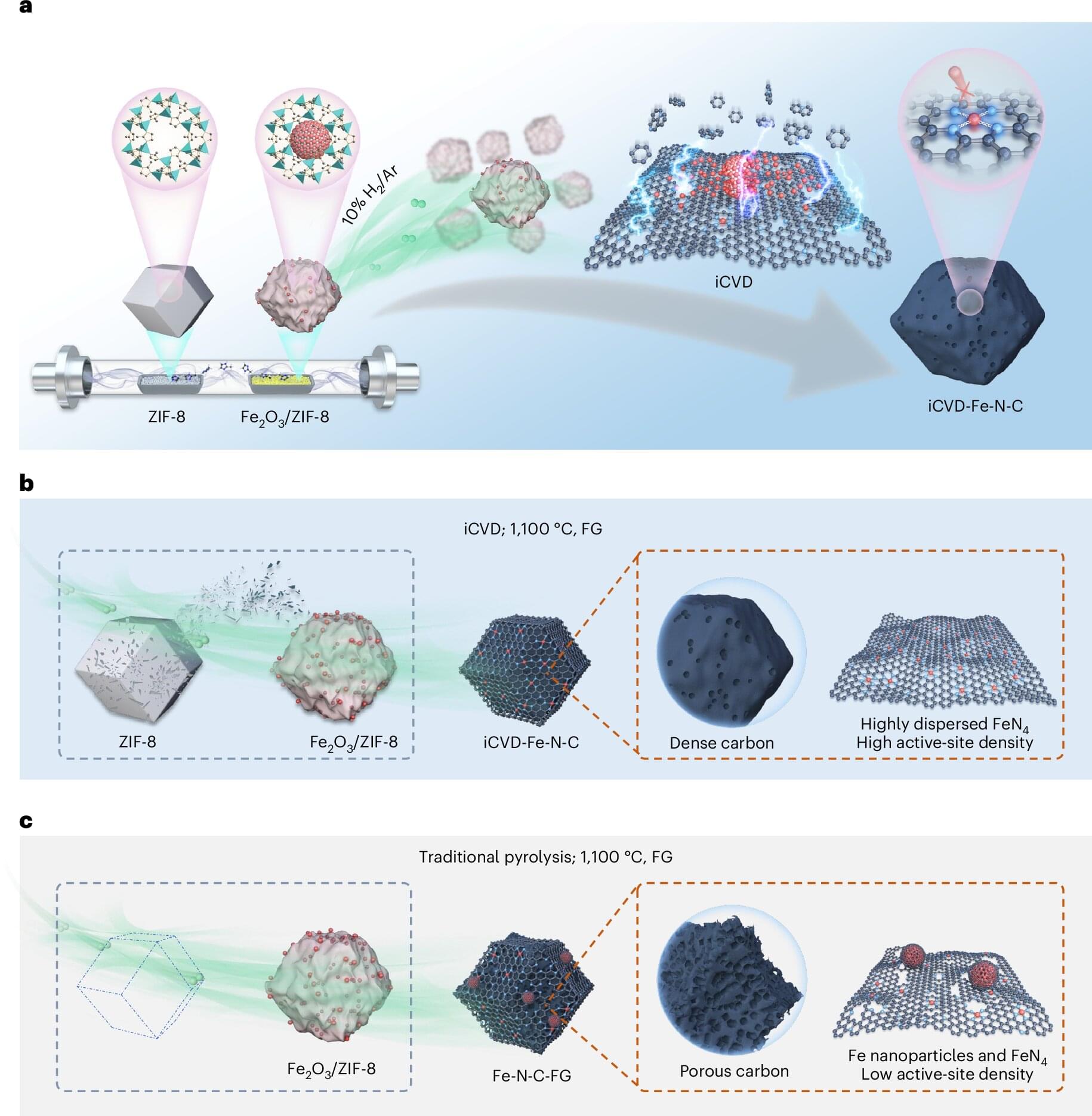
Japan and California have embraced hydrogen fuel-cell technologies, a form of renewable energy that can be used in vehicles and for supplying clean energy to manufacturing sectors. But the technology remains expensive due to its reliance on precious metals such as platinum. Engineers at Washington University in St. Louis are working on this challenge, finding ways to stabilize ubiquitous iron components for use in fuel cells to replace the expensive platinum metals, which would make hydrogen fuel-cell vehicles more affordable.

Cost challenges for fuel-cell vehicles

“The hydrogen fuel cell has been successfully commercialized in Japan and California in the U.S.,” said Gang Wu, a professor of energy, environmental and chemical engineering at the McKelvey School of Engineering. “But these vehicles struggle to compete with the battery vehicle and combustion engine vehicle, with cost being the main issue.”

Study reveals microscopic origins of surface noise limiting diamond quantum sensors

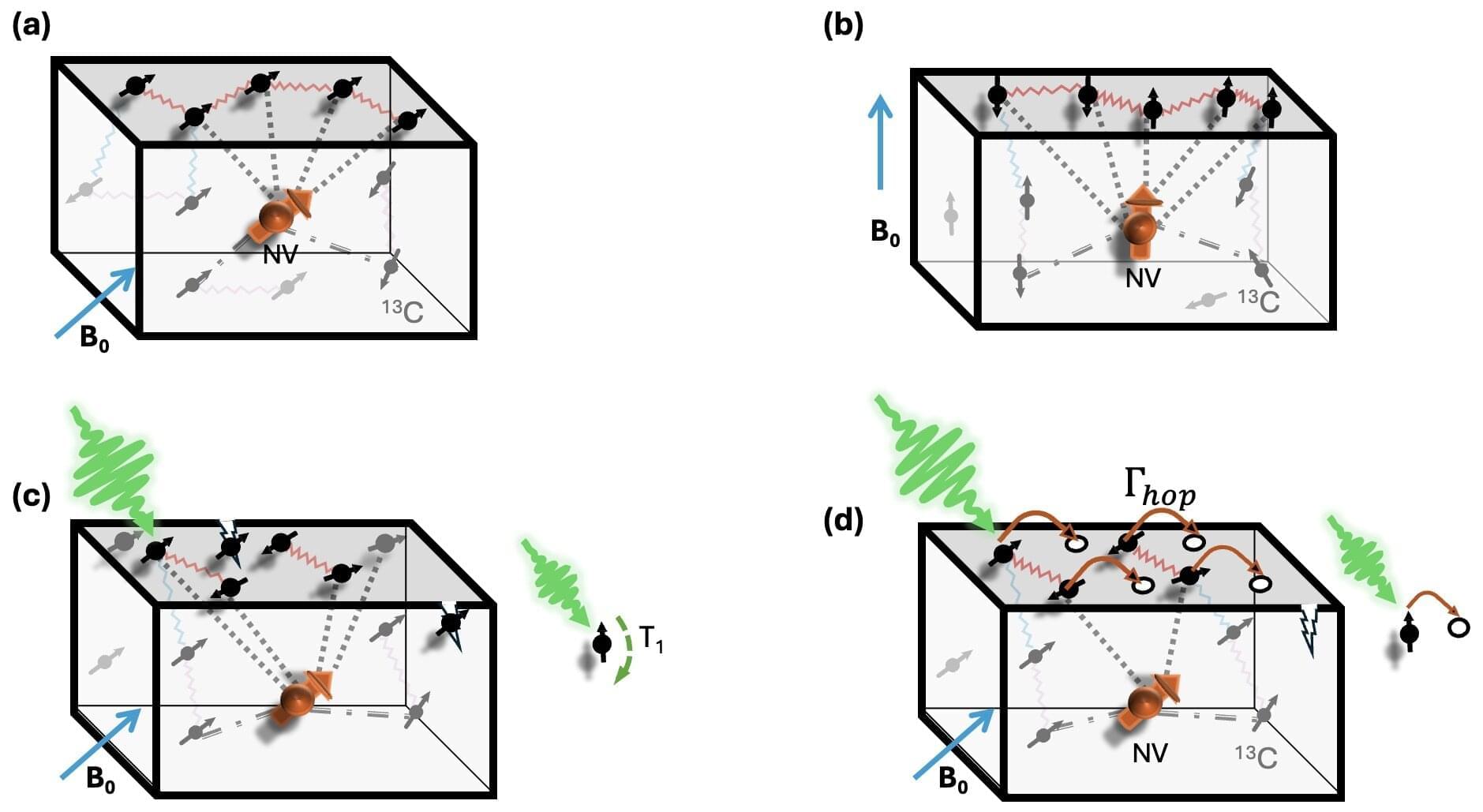
A new theoretical study led by researchers at the University of Chicago and Argonne National Laboratory has identified the microscopic mechanisms by which diamond surfaces affect the quantum coherence of nitrogen-vacancy (NV) centers—defects in diamond that underpin some of today’s most sensitive quantum sensors. The study has appeared in Physical Review Materials and was selected to be an Editors’ Suggestion paper.

“One long-standing challenge has been understanding why shallow NV centers lose coherence so quickly,” said Giulia Galli, professor at the University of Chicago Pritzker School of Molecular Engineering (UChicago PME) and senior scientist at Argonne National Laboratory. “By combining first-principles surface models with quantum dynamics simulations, we understood that the culprit of decoherence is not just which spins live on the diamond surface, but how they move: surface noise is dynamical.”

The findings of the study provide clear, physics-based guidelines for engineering diamond surfaces that help preserve quantum coherence, a key requirement for quantum sensing and emerging quantum information technologies.

Measuring time at the quantum level depends on material symmetry

EPFL physicists have found a way to measure the time involved in quantum events and found it depends on the symmetry of the material. “The concept of time has troubled philosophers and physicists for thousands of years, and the advent of quantum mechanics has not simplified the problem,” says Professor Hugo Dil, a physicist at EPFL. “The central problem is the general role of time in quantum mechanics, and especially the timescale associated with a quantum transition.”

Quantum events, like tunneling, or an electron changing its state by absorbing a photon, happen at mind-bending speeds. Some take only a few tenths of attoseconds (10-18 seconds), which is so short that light would not even cross the width of a small virus. But measuring time intervals this small is notoriously difficult, also because any external timing tool can distort the very thing we want to observe.

“Although the 2023 Nobel prize in physics shows we can access such short times, the use of such an external time scale risks inducing artifacts,” says Dil. “This challenge can be resolved by using quantum interference methods, based on the link between accumulated phase and time.”

When silicon fills the role of carbon: Debut of all-silicon cyclopentadienides

Carbon’s unique chemical properties allow it to be an essential building block for life on Earth and many other molecules we rely on for day-to-day life—but what about carbon’s neighbor? Silicon is located one row below carbon in the periodic table of elements, and similarly has many possible uses, and is a key component of semiconductors, silicon carbide fibers, and silicones. However, silicon has some key weaknesses compared to carbon.

For example, carbon forms very stable π-electron compounds (compounds linked by pi bonds, or π-bonds, which affect a molecule’s reactivity) called benzene and fullerene. In comparison, silicon cannot readily form these compounds, as the π-bonds forming π-electron compounds are not strong in this element. Synthesizing such silicon-based π-electron compounds consequently becomes increasingly difficult as the number of silicon atoms increases. However, researchers at Tohoku University found a way to overcome these limitations.

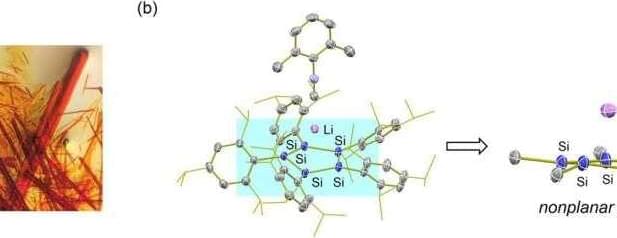
A research group led by Professor Takeaki Iwamoto, Graduate Student Tomoki Ishikawa, and Associate Professor Shintaro Ishida at the Graduate School of Science, Tohoku University, has successfully synthesized π-electron compounds with a pentagonal silicon framework, “pentasilacyclopentadienide,” and elucidated their molecular structures. The study is published in the journal Science.

Watching a critical green-energy catalyst dissolve, atom by atom

Iridium oxide is one of the most important—and most problematic—materials in the global push toward clean energy. It is currently the most reliable catalyst used in the conversion of energy to chemicals by electrolysis, a process that uses electricity to split water molecules into oxygen and hydrogen.

But iridium is among the rarest non-radioactive elements in Earth’s crust, and not unlike metal rusting over time, iridium oxide catalysts slowly degrade under the harsh acidic and high-voltage conditions required for electrolyzers (the devices used for electrolysis) to operate.

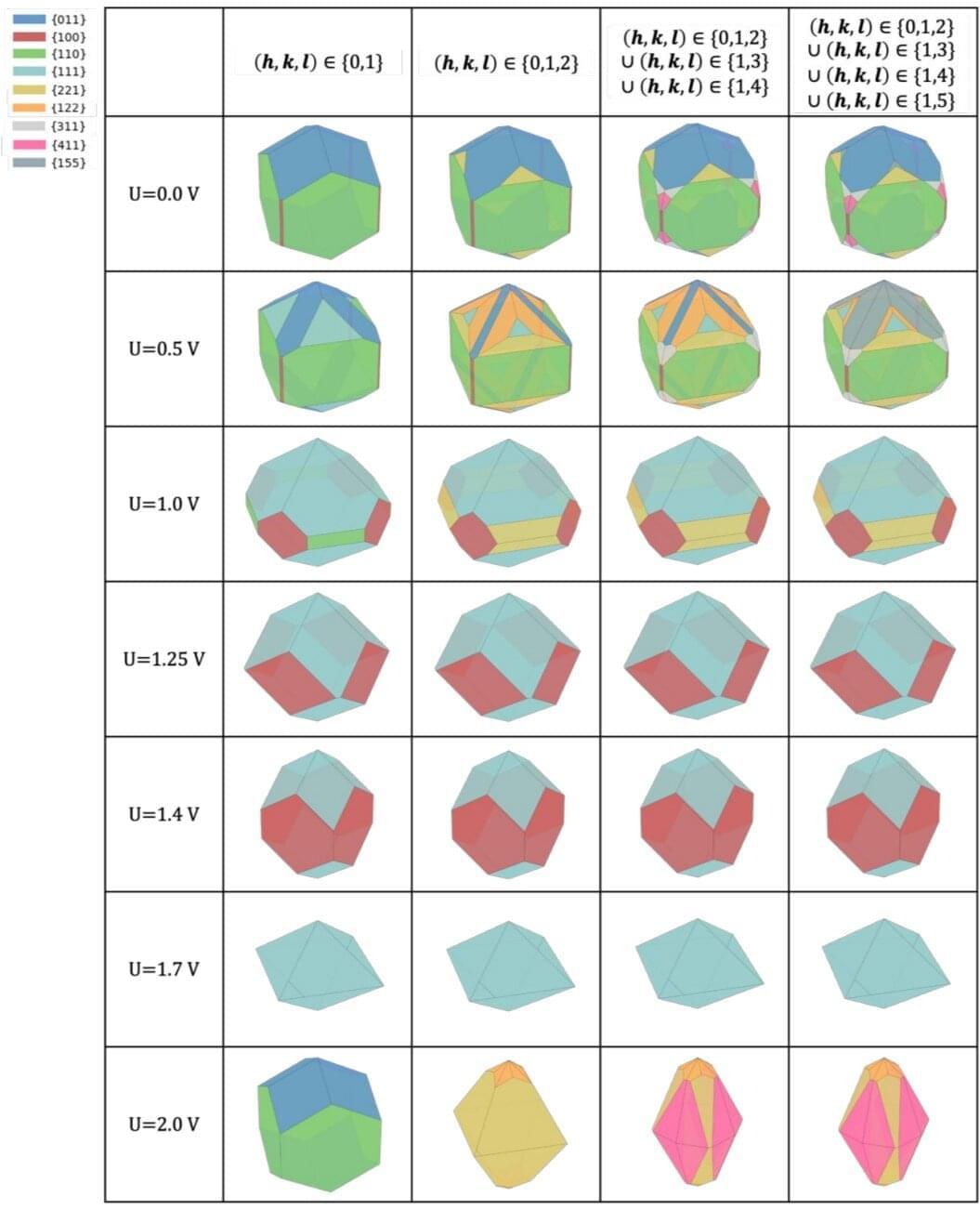
A new study by researchers at Duke University and the University of Pennsylvania offers an unprecedented view of that degradation process, capturing how iridium oxide nanocrystals restructure and dissolve—atom by atom—during electrolysis. The findings provide critical insight into why today’s best catalysts still fail and how future materials might last longer. The study is published in the Journal of the American Chemical Society.

Scientists discover ‘levitating’ time crystals that you can hold in your hand

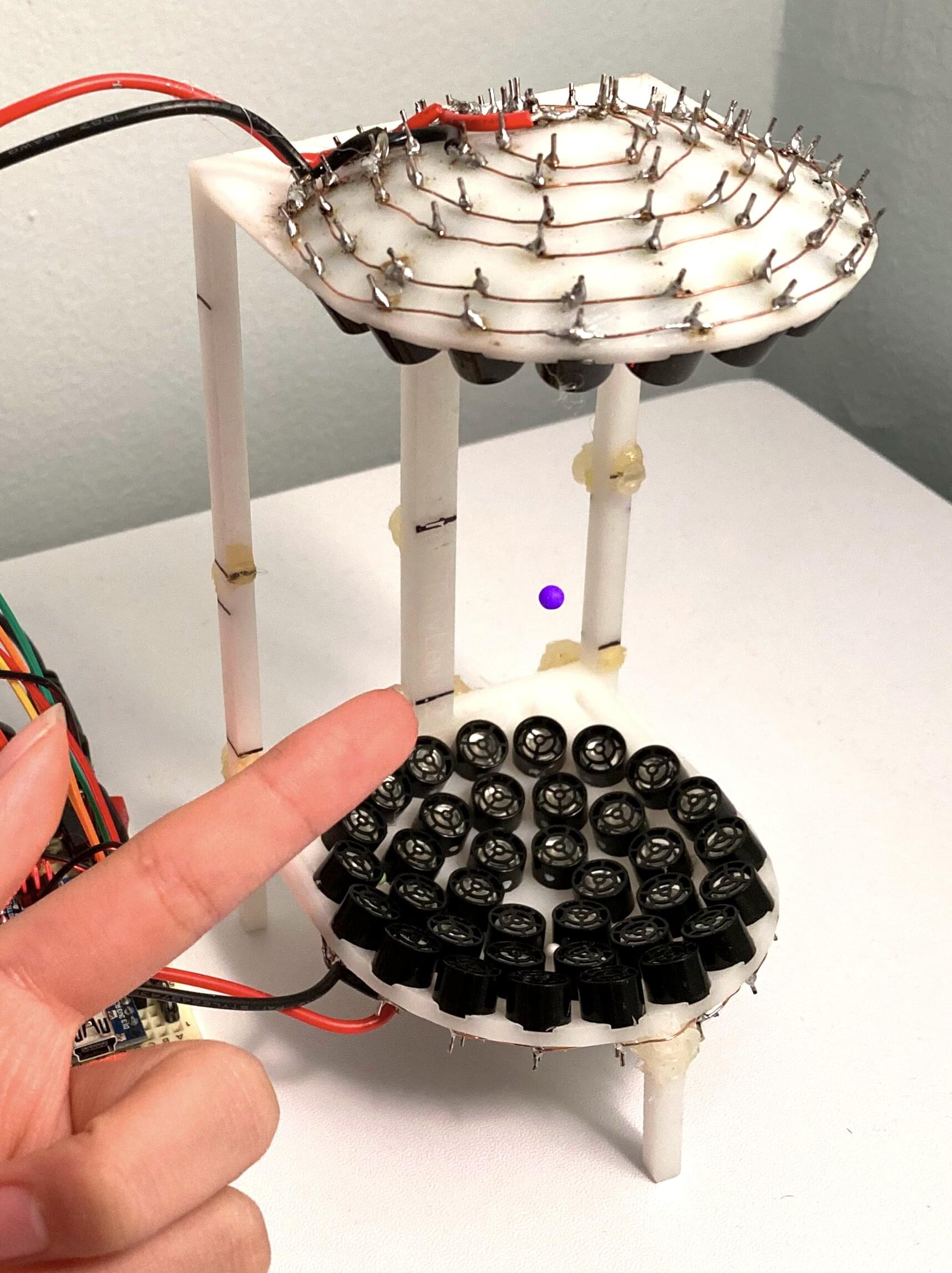
Time crystals, a collection of particles that “tick”—or move back and forth in repeating cycles—were first theorized and then discovered about a decade ago. While scientists have yet to create commercial or industrial applications for this intriguing form of matter, these crystals hold great promise for advancing quantum computing and data storage, among other uses.

Over the years, different types of time crystals have been observed or created, with their varying properties offering a range of potential uses.

Scientists Are Building Detectors to Reveal the Invisible Universe

Most of the universe is made of dark matter and dark energy, yet scientists still don’t know what either one is. New ultra-sensitive detectors are being built to spot incredibly rare particle interactions that could finally reveal their nature. Scientists have made remarkable progress in understa

UCLA Chemists Have Created “Impossible” 3D Bonds That Shouldn’t Exist

UCLA chemists proved that some of chemistry’s oldest rules can be broken—and new molecules emerge when they are.

Organic chemistry is built on well-known principles that describe how atoms connect, how chemical bonds form, and how molecules take shape. These rules are often treated as firm boundaries that define what structures are possible. Researchers at UCLA, however, are showing that some of these limits are more flexible than long assumed.

Challenging a Century Old Rule.

/* */