Toggle light / dark theme

Get the latest international news and world events from around the world.

Log in for authorized contributors

How Life Learned to Think: The Complete History of Intelligence

Your brain is running on twenty watts right now. The power of a dim lightbulb. And yet it contains the entire eight-hundred-million-year history of life’s most improbable experiment — the experiment of intelligence itself. In this episode, we follow that experiment from its very beginning: from the first bacterium that navigated a chemical gradient in the ancient ocean, through the nerve nets of jellyfish, the distributed arms of the octopus, the tool-making crow, the grieving elephant, the dreaming mammalian brain — all the way to the only creature that has ever turned its intelligence on the question of where intelligence came from. This is not a story about the human brain. It is a story about what matter does when evolution pressures it long enough and hard enough. It is the deepest origin story you have.

/ @theevolutionoflife2026 Subscribe to the channel and join us — there is much more of this story still to tell.

The Puzzling Success of Overparameterization: Lottery Tickets or Escape Dimensions?

Lotteries and tickets are often used as a didactical analogy to explain the success of overparameterized neural networks: “larger networks succeed because they more likely contain a well-initialized subnetwork that can learn the task in isolation, much like buying more tickets increases the chances of winning a lottery.”

This explanation is intuitive but misleading: it suggests that subnetworks can be treated in isolation from the rest of the network. Following this reasoning leads to interpreting learning in wide networks as a multi-start optimization process, where gradient descent simply conducts a parallel search over subnetworks. We argue that this view is flawed since, among other reasons, winning tickets can be made to fail by perturbing the rest of the network.

Spontaneous problem-solving in bumble bees

Problem-solving using novel solutions without explicit training is often considered a hallmark of cognitive flexibility. We investigated whether bumble bees (Bombus terrestris) could solve a novel object manipulation task spontaneously. Bees trained to associate a blue ring (“flower”) on the floor with a reward successfully moved a ball underneath a flower relocated to the ceiling to reach the flower. In control experiments in which the flower was out of sight when ball movement began and remained hidden during transport, bees still succeeded in the task. These results suggest that these were goal-directed actions rather than reinforcement-based associations driven by perceptual feedback. Our findings provide evidence that bumble bees can exhibit spontaneous problem-solving, challenging the notion that such advanced cognitive abilities are exclusive to large-brained vertebrates.

CRISPR enzyme precisely detects and shreds DNA in cancer mutations once considered ‘undruggable’

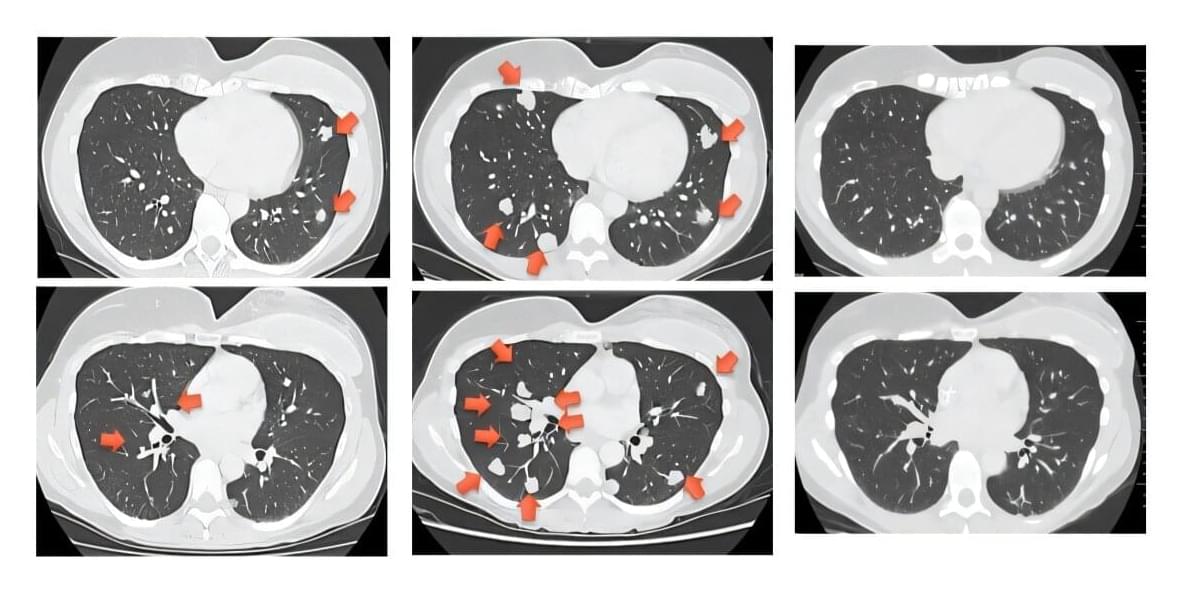
In 2020, Jennifer Doudna won the Nobel Prize in chemistry for her work on the CRISPR-Cas9 gene-editing technology that allows scientists to precisely modify DNA by cutting it at specific locations. Six years later, a new study in Nature by a team led by Doudna has uncovered a powerful new approach to selectively kill cancer cells using a CRISPR enzyme called Cas12a2.

Once the enzyme detects cancer-specific genetic signatures, it begins to shred chromatin—a mixture of DNA and proteins that forms chromosomes—within the targeted cell.

Many cancers are driven by mutations in tumor suppressor proteins such as TP53, which is altered in nearly half of all cases. Yet these mutations have remained difficult to treat because they lack binding pockets for traditional drugs to latch onto. As a result, many cancer-causing mutations have long been considered undruggable.

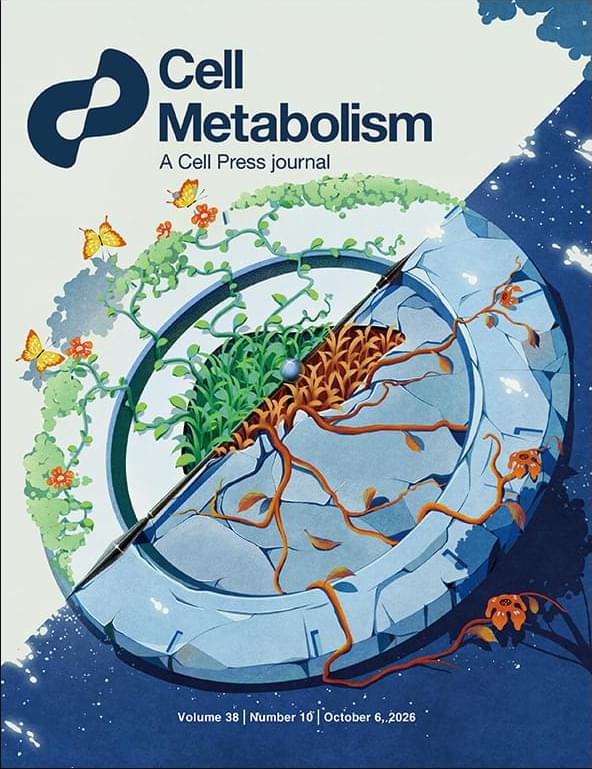
Microbiota-driven gut-brain signaling underlies antidepressant effects of a GLP-1 analog

To determine whether canonical GLP-1R signaling is required for liraglutide to remodel the gut microbiota, we performed 16S rRNA sequencing on fecal samples from CUS-exposed wild-type (WT) and Glp1r−/− mice treated with or without liraglutide. Analyses of alpha-diversity, beta-diversity, and genus-level composition revealed that liraglutide changed the microbial structure in CUS mice, although specific compositional shifts differed between WT and Glp1r−/− mice (Figure S6). However, linear discriminant analysis (LDA) identified the genus Lactobacillus as the most significantly enriched taxon following liraglutide treatment in both WT and Glp1r−/− mice (Figures 2 H and 2I). Consistent with this finding, the abundance of Lactobacillus, which was reduced by CUS, was restored by liraglutide in both WT and Glp1r−/− mice (Figure 2 J). To identify the specific Lactobacillus species affected, we performed metagenomic sequencing on fecal samples from CUS mice treated with liraglutide. The Venn diagram showed that L. delbrueckii emerged as the most markedly altered species following liraglutide intervention in CUS mice (Figures 2 K and 2L). Targeted qPCR further validated that CUS-induced reduction in L. delbrueckii abundance was restored by liraglutide treatment in both WT and Glp1r−/− mice (Figures S7 A and S7B). Moreover, semaglutide, another GLP-1R agonist, similarly reversed the CUS-induced reduction of L. delbrueckii, suggesting a shared effect within this class of drugs (Figure S7 C). Together, these results demonstrated that liraglutide enriches intestinal L. delbrueckii in a manner that does not require canonical GLP-1R signaling. Notably, subcutaneous administration of liraglutide reached the gut lumen, and L. delbrueckii was most abundant in the ileum (Figure S8), supporting the in vivo relevance of the proposed mechanism.

To establish the causal role of liraglutide-induced microbial remodeling in mediating its behavioral effects, we performed fecal microbiota transplantation (FMT) from either untreated CUS or liraglutide-treated CUS donors into ABX-pretreated CUS recipients (Figure 2M). Recipients colonized with microbiota from liraglutide-treated donors exhibited significant improvements in depressive-like behaviors, as evidenced by increased sucrose preference in the SPT and reduced immobility in both the TST and FST, whereas microbiota from untreated CUS donors produced no significant behavioral change (Figures 2N–2P). Additionally, we found that FMT from liraglutide-treated donors similarly ameliorated depressive-like behaviors in lipopolysaccharide (LPS)-exposed recipients (Figure S9). We further quantified L. delbrueckii abundance in recipient feces and found that FMT from liraglutide-treated donors elevated L. delbrueckii abundance in recipients (Figure 2Q). Notably, the abundance of L.

Does the Universe Contain Negative-Mass Particles?

The mainstream of cosmology asserts that 84% of the matter in the Universe is invisible, labeled as “dark matter”. The total matter which accounts for attractive gravity amounts to 32% of the cosmic mass-energy budget, while the remaining 68% — in the form of “dark energy”- induces repulsive gravity. The ordinary matter that we are made of, makes only 5% of the cosmic budget. We are made of rare materials in the cosmic context!

Since the dark matter and dark energy components are invisible, we had not observed them directly but only inferred them indirectly through their gravitational influence. This is all fine as long as gravity is the curvature of spacetime, as formulated by Albert Einstein in 1916. Despite the overwhelming consensus of the mainstream, the nature of dark matter and dark energy remains unknown following a century of unsuccessful searches. Is it possible that these constituents are fictitious “ghosts” that do not actually exist, but were imagined because Einstein’s equations fail to describe gravity correctly on cosmic scales?

I spent the day today brainstorming through this possibility along the following lines.

Huge Psilocybin Dose Has Incredible Effect on Elderly Dementia Patient

Dementia is a degenerative disease that no known drug can completely stop or reverse, despite decades of tests.

Now, a historically vilified psychedelic is emerging as a possible new avenue for controlling Alzheimer’s symptoms.

Neuroscientists around the world are starting to investigate if psilocybin – the psychoactive ingredient in magic mushrooms – can help protect the aging brain.

/* */