Toggle light / dark theme

Get the latest international news and world events from around the world.

Log in for authorized contributors

Novel protocol reconstructs quantum states in large-scale experiments up to 96 qubits

Quantum computers, systems that process information leveraging quantum mechanical effects, could outperform classical computers on some computationally demanding tasks. Despite their potential, as the size of quantum computers increases, reliably describing and measuring the states driving their functioning becomes increasingly difficult.

One mathematical approach to simplify the description of quantum systems entails the use of matrix-product operators (MPOs). These are mathematical representations that allow researchers to break down very large systems into a long chain of connected smaller pieces.

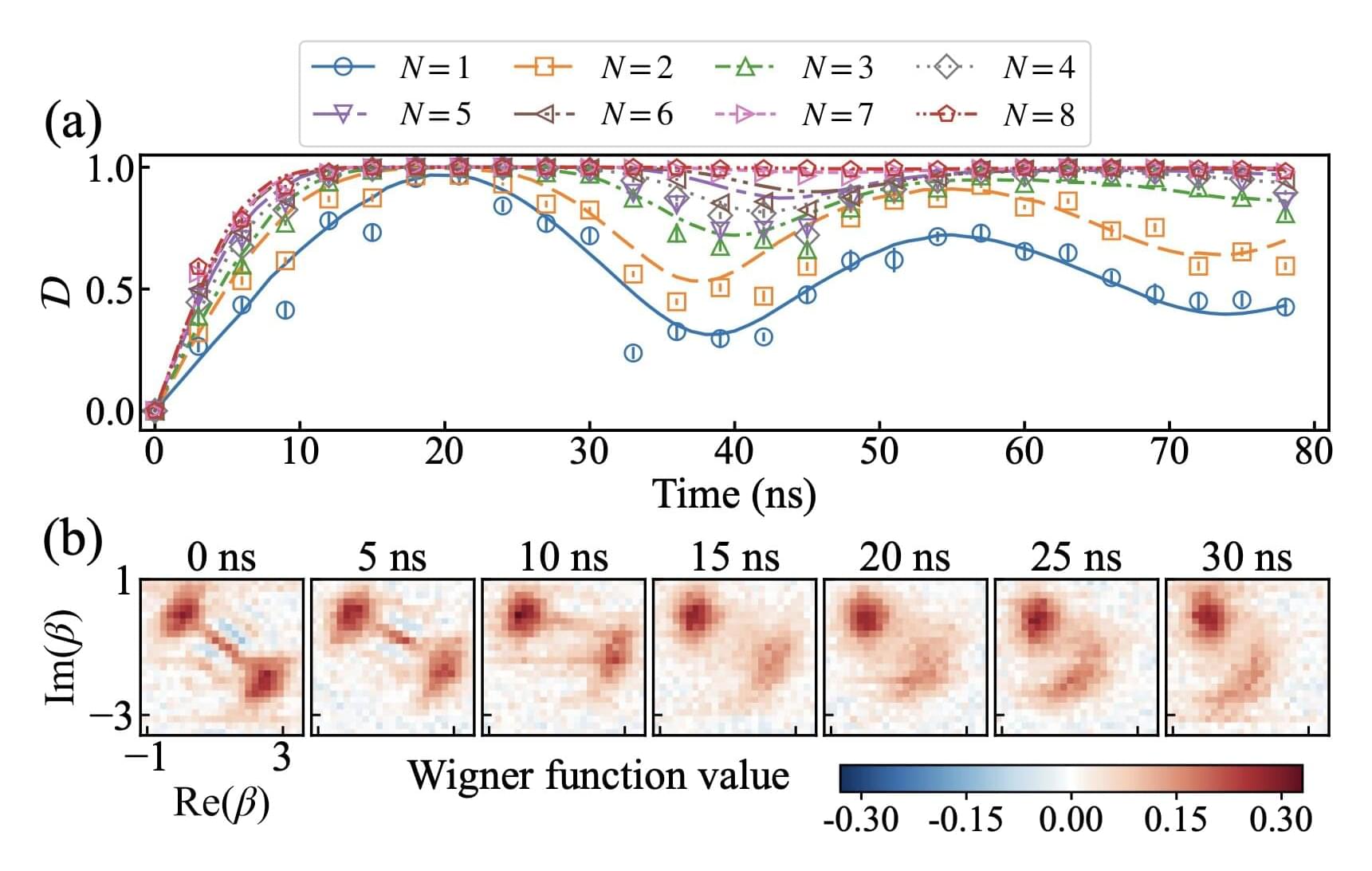
Researchers at Université Grenoble Alpes, Technical University of Munich, Max Planck Institute of Quantum Optics, University of Innsbruck and University of Bologna recently developed a new protocol that could be used to learn the MPO representations of quantum states in real, large-scale quantum experiments. Their protocol, presented in a paper published in Physical Review Letters, has so far been found to reliably reconstruct states in quantum systems including up to 96 qubits.

In wrangling dark matter, some scientists find inspiration in the Torah, Krishna and Christ

When an invisible entity making up 85% of the universe’s mass stumps the greatest scientific minds of our time, awe is an understandable response.

Physicists call it dark matter, a substance they describe as the cosmic glue, the scaffolding, a web that uses gravity to corral, shape and hold together stars, planets and galaxies. Yet nobody knows exactly what it is.

Dark matter’s existence is only inferred from its gravitational effects on visible matter. Together with dark energy—a mysterious force causing the universe to expand at an accelerated rate—they are the biggest scientific mysteries of our time.

In world first, antimatter taken on test drive at CERN

CERN scientists on Tuesday pulled off the unprecedented feat of transporting antiprotons by road, successfully test-driving the world’s first antimatter delivery system, with an eye to one day supplying research labs across Europe.

“The particles returned… so this was a success,” CERN physicist Stefan Ulmer told reporters after the large truck came back from a 10-kilometer drive around the campus of Europe’s main physics laboratory.

While that might not sound like a big distance, Ulmer, a spokesman for CERN’s BASE experiment probing the asymmetry between matter and antimatter in the universe, said it marked the “starting point to a new era.”

Lab-based mini-atmosphere reveals how turbulence changes on different scales

With a new lab-based experiment, researchers in the UK and France have recreated the characteristic cascades of energy and angular momentum that underpin key features of Earth’s atmosphere. Reporting in Physical Review Letters, a team led by Peter Read at the University of Oxford has gained fresh insights into how energy fluctuations in turbulent flows are linked to their size, while also uncovering behaviors that current atmospheric models can’t yet explain.

For all its complexity, many large-scale properties of Earth’s atmosphere can be captured by relatively simple mathematical laws. Among the most important is the “cascade” of energy and rotational motion between flows spanning vastly different scales: from jet streams stretching thousands of kilometers, down to tiny eddies just a few meters across.

This cascade is central to understanding the effect of turbulence. In modern atmospheric theory, there is an inverse relationship between the size of a flow and the kinetic energy contained in its fluctuations, which allows researchers to describe turbulence using a kinetic energy spectrum. This in turn helps climatologists to track how energy is distributed across different length scales.

Scientists Say Washing Dishes With a Sponge Has a Concerning Side Effect

Kitchen sponges shed microplastics, but water use drives most environmental harm. Real-world and lab data show reducing water consumption has the greatest impact. Kitchen sponges may look harmless, but each scrub can release tiny plastic fragments that slip unnoticed down the drain. These micropl

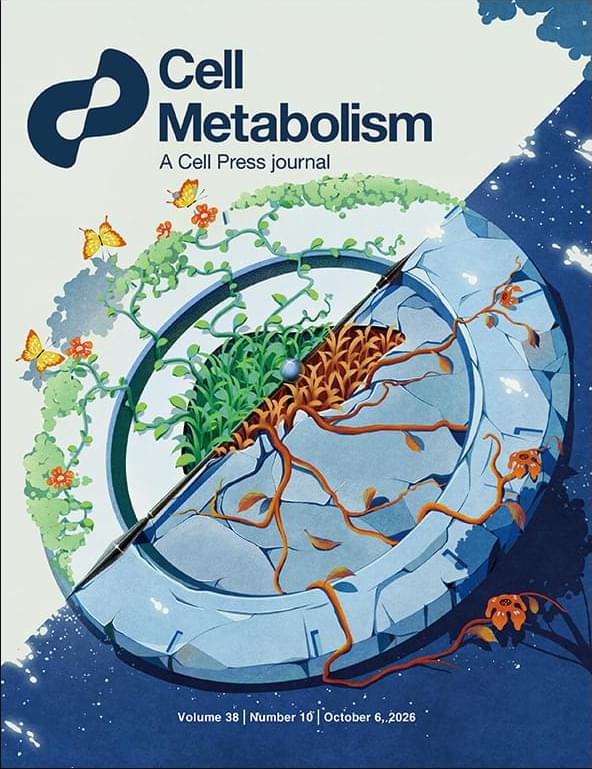
Decoding Arabidopsis growth-defense trade-offs through ADR1-associated transcriptional networks

Using DANGEROUS MIX autoimmune plants with constitutively active NLRs, Hu et al. dissect growth-defense trade-offs. Two major transcriptional modules, representing growth and defense, show a strong inverse correlation and are governed by ADR1 helper NLRs. ADR1s maintain this balance largely through effects on transcription and chromatin accessibility in both modules.

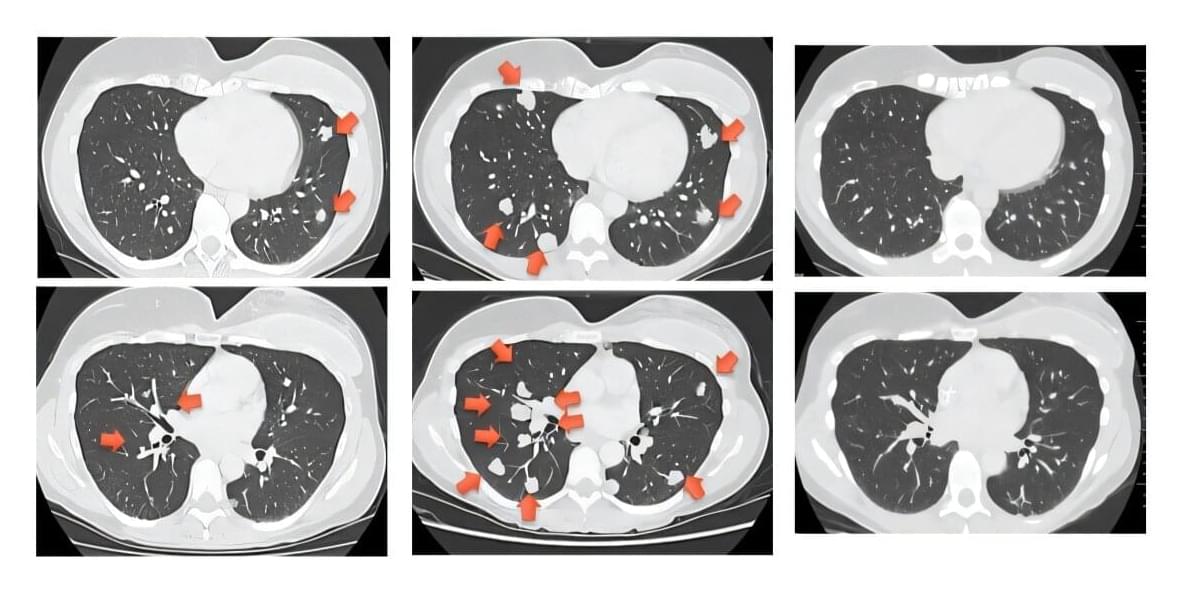
High-Level Alzheimer Disease Neuropathological Change Following Iatrogenic Exposure

Patients treated with cadaveric pituitary-derived human growth hormone contaminated with amyloid-β developed early-onset AlzheimerDisease with prominent language deficits and histopathological features consistent with AD.


Question What are the clinical and postmortem findings in iatrogenic Alzheimer disease (iAD) consequent to treatment with cadaveric pituitary–derived human growth hormone (c-hGH)?

Findings This case series describes a c-hGH recipient with early-onset dementia and prominent language involvement, in whom postmortem examination showed unequivocal neuropathological features of AD, including severe tauopathy. Three additional c-hGH recipients have similar cognitive syndromes characterized by prominent language involvement.

Meaning These results demonstrate that patients with iAD can have histopathological findings classically found in sporadic AD and that prominent language involvement might be an important phenotypic feature in this AD subtype.

Mutation map reveals how amylin mutations influence type 2 diabetes

Researchers at the Institute for Bioengineering of Catalonia (IBEC) have produced a mutational map showing how mutations in amylin—a hormone that plays a key role in glucose regulation—affect its tendency to form toxic amyloid aggregates in the pancreas. This process is linked to the development of type 2 diabetes. While it was already known that certain mutations could alter this aggregation capacity, understanding of this process was fragmented and based on isolated studies. The research is published in the journal Nature Communications.

“For the first time, we can systematically map how thousands of mutations modulate amylin aggregation, bringing human genetics closer to molecular mechanisms,” says Benedetta Bolognesi, the principal investigator of the Protein Phase Transitions in Health and Disease group at IBEC, who is also the lead author of the study.

“We have created a map that allows us to anticipate the potential impact of these mutations in the population,” adds Marta Badia, a researcher in the same group and first author of the study. “We are not assessing toxicity, but rather the protein’s intrinsic propensity to form fibers. This is a first step, but an extremely necessary one.”

A long-term and scalable system to record from neural organoids

Driving liver inflammation in MASH via multiple pathways.

Metabolic dysfunction-associated steatohepatitis (MASH) if not treated early, may lead to liver cirrhosis and hepatocellular carcinoma (liver cancer).

Hepatic lipotoxicity, intestinal dysbiosis, and pro-inflammatory diets have been attributed to the development of MASH. Moreover, obesity-induced adipose tissue inflammation also contributes to MASH.

The researchers in this review unravel complex, multiple parallel inflammatory mechanisms in MASH and describe how MASH drugs exert their effects. # sciencenewshighlights ScienceMission https://sciencemission.com/liver-inflammation-in-MASH


Intra-and extrahepatic inflammation in MASH is driven by various hits such as lipotoxicity, the gut microbiome, and proinflammatory diets. Inflammation contributes to hepatic and systemic complications, including cardiovascular diseases. Beneficial drugs in MASH might target metabolic and inflammatory pathways.

/* */