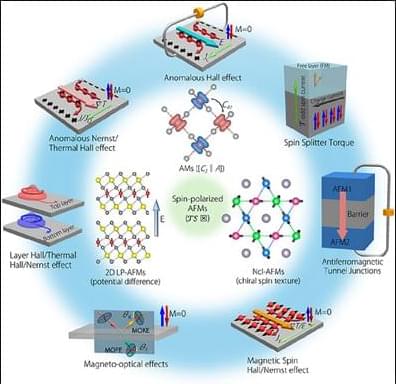
This review highlights recent advances in anomalous and spin transport phenomena in spin-polarized antiferromagnets. Key effects—including the anomalous Hall, Nernst, and magneto-optical effects—are…

The ubiquitous existence of microplastics and nanoplastics raises concerns about their potential impact on the human reproductive system. Limited data exists on microplastics within the human reproductive system and their potential consequences on sperm quality. Our objectives were to quantify and characterize the prevalence and composition of microplastics within both canine and human testes and investigate potential associations with the sperm count, and weights of testis and epididymis. Using advanced sensitive pyrolysis-gas chromatography/mass spectrometry, we quantified 12 types of microplastics within 47 canine and 23 human testes. Data on reproductive organ weights, and sperm count in dogs were collected.
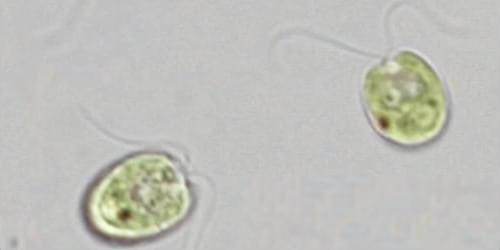
In response to changes in illumination, a swimming microorganism reverses the direction of its circular trajectory by tilting its flagella’s planes of motion.
Many microorganisms adjust their swimming trajectories in response to environmental signals such as nutrients or light. Researchers have now discovered a new mode of such behavior in a species of green algae [1]. The microbes swim in wide circles when illuminated and switch from counterclockwise (CCW) to clockwise (CW) swimming when the light intensity is above a threshold value. The researchers determined how this change is generated by the algae’s two whip-like flagella. They say that the results reveal a new navigation strategy that microorganisms can use to find optimal environments.
The single-celled green alga Chlamydomonas reinhardtii is photosynthetic and moves toward light by beating its two flagella, situated close together on its front surface, in a breaststroke pattern. In 2021, Kirsty Wan and Dario Cortese of the University of Exeter in the UK figured out the beating pattern that produces the microbe’s typical corkscrew-shaped trajectory, which follows a tight helix [2]. They showed how changing the frequency, amplitude, and synchronization of the flagellar beating allows the cell to change the overall direction of motion, perhaps to steer it toward or away from a light source and optimize the intensity of light it receives.
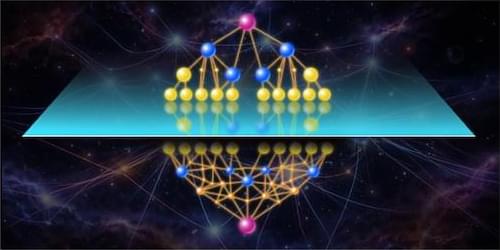
Statistical physics is shedding light on how network architecture and data structure shape the effectiveness of neural-network learning.
Machine-learning technologies have profoundly reshaped many technical fields, with sweeping applications in medical diagnosis, customer service, drug discovery, and beyond. Central to this transformation are neural networks (NNs), models that learn patterns from data by combining many simple computational units, or neurons, linked by weighted connections. Acting collectively, these neurons can process data to learn complex input–output relationships. Despite their practical success, the fundamental mechanisms by which NNs learn remain poorly understood at a theoretical level. Statistical physics offers a promising framework for exploring central questions in machine-learning theory, potentially clarifying how learning depends on the layout of the network—the NN architecture—and on statistics of the data—the data structure (Fig. 1).
Three recent papers in a special Physical Review E collection (See Collection: Statistical Physics Meets Machine Learning — Machine Learning Meets Statistical Physics) provide significant insights into these questions. Francesca Mignacco of City University of New York and Princeton University and Francesco Mori of the University of Oxford in the UK derived analytical results on the optimal fraction of neurons that should be active at a given time [1]. Abdulkadir Canatar and SueYeon Chung of the Flatiron Institute in New York and New York University investigated the influence of the precision with which a network is “trained” on the amount of data the NN can reliably decode [2]. Francesco Cagnetta at the International School for Advanced Studies in Italy and colleagues showed that NNs whose structure mirrors that of the data learn faster [3].
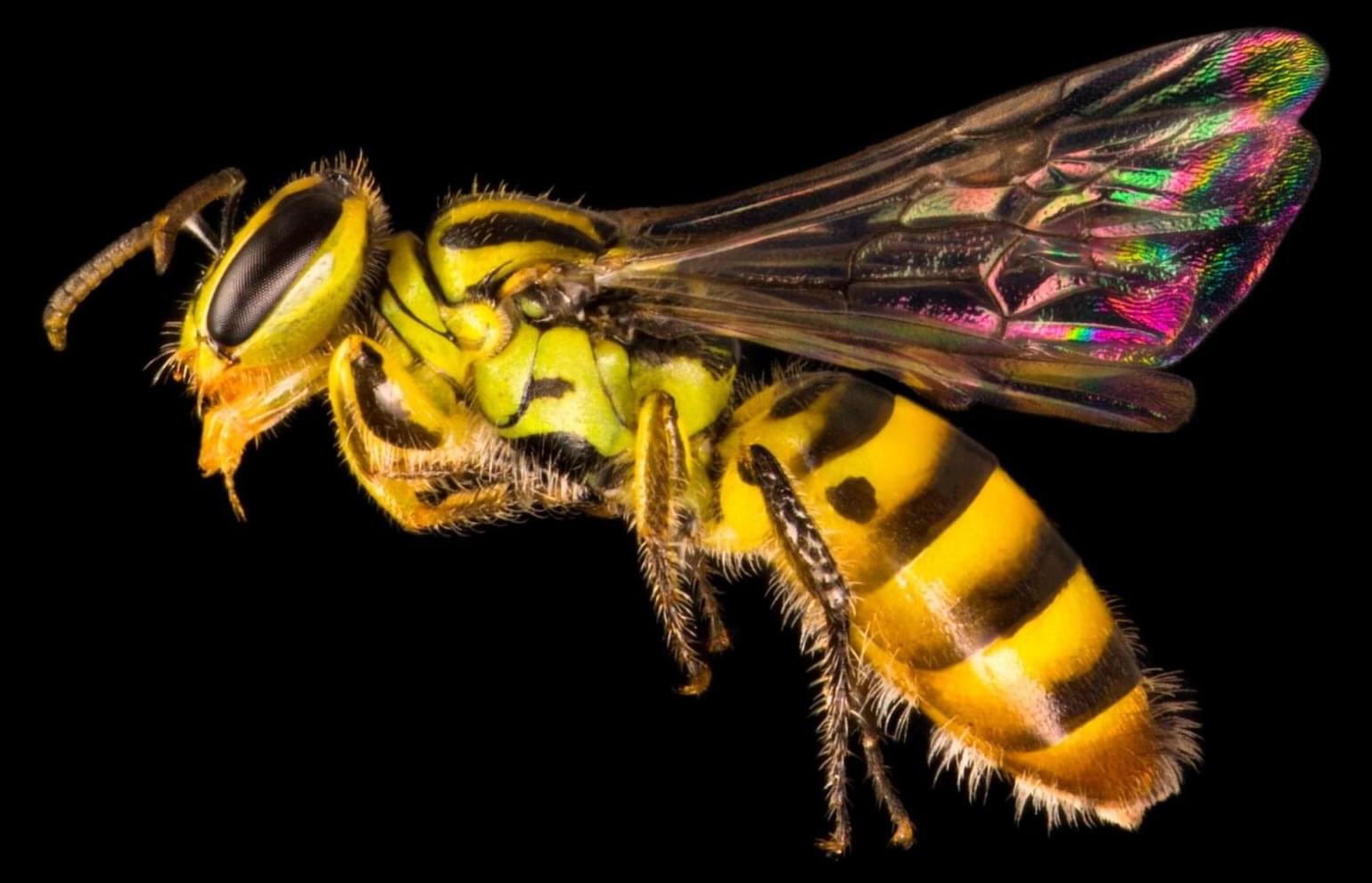
The world has far more bees than anyone realized. Scientists have, for the first time, estimated just how many species of bees are out there on a global scale, offering a clearer look at how these vital pollinators are distributed around the planet. The landmark study, led by University of Wollongong (UOW) evolutionary biologist Dr. James Dorey, provides the most comprehensive count to date—broken down by continent and country—calculating there are, at a minimum, between 3,700 and 5,200 more bee species buzzing around the world than currently recognized.
The research, outlined in a new paper published Tuesday, February 24, in Nature Communications, lifts global estimates to between 24,705 and 26,164 bee species and reveals a richer and more complex picture of the world’s bees than ever before. The findings highlight how many bee species remain unclassified or overlooked, showing that even our much-loved pollinators are not fully understood, and that closing these knowledge gaps is crucial for conservation and food security.
“Knowing how many species exist in a place, or within a group like bees, really matters. It shapes how we approach conservation, land management, and even big-picture science questions about evolution and ecosystems,” Dr. Dorey said. “Bees are a perfect example. They’re keystone species; their diversity underpins healthy environments and resilient agriculture. If we don’t understand how many bee species there are, we’re missing a key part of the puzzle for protecting both nature and farming.”
Large language models (LLMs), artificial intelligence (AI) systems that can process human language and generate texts in response to specific user queries, are now used daily by a growing number of people worldwide. While initially these models were primarily used to quickly source information or produce texts for specific uses, some people have now also started approaching the models with personal issues or concerns.
This has given rise to various debates about the value and limitations of LLMs as tools for providing emotional support. For humans, offering emotional support in dialogue typically entails recognizing what another is feeling and adjusting their tone, words and communication style accordingly.
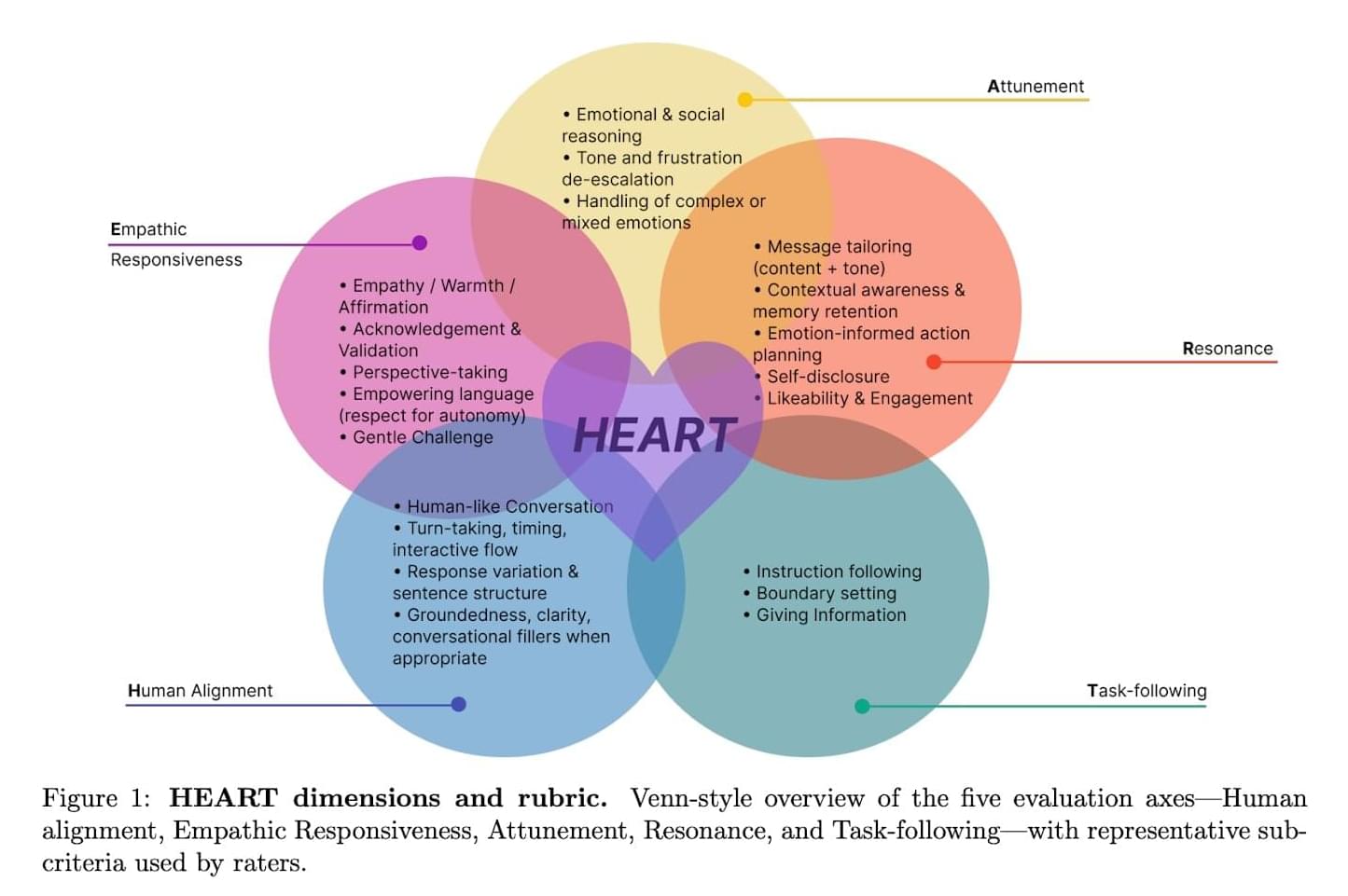
Researchers at Hippocratic AI, Stanford University, University of California San Diego and University of Texas at Austin recently developed a new structured method to evaluate the ability of both LLMs and humans to offer emotional support during dialogues marked by several back-and-forth exchanges. This framework, dubbed HEART, was introduced in a paper is published on the arXiv preprint server.
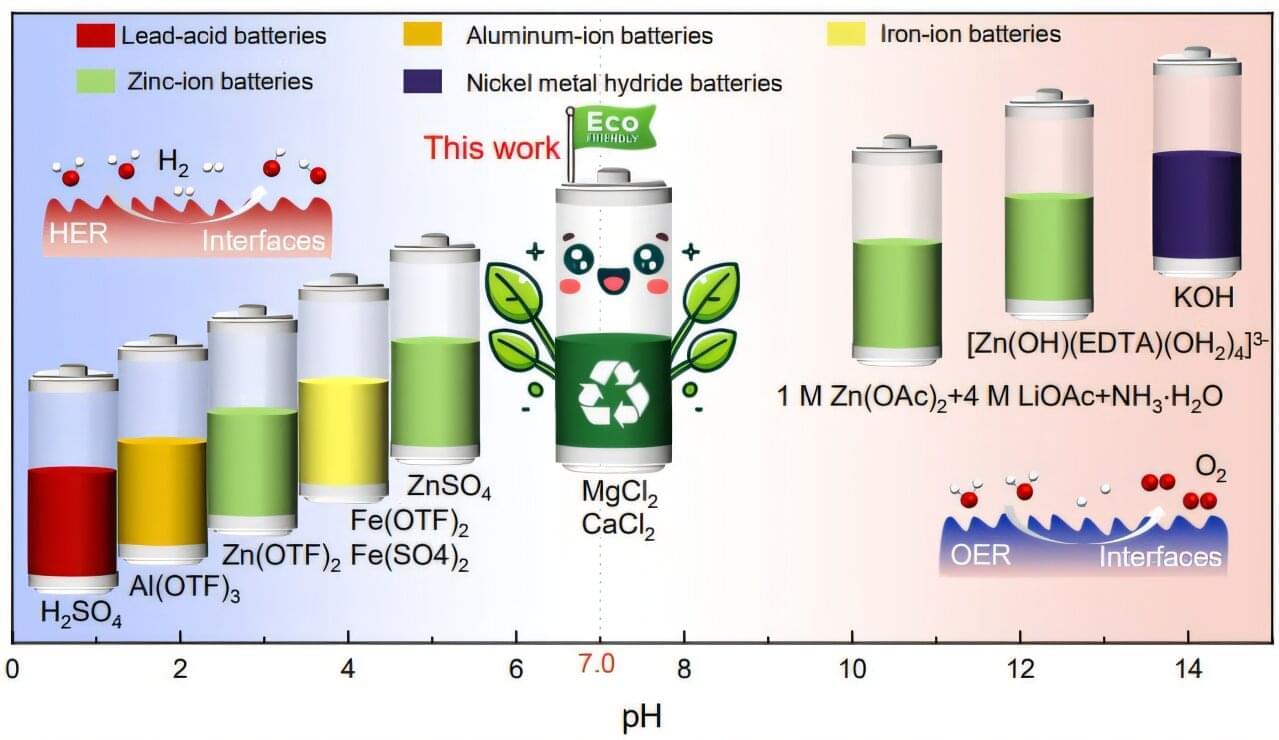
The problem with many types of modern batteries is that they rely on harsh chemicals to work. Not only can these corrosive liquids damage internal parts over time, but they can also leach into soil and water when disposed of, contaminating it. But researchers from the City University of Hong Kong and Southern University of Science and Technology have developed an alternative, a new kind of eco-friendly battery that runs on a solution similar to the minerals used in tofu brine.
The team describes their work in a paper published in the journal Nature Communications.
The scientists replaced traditional acids and alkalis with neutral salts of magnesium and calcium to create the electrolyte. These are the same minerals used as brine in tofu production. Keeping this liquid at a neutral pH of 7.0 prevents the type of corrosive reactions that can destroy a battery from the inside out.
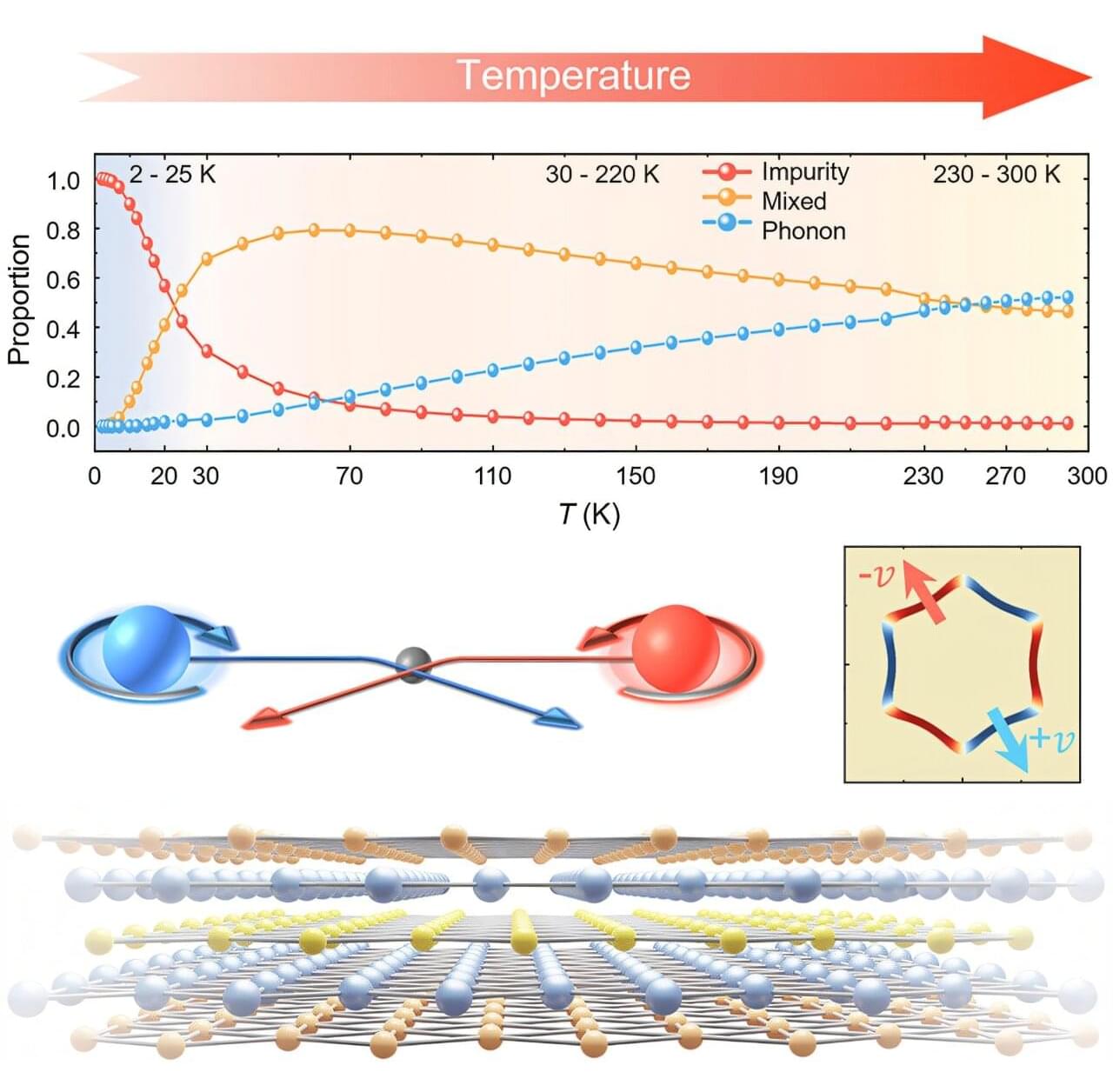
A new study has revealed how tiny imperfections and vibrations inside a promising quantum material could be used to control an unusual quantum effect, opening new possibilities for smaller, faster, and more efficient energy-harvesting devices.
The international team, led by Professor Dongchen Qi from the QUT School of Chemistry and Physics and Professor Xiao Renshaw Wang from Nanyang Technological University in Singapore, studied the mechanism governing the so-called nonlinear Hall effect (NLHE). The research is published in the journal Newton.
Unlike the classical Hall effect, this quantum version allows alternating electrical signals, like those found in wireless or ambient energy sources, to be converted directly into usable direct current without the need for traditional diodes or bulky components.