Risk of new indications for anticoagulants and thrombolytics in people with cognitive impairment: implications for anti-amyloid therapy.


This is the second time in recent months that the AI world has got all excited about math. The rumor mill went into overdrive last November, when there were reports that the boardroom drama at OpenAI, which saw CEO Sam Altman temporarily ousted, was caused by a new powerful AI breakthrough. It was reported that the AI system in question was called Q* and could solve complex math calculations. (The company has not commented on Q*, and we still don’t know if there was any link to the Altman ouster or not.) I unpacked the drama and hype in this story.
You don’t need to be really into math to see why this stuff is potentially very exciting. Math is really, really hard for AI models. Complex math, such as geometry, requires sophisticated reasoning skills, and many AI researchers believe that the ability to crack it could herald more powerful and intelligent systems. Innovations like AlphaGeometry show that we are edging closer to machines with more human-like reasoning skills. This could allow us to build more powerful AI tools that could be used to help mathematicians solve equations and perhaps come up with better tutoring tools.

One intriguing method that could be used to form the qubits needed for quantum computers involves electrons hovering above liquid helium. But it wasn’t clear how data in this form could be read easily.
Now RIKEN researchers may have found a solution. Their work is published in the journal Physical Review Letters.
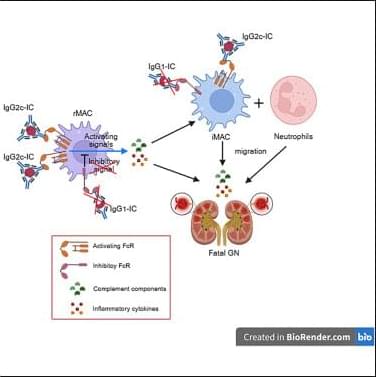
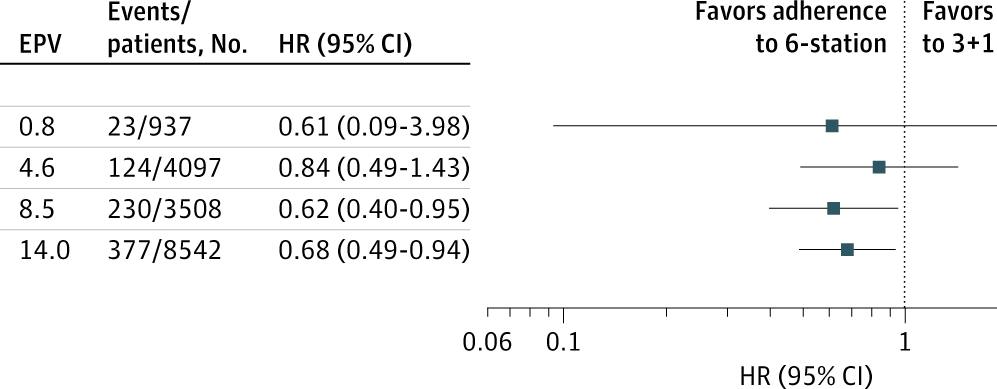
Guideline-adherent lymph node dissection provided a small survival benefit for patients with high-grade or no lepidic pattern LungAdenocarcinoma, but not for those with lepidic pattern alone.
Importance Lymph node dissection for early-stage lung adenocarcinoma is controversial. Histologic pattern subtyping reveals heterogeneity of lung adenocarcinoma, yet its association with lymph node involvement and dissection is understudied.
Objective To assess the association between guideline-adherent lymph node dissection, histologic pattern subtyping, and overall survival in patients with clinical T1N0M0 lung adenocarcinoma.
Design, Setting, and Participants This multicenter cohort study used data from the National Cancer Center LungReal database, a multicenter, electronic health records-based database for patients undergoing surgery for lung cancer, from January 2014 to December 2021, with the last follow-up in December 2022. Patients were categorized based on histologic pattern of adenocarcinoma into 2 groups: lepidic without high-grade pattern, and high-grade or no lepidic pattern. The data analysis was performed from April to November 2025.
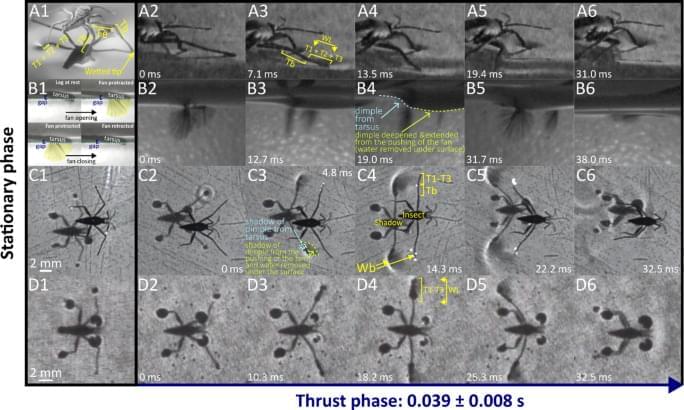
Bang, S.Y., Kim, W., Lee, J. et al. Sci Rep 15, 44,777 (2025). https://doi.org/10.1038/s41598-025-28453-0
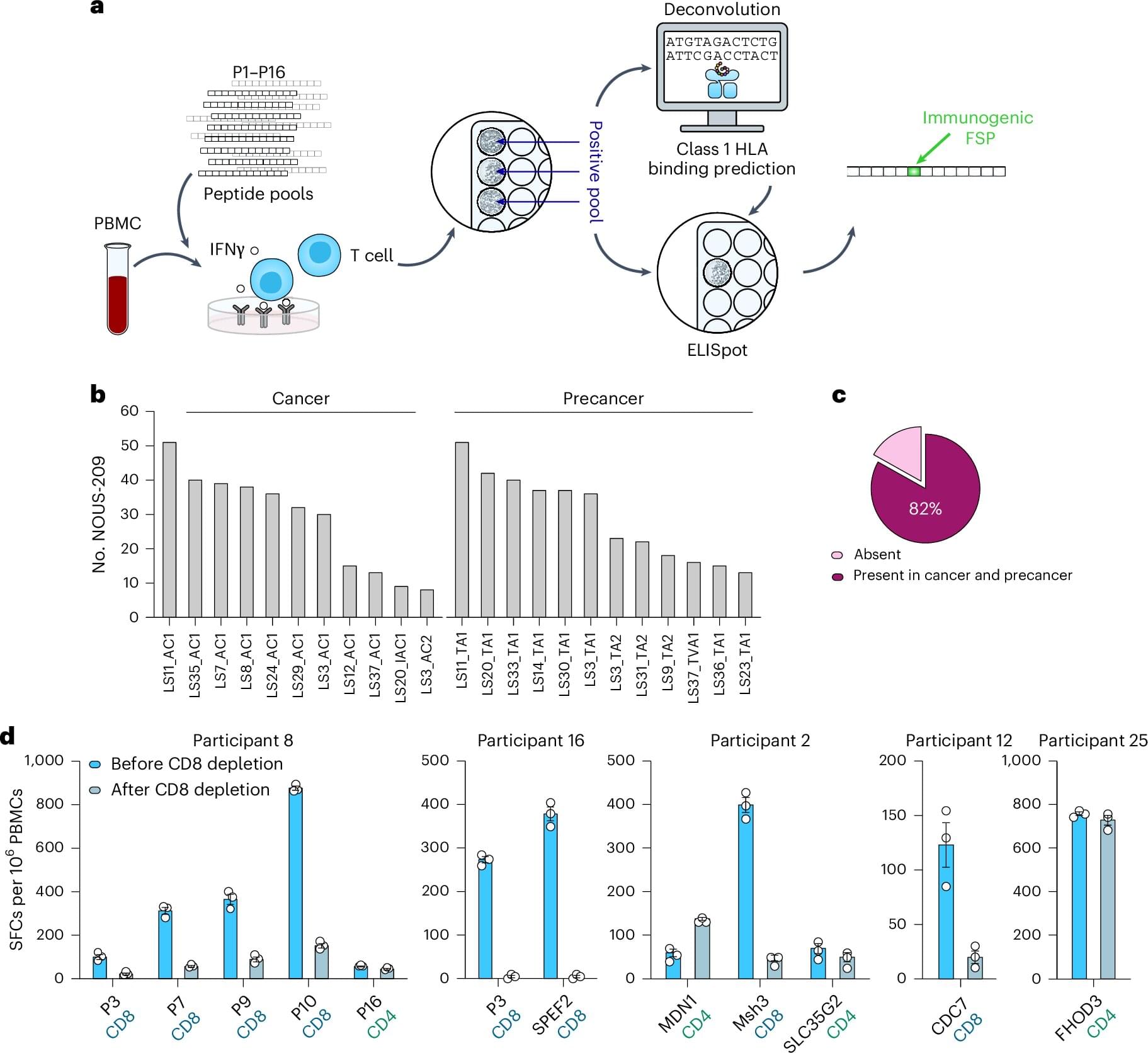
The investigational cancer vaccine, NOUS-209, was found to safely stimulate the immune system to target precancerous and cancerous cells in individuals with Lynch Syndrome (LS), according to a study from researchers at The University of Texas MD Anderson Cancer Center.
The results of a Phase Ib/II clinical trial, published today in Nature Medicine, provide early evidence that immune-based approaches, such as NOUS-209, may be able to intercept cancer before it develops, offering a potential new avenue for preventive care for high-risk individuals.
“Current management strategies for Lynch Syndrome patients—frequent screenings or elective preventive surgery—are life-changing interventions that help prevent cancer development but can significantly affect quality of life,” said principal investigator Eduardo Vilar-Sanchez, M.D., Ph.D., chair ad interim of Clinical Cancer Prevention. “By teaching the immune system to recognize and attack abnormal cells, this therapy offers a promising new approach to this patient population, who face a significantly higher risk of colorectal, endometrial, urothelial and other cancers.”
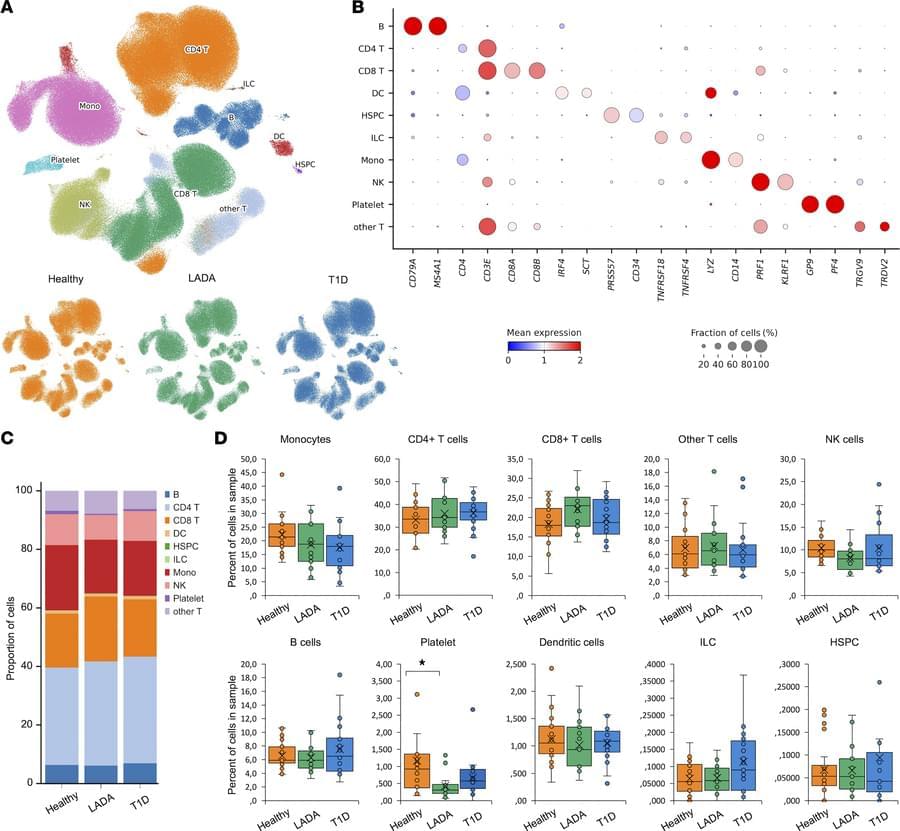
Ivan I. Golodnikov & team report a calmer immune response in slower autoimmune diabetes, offering insight into why some patients lose insulin production more gradually:
The figure shows an atlas of PBMC from healthy donors and patients with latent autoimmune diabetes mellitus (LADA) and Type1 Diabetes (T1D).
Address correspondence to: Ivan I. Golodnikov, 11 Dm. Ulyanova Street, 117,036 Moscow, Russian. Phone: 7.985.352.05.75; Email: [email protected].
Find articles by Golodnikov, I. in: | Google Scholar
1Endocrinology Research Centre, Moscow, Russia.