Toggle light / dark theme

Get the latest international news and world events from around the world.

Log in for authorized contributors

Celebrating two decades of global scientific computing

Imagine a planetary computer capable of storing and processing hundreds of petabytes of data for the research needs of a worldwide community of scientists. This is the Worldwide LHC Computing Grid (WLCG), which is celebrating its 20th anniversary.

Originally conceived to handle the unprecedented data volumes of the Large Hadron Collider (LHC), the WLCG has evolved into a global network connecting hundreds of computing centres across more than 40 countries. It enables thousands of scientists worldwide to store, process and analyse massive amounts of data in quasi-real time, supporting discoveries in particle physics.

On 8 December, a special event at the CERN Science Gateway brought together the international community that has turned this ambitious project into one of the largest distributed computing collaborations in the world. Key figures from the project highlighted its history, challenges and future prospects. Les Robertson, whose efforts and leadership were instrumental during the early days of the Grid, reflected on how the idea was born and the challenges of building something that had never been done before. It was an ambitious idea for its time, one that required both technological innovation and unprecedented cooperation across countries. Yet this early confidence proved justified: the Grid rapidly moved from concept to reality, paving the way for a new model of large-scale scientific computing.

Laser light and the quantum nature of gravity: Proposed experiment could measure graviton energy exchange

When two black holes merge or two neutron stars collide, gravitational waves can be generated. They spread at the speed of light and cause tiny distortions in space-time. Albert Einstein predicted their existence, and the first direct experimental observation dates from 2015.

Now, Prof. Ralf Schützhold, theoretical physicist at the Helmholtz-Zentrum Dresden-Rossendorf (HZDR), is going one step further. He has conceived an experiment through which gravitational waves can not only be observed but even manipulated. Published in the journal Physical Review Letters, the idea could also deliver new insights into the hitherto only conjectured quantum nature of gravity.

“Gravity affects everything, including light,” says Schützhold. And this interaction also occurs when gravitational waves and light waves meet.

Sensor uses acoustic waves to detect objects at smallest scales

At the heart of every camera is a sensor, whether that sensor is a collection of light-detecting pixels or a strip of 35-millimeter film. But what happens when you want to take a picture of something so small that the sensor itself has to shrink down to sizes that cause the sensor’s performance to crater?

Now, Northeastern University researchers have made a breakthrough discovery in sensing technologies that allows them to detect objects as small as individual proteins or single cancer cells, without the additional need to scale down the sensor. Their breakthrough uses guided acoustic waves and specialized states of matter to achieve great precision within very small parameters.

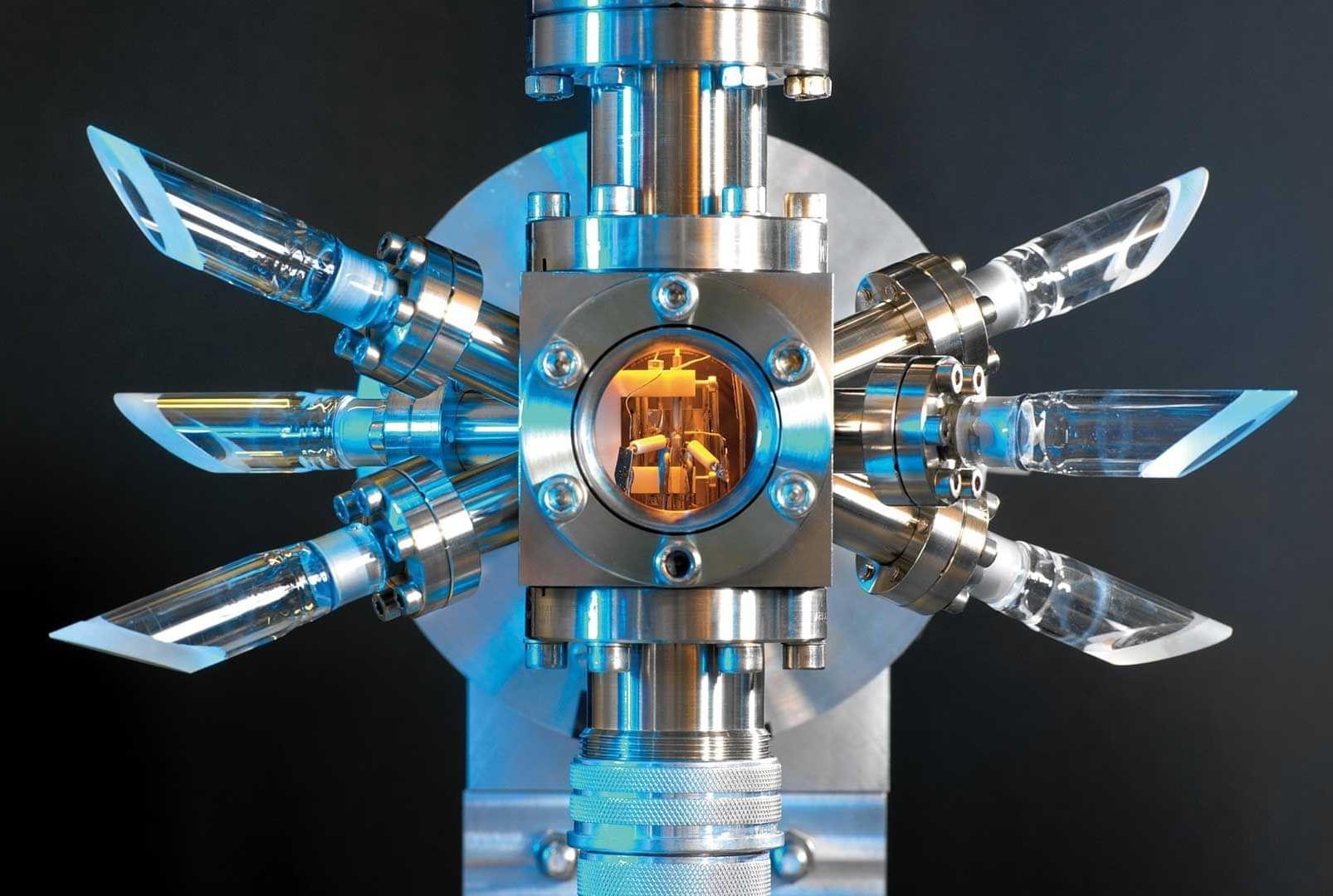
The device, which is about the size of a belt buckle, opens up possibilities for sensing at both the nano and quantum scales, with repercussions for everything from quantum computing to precision medicine.

New 1.4nm nanoimprint lithography template could reduce the need for EUV steps in advanced process nodes — questions linger as no foundry has yet committed to nanoimprint lithography for high-volume manufacturing

Questions remain over whether nanoimprint can shoulder even a slice of next-generation logic.

A Planet 900 Light-Years Away Has Weather So Extreme “It Feels Like Science Fiction”. It’s 70,000 km/h Winds Carry Vaporized Iron and Even Titanium

Scientists have for the first time mapped the 3D structure of an exoplanet’s atmosphere, uncovering violent winds and bizarre weather patterns.

Advanced neuromorphic engineering approaches for restoring… : Regenerative Medicine Reports

Isting gap in neuromorphic engineering by mimicking biological neuron dynamics and realizing effective clinical applications to promote functional recovery and quality of life enhancement in patients with brain injury. The novel neuromorphic engineering approaches leverage the dynamic behavior of brain neurons, incorporating electronic circuits that emulate neuronal dynamics. A basic configuration involves a neural model designed to mimic the dynamics of a living neuron, with the potential to replace damaged brain tissue when implanted, thus restoring signal propagation. An enhanced configuration integrates a closed-loop system, wherein the feedback signal from biological neurons synchronizes the artificial neuron with its living counterpart, allowing continuous self-adjustment of system parameters and promoting a neuro-autogenerative regime.

/* */