Toggle light / dark theme

Get the latest international news and world events from around the world.

Log in for authorized contributors

Modern Calculations Finally Solve 50-Year-Old Magnetic Mystery in Steel

Researchers at the Department of Materials Science and Engineering within The Grainger College of Engineering have identified the first detailed physical mechanism explaining how magnetic fields slow the movement of carbon atoms inside iron. The study, published in Physical Review Letters, sheds new light on the role carbon plays in shaping the internal grain structure of steel.

Steel, which is made from iron and carbon, is among the most widely used construction materials worldwide. Producing steel with specific internal structures typically requires extreme heat, making the process highly energy intensive.

Decades ago, researchers observed that exposing certain steels to magnetic fields during heat treatment led to improved performance, but the explanations offered at the time remained largely theoretical. Pinpointing the underlying cause of this effect could give engineers more precise control over heat treatment, leading to more efficient processing and lower energy demands.
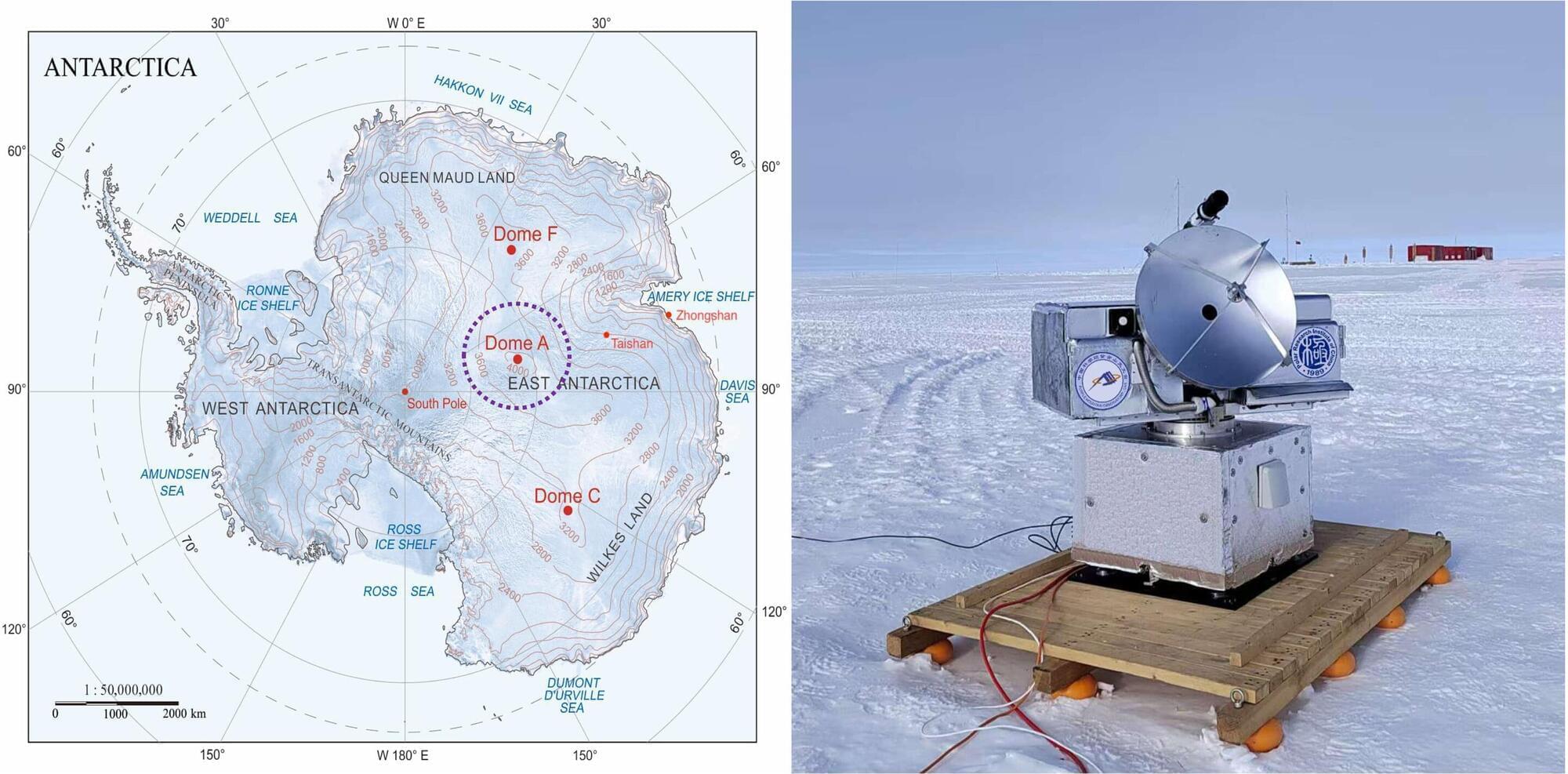

Antarctic submillimeter telescope enables more complete view of the carbon cycle in star-forming regions

Chinese researchers have braved the cold and harsh environment of Antarctica in order to get a unique view of star formation in the interstellar medium (ISM). The Chinese National Antarctica and Arctic Research Expedition (CHINARE) has managed to complete a study at Dome A—the highest ice dome on the Antarctic Plateau—and successfully collected submillimeter data to form a better understanding of carbon cycling in the ISM. Their research is published in Science Advances.

In most places on Earth, the detection of submillimeter wavelengths (terahertz frequencies) from space is inhibited by water vapor in the atmosphere, which absorbs radiation at these wavelengths. This is a major roadblock to the study of carbon phases in the ISM, as carbon cycles between ionized (C+), atomic (C0), and molecular (CO) forms in the interstellar medium. These transitions produce emissions in submillimeter wavelength bands, making them difficult to detect from most locations.

While prior ground-based telescopes have detected some [CI] emissions, coverage is limited compared to CO surveys, and not all carbon phases have been mapped together. However, Dome A in Antarctica offers the dry, high altitude conditions needed for submillimeter astronomy, but successful observations have been elusive due to the harsh environment and technical challenges.

New research reveals a psychological shift triggered by the 2008 Great Recession

New research suggests the 2008 Great Recession fundamentally altered how Americans perceive their social standing. An analysis of over 160,000 people indicates the economic shock caused a widespread decline in class identity that persisted long after the market recovered.

SPHEREx Images and a New Anomaly Regarding the Gas Plume Around 3I/ATLAS After Perihelion

A new paper led by Carey Lisse (accessible here) reports large-scale images of the gas plume around the interstellar object 3I/ATLAS after perihelion, based on data collected last month by the SPHEREx space observatory. The data show enhanced mass loss of dust and gas around 3I/ATLAS.

The new images of 3I/ATLAS were taken in the wavelength range of 0.75–5.0 microns between the 8 and 15 of December, 2025. Each image spans 30,000 kilometers on a side. On these large scales, the brightness maps of dust and organics were found to be pear-shaped, with an anti-tail elongation in the direction of the Sun. All six other gas plumes were found to be nearly round. The major gas species were identified as: cyanide (CN, at a wavelength of 0.93 microns), water (H2O, in the wavelength range of 2.7–2.8 microns), Organics (C-H, between 3.2–3.6 microns), carbon-dioxide (CO2, 4.2–4.3 microns), and carbon-monoxide (CO, 4.7–4.8 microns). The CO2 gas-plume continues to extend out to a few hundreds of thousands of kilometers. The dust spectrum can be described as the sum of scattered sunlight and thermal emission.

Most notably, the signature of sub-micron dust particles that would have enhanced the blue color via Rayleigh scattering are absent. Moreover, these small particles would have also been subjected to a strong solar radiation-pressure and would have formed the standard cometary tail, extending away from the Sun — which is not observed — as I argued in an essay, posted here on December 25, 2026.

Rocks and rolls: The computational infrastructure of earthquakes and physics of planetary science

Sometimes to truly study something up close, you have to take a step back. That’s what Andrea Donnellan does. An expert in Earth sciences and seismology, she gets much of her data from a bird’s-eye view, studying the planet’s surface from the air and space, using the data to make discoveries and deepen understanding about earthquakes and other geological processes.

“The history of Earth processes is written in the landscapes,” Donnellan said. “Studying Earth’s surface can help us understand what is happening now and what might happen in the future.”

Donnellan, professor and head of the Department of Earth, Atmospheric, and Planetary Sciences in Purdue’s College of Science, has watched Earth for a long time. Her original research was studying and tracking glaciers in Antarctica.

Breakthrough lets scientists watch plants breathe in real time

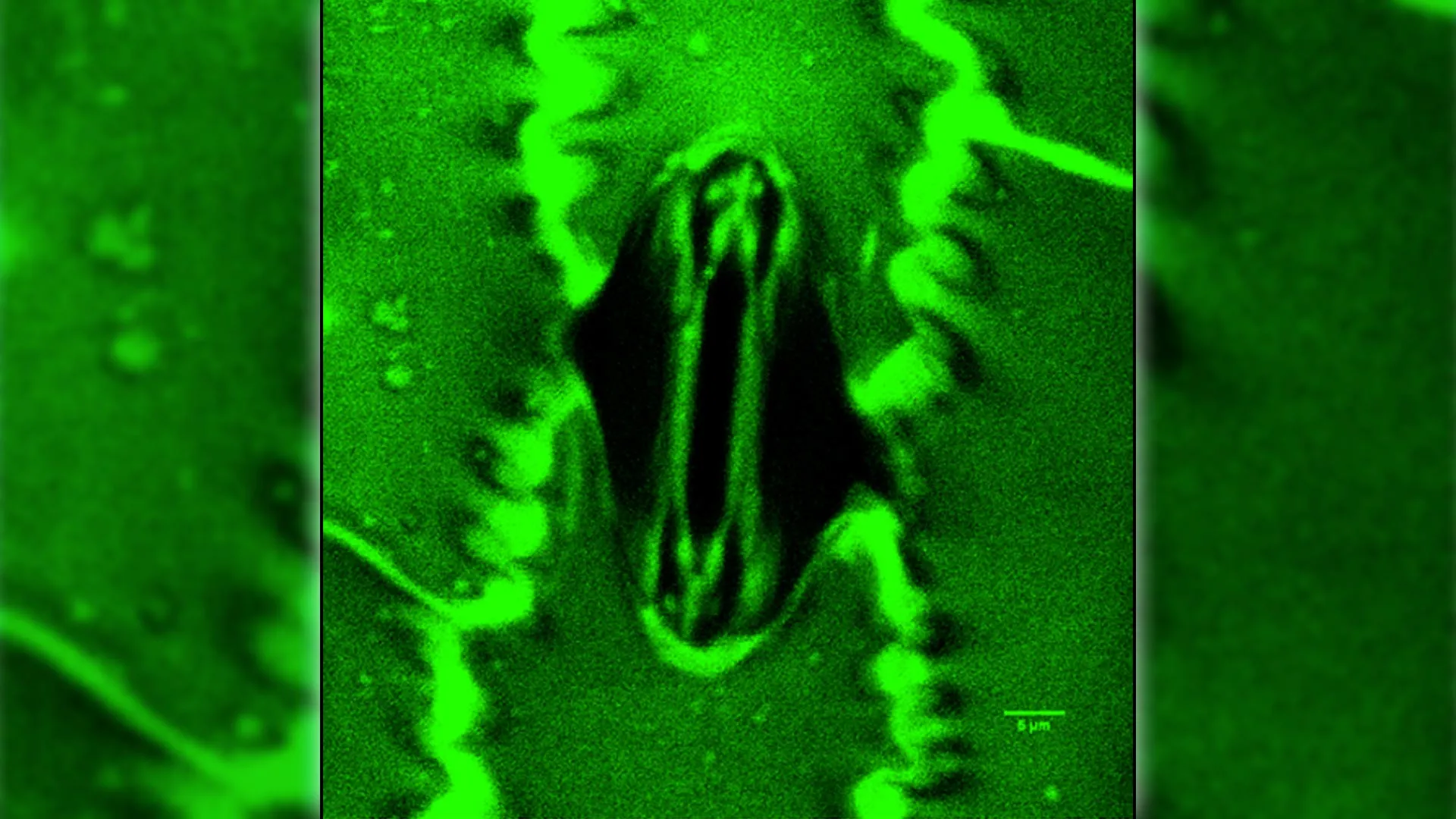
Scientists have long understood that plants take in air through tiny openings on their leaves known as stomata. These microscopic pores act like adjustable valves, letting carbon dioxide enter the leaf for photosynthesis while allowing water vapor to escape into the air. Until now, closely tracking this balancing act as it happens has been extremely difficult.

Researchers at the University of Illinois Urbana-Champaign have now created a powerful new system that makes this possible. Their study, published in the journal Plant Physiology, introduces a tool called “Stomata In-Sight.” It overcomes a major obstacle in plant science by allowing scientists to observe the minute movements of stomata while also measuring, at the same time, how much gas the leaf is exchanging with the atmosphere under carefully controlled conditions.

Magnetic fields slow carbon migration in iron by altering energy barriers, study shows

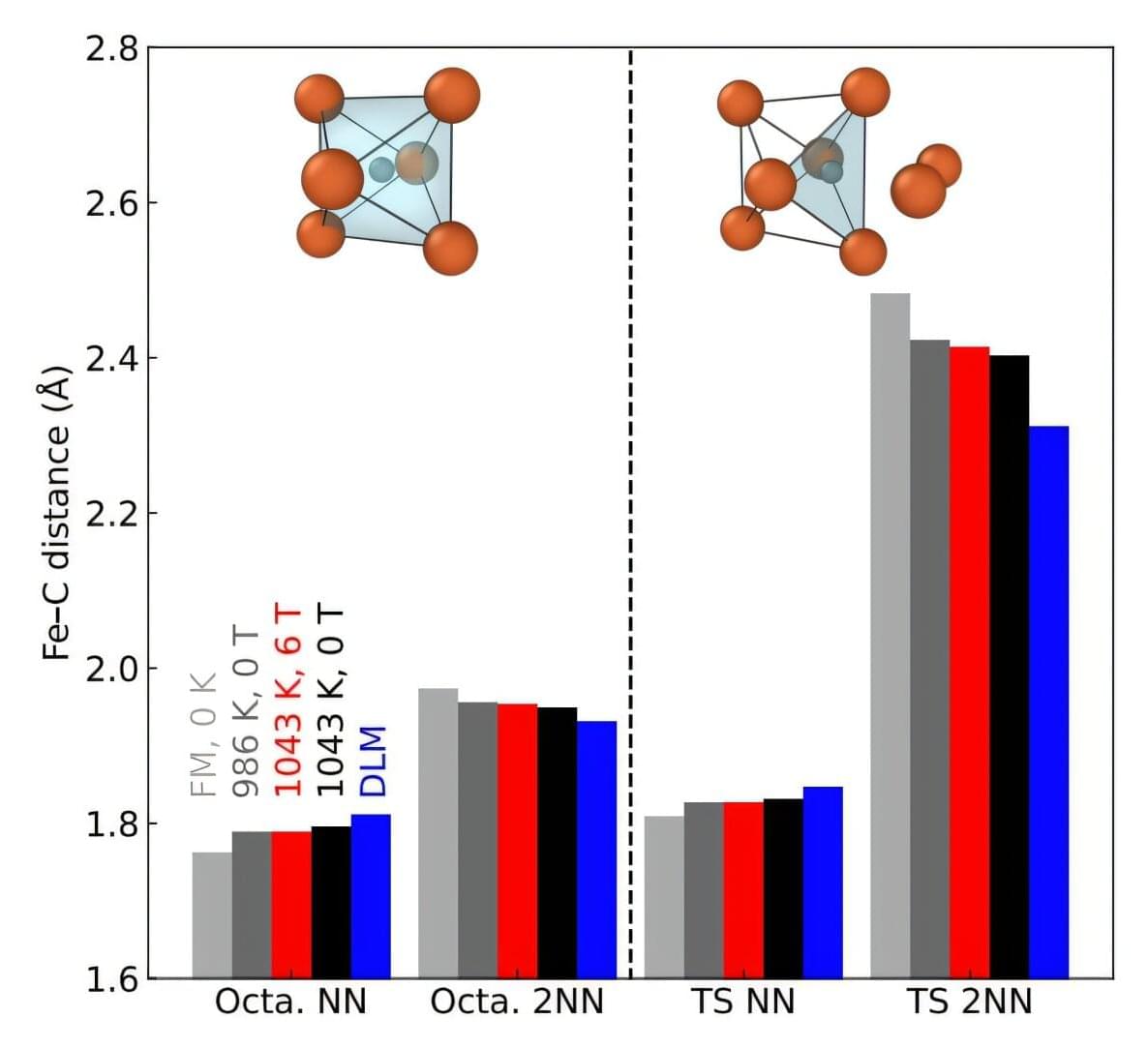
Professor Dallas Trinkle and colleagues have provided the first quantitative explanation for how magnetic fields slow carbon atom movement through iron, a phenomenon first observed in the 1970s but never fully understood. Published in Physical Review Letters, their computer simulations reveal that magnetic field alignment changes the energy barriers between atomic “cages,” offering potential pathways to reduce the energy costs and CO2 emissions associated with steel processing.

An alloy of iron and carbon, steel is one of the most-used building materials on the planet. Engineering its microstructure requires high temperatures; as a result, most steel processing consumes significant energy. In the 1970s, scientists noted that some steels exhibited better properties when heat treated under a magnetic field—but their ideas explaining this behavior were only conceptual. Understanding the mechanism behind this phenomenon could improve engineers’ ability to control heat treatment, improving material processing and potentially lowering energy costs.

“The previous explanations for this behavior were phenomenological at best,” said Trinkle, the Ivan Racheff Professor of Materials Science and Engineering and the senior author of the paper. “When you’re designing a material, you need to be able to say, ‘If I add this element, this is how (the material) will change.’ And we had no understanding of how this was happening; there was nothing predictive about it.”

Mysterious Pink Rocks Expose a Massive Secret Buried Under Antarctica’s Ice

Ancient granite boulders reveal a vast hidden structure beneath Pine Island Glacier, reshaping understanding of Antarctic ice flow. Pink granite boulders scattered across the dark volcanic peaks of the Hudson Mountains in West Antarctica have pointed scientists to a massive granite formation hidd

/* */