The firm plans to deploy the technology at the same plant that was involved in a huge immigration raid in 2025.
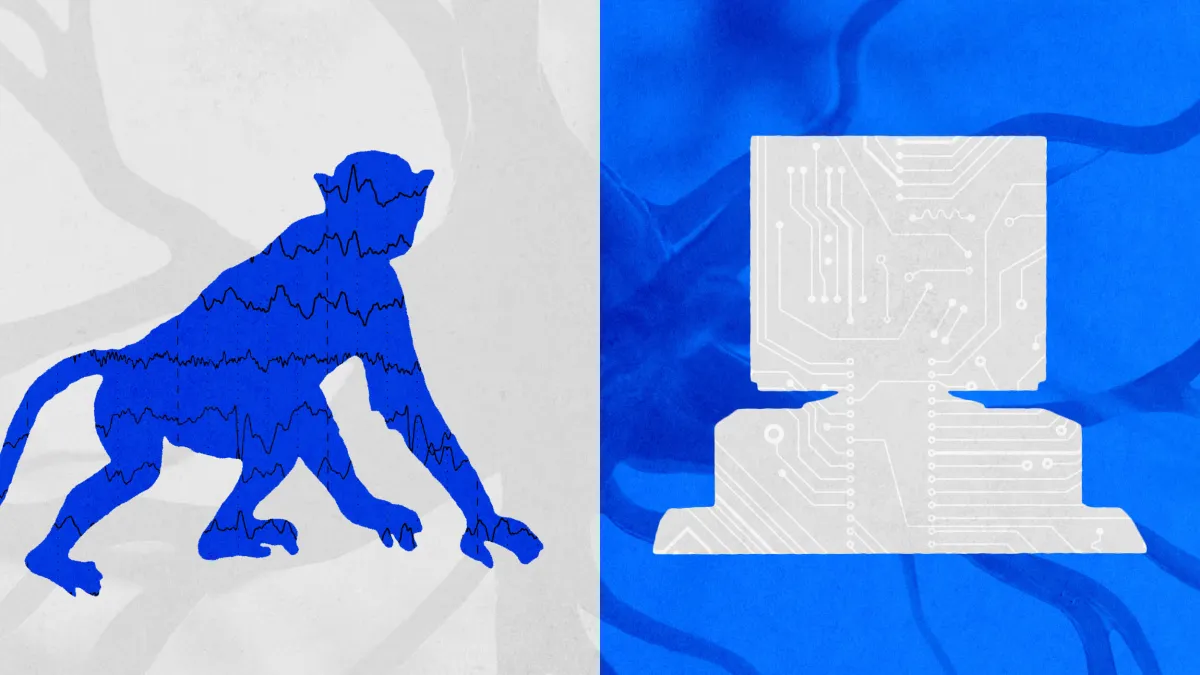
While supercomputers excel at general-purpose tasks and large-scale simulations, quantum computers specialize in problems involving exponential combinations (e.g., materials science, drug discovery, AI optimization). However, quantum systems currently require conventional computers to operate—a dependency that will intensify as they scale from today’s 100+ qubits to thousands or millions. The project envisions supercomputers acting as the “pianists” that play the quantum “piano.”
Twelve user groups are currently testing both systems. The project’s primary objective is to provide concrete answers to “What can quantum computers do *now*?” rather than speculating about future capabilities, while demonstrating practical advantages of tightly integrated hybrid computing for real-world scientific and industrial applications.
A RIKEN-led project is developing system software to tightly integrate quantum computers with supercomputers.
This recently published research is compelling. “Microbiota-IL-17A-brain axis… induced ASD” both in and out of the womb has been our focus in learning about injury. ‘’ https://www.sciencedirect.com/science/article/pii/S0147651323013015 Interesting to see differences related to sex given much higher ASD rates in males, though that ratio has changed over the years.
You may be able to guess what kinds of things can affect microbiota-IL-17A-brain axis in infants, leading to neutrophil activity and brain inflammation in context of gut dysbiosis, a microbial predisposition to adverse reaction and injury. No research is published on this dynamic. Zero. microbiomevaccinesafetyproject Note: this is also the pathway explaining fever reducing symptoms in autism, a double-edged sword. https://www.facebook.com/share/p/1C3ZjUoV8k/
Prenatal caffeine exposure (PCE) is a significant contributor to intrauterine growth retardation (IUGR) in offspring, which has been linked to an increased susceptibility to autism spectrum disorder (ASD) later in life. Additionally, a high-fat diet (HFD) has been shown to exacerbate ASD-like behaviors, but the underlying mechanisms remain unclear. In this study, we first noted in the rat model of IUGR induced by PCE that male PCE offspring exhibited typical ASD-like behaviors post-birth, in contrast to their female counterparts. The female PCE offspring demonstrated only reduced abilities in free exploration and spatial memory. Importantly, both male and female PCE offspring displayed ASD-like behaviors when exposed to HFD.
Researchers have developed a new computational approach that uncovers possible drugs for specific cellular targets for treating glioblastoma, a lethal brain tumor. This approach enabled them to predict more effective treatment combinations to fight the disease on an individualized basis.
This laboratory and computational research effort was led by scientists at Georgetown’s Lombardi Comprehensive Cancer Center.
“The cellular targets we identified could be key to effectively fighting a disease that has seen only one new targeted drug approved in the last two decades,” says Nagi G. Ayad, Ph.D., senior author, associate director for translational research, and professor of oncology at Georgetown Lombardi.
Physicists like Sean Carroll propose not only that quantum mechanics is not only a valuable way of interpreting the world, but actually describes reality, and that the wave function – the centre equation of quantum mechanics – describes a real object.
But, in this article, philosophers Raoni Arroyo and Jonas R. Becker Arenhart argue that the case for wave function realism is deeply confused. While it is a useful component within quantum theory, this alone doesn’t justify treating it as literally real.
Tap the link to read more.
Physicists like Sean Carroll argue not only that quantum mechanics is not only a valuable way of interpreting the world, but actually describes reality, and that the central equation of quantum mechanics – the wave function – describes a real object in the world. But philosophers Raoni Arroyo and Jonas R. Becker Arenhart warn that the arguments for wave-function realism are deeply confused. At best, they show only that the wave function is a useful element inside the theoretical framework of quantum mechanics. But this goes no way whatsoever to showing that this framework should be interpreted as true or that its elements are real. The wavefunction realists are confusing two different levels of debate and lack any justification for their realism. The real question is: does a theory need to be true to be useful?
Quantum mechanics is probably our most successful scientific theory. So, if one wants to know what the world is made of, or how the world looks at the fundamental level, one is well-advised to search for the answers in this theory. What does it say about these problems? Well, that is a difficult question, with no single answer. Many interpretative options arise, and one quickly ends up in a dispute about the pros and cons of the different views. Wavefunction realists attempt to overcome those difficulties by looking directly at the formalism of the theory: the theory is a description of the behavior of a mathematical entity, the wavefunction, so why not think that quantum mechanics is, fundamentally, about wavefunctions? The view that emerges is, as Alyssa Ney puts it, that.
Simultaneous ground-and space-based observations of a newly discovered free-floating planet have enabled direct measurement of its mass and distance from Earth, according to a new Science study.
The findings offer insights into the diverse and dynamic pathways by which planets can be cast adrift into interstellar space.
Learn more in a new Science Perspective.
A collaboration between ground and space observations unveils a rogue planet.
Gavin A. L. Coleman Authors Info & Affiliations
Science
The AI & quantum revolution: redefining research & development, manufacturing & technological exploration
By Chuck Brooks
By Chuck Brooks, president of Brooks Consulting International
We are at a crucial juncture in the annals of technical history. Throughout decades of writing, lecturing, teaching and consulting on emerging technologies, I have observed cycles of invention transform companies, governments and society. The current frontier—a synthesis of artificial intelligence and quantum technologies—is propelling that shift more rapidly and deeply than ever before. These technologies are transforming research methodologies and changing the architecture of production and discovery, presenting remarkable potential alongside significant constraints.
Research & development reconceived: accelerated, intelligent & solution-oriented.