Toggle light / dark theme

Get the latest international news and world events from around the world.

Log in for authorized contributors

Freshwater mussel protein offers new source of inspiration for medical-grade glues

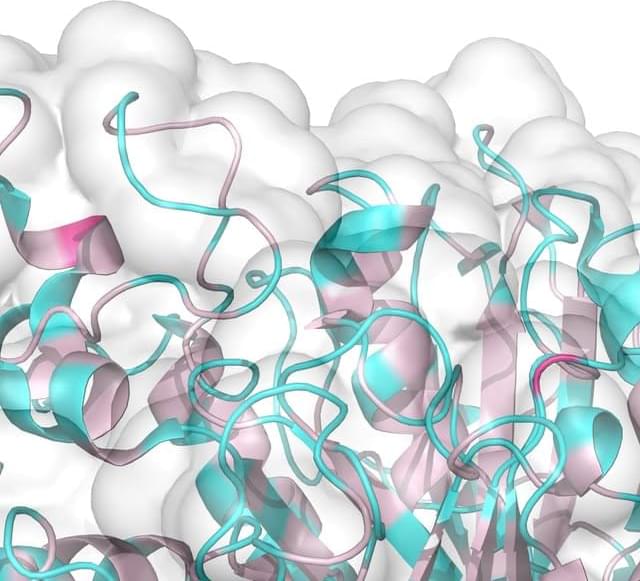
Researchers at the University of Toronto have identified a protein from the quagga mussel that can stick to surfaces underwater, even though it lacks a chemical feature long thought to be essential for this kind of adhesion. The protein, called Dbfp7, is the first freshwater mussel adhesive protein to be functionally characterized.

The finding, published in PNAS, helps explain how some organisms attach themselves in wet environments and could inform the design of future medical glues—such as medical sealants and surgical adhesives—or other materials that need to work reliably in water.

Most studies of underwater adhesion have focused on marine mussels, which use proteins rich in a modified amino acid called 3,4-dihydroxyphenylalanine (DOPA) to bond to surfaces. Freshwater species have been studied less, and whether they rely on the same chemistry has not been clear.

AI lets chemists design molecules by simply describing them

Creating complex molecules usually requires years of experience and countless decisions, but a new AI system is changing that. Synthegy lets chemists guide synthesis and reaction planning using simple language, while powerful algorithms generate and evaluate possible solutions. The AI doesn’t just compute—it reasons, scoring pathways and explaining which ones make the most sense.

How controlling light inside a tiny resonator could speed AI chips and secure communications

A new technology allows light to be “designed” into desired forms, potentially making AI and communication technologies faster and more accurate. A KAIST research team has developed an “integrated photonic resonator”—a core component of next-generation optical integrated circuits that process data using light. Interestingly, the research was led by an undergraduate student. This technology is expected to serve as a key foundation for next-generation security technologies such as highspeed data processing and quantum communication.

The resonator developed by the research team of Professor Sangsik Kim from the School of Electrical Engineering, in collaboration with Professor Jae Woong Yoon’s team from the Department of Physics at Hanyang University, is capable of freely controlling optical signals by utilizing light interference (the phenomenon where two light waves meet and influence each other). Their paper is published in Laser & Photonics Reviews.

Photonic Integrated Circuits (PICs) process data at ultra-high speeds and with low power consumption using light. They are garnering significant attention as a fundamental platform technology for next-generation fields such as AI, data centers, and quantum information processing.

A three-dimensional micro-instrumented neural network device

A three-dimensional soft electronic sensor and stimulator array that is integrated with a three-dimensional cultured neural network can be used to record action potential from multiple planes over a period of 6 months, monitor evolving connectivity maps and pharmacological responses, as well as construct a reservoir neural network for biocomputing.

What If Black Holes ARE Dark Energy?

PBS Member Stations rely on viewers like you. To support your local station, go to: http://to.pbs.org/DonateSPACE

Sign Up on Patreon to get access to the Space Time Discord!
/ pbsspacetime.

We tend to imagine there are connectings between things that we don’t understand. Quantum mechanics and consciousness, aliens and pyramids, black holes and dark matter, dark matter and dark energy, dark energy and black holes. Usually there’s no real relationship whatsoever, but this last pair—black holes and dark energy being the same thing—has received some recent hype in the press. Let’s see if it might actually be true.

Episodes referenced companion playlist: • what if black hole ARE dark energy? | comp…

Check out the Space Time Merch Store.
https://www.pbsspacetime.com/shop.

When “Artificial Neurons” Can Talk Directly to the “Brain”

*** This content was analyzed and written by AI for informational purposes only.
*** Please consult a specialist for professional advice.

The world is entering an era where “technology” and “living organisms” merge into one. Most recently, in 2026, a research team from Northwestern University created a landmark breakthrough by developing “Printed Neurons.” These are not designed just to mimic biology—they can actually “transmit signals” to communicate with living brain cells!

Why is this a big deal?
Typically, the silicon-based computers we use today operate entirely differently from the human brain. Computers consume massive amounts of power and are rigid. In contrast, our brains use only about 20 watts (less than some lightbulbs) and are incredibly flexible.
Creating artificial neurons that “speak the same language as the brain” is the key to treating diseases that were once considered incurable.

Innovations in “Electronic Ink” and “3D Printing“
At the heart of this research lies a leap forward in materials science and engineering:
• Nanomaterials (MoS₂ and Graphene): Researchers used these materials to create a specialized “ink” for printing neural networks. These materials are unique for being both flexible and excellent conductors of electricity.
• Aerosol Jet Printing: This technology allows for nano-level precision printing on flexible plastic sheets, designed to contour perfectly to human tissue.
• Biomimicry: These artificial cells can generate electrical signals called “Spikes,” matching the rhythm and speed of actual biological neurons.

Proven! Successful Communication with a “Mouse Brain“
The research team tested the connection between these printed neurons and mouse brain tissue. The results showed that the mouse brain cells could receive and respond to signals from the artificial device as if they were from their own kind. This is vital evidence that humans can create devices that interface seamlessly with the nervous system.

Printed Neurons Just Talked to Living Brain Cells

Printed artificial neurons reported by Northwestern University can produce neuron-like electrical spikes and trigger responses in living mouse brain tissue. This video explains what was shown, why it matters for brain-like computing and future neural interfaces, and why it is still early laboratory research, not a human implant.

Sources:
Northwestern Now: https://news.northwestern.edu/stories

  • Nature Nanotechnology: https://www.nature.com/natnanotech/
  • Subscribe for clear, cinematic science stories in about five minutes.
    Nature Nanotechnology: https://www.nature.com/natnanotech/

    Subscribe for clear, cinematic science stories in about five minutes.

    Printed Artificial Neurons Connect With Real Brain Cells | WION News

    Northwestern University engineers developed flexible, printed artificial neurons that communicate directly with living brain cells, marking a major breakthrough for brain-machine interfaces and neuroprosthetics. Using aerosol jet printing with materials like molybdenum disulfide, these devices generate signals that trigger responses in mouse brain tissue.

    #neurons #braincells #wion.

    About Channel:

    WION The World is One News examines global issues with in-depth analysis. We provide much more than the news of the day. Our aim is to empower people to explore their world. With our Global headquarters in New Delhi, we bring you news on the hour, by the hour. We deliver information that is not biased. We are journalists who are neutral to the core and non-partisan when it comes to world politics. People are tired of biased reportage and we stand for a globalized united world. So for us, the World is truly One.

    Please keep discussions on this channel clean and respectful and refrain from using racist or sexist slurs and personal insults.

    Check out our website: http://www.wionews.com.

    Can We Simulate a Mind? The Era of the Digital Brain

    What if the human brain could be mapped, simulated… and eventually run like software?

    Scientists have already mapped a single cubic millimeter of the human brain, generating a staggering 1.4 petabytes of data. But that’s just the beginning.

    In this video, we break down:

    The rise of connectomics and full brain mapping
    How AI reconstructs neurons from petavoxel-scale data
    Why a brain map alone isn’t enough to recreate intelligence
    The emergence of digital brain twins
    And how models like ZAPBench are predicting brain activity like a weather forecast.

    From the complete neural wiring of a fruit fly to simulations like OpenWorm, we are entering an era where biology meets computation.

    This isn’t science fiction anymore. It’s engineering.

    /* */