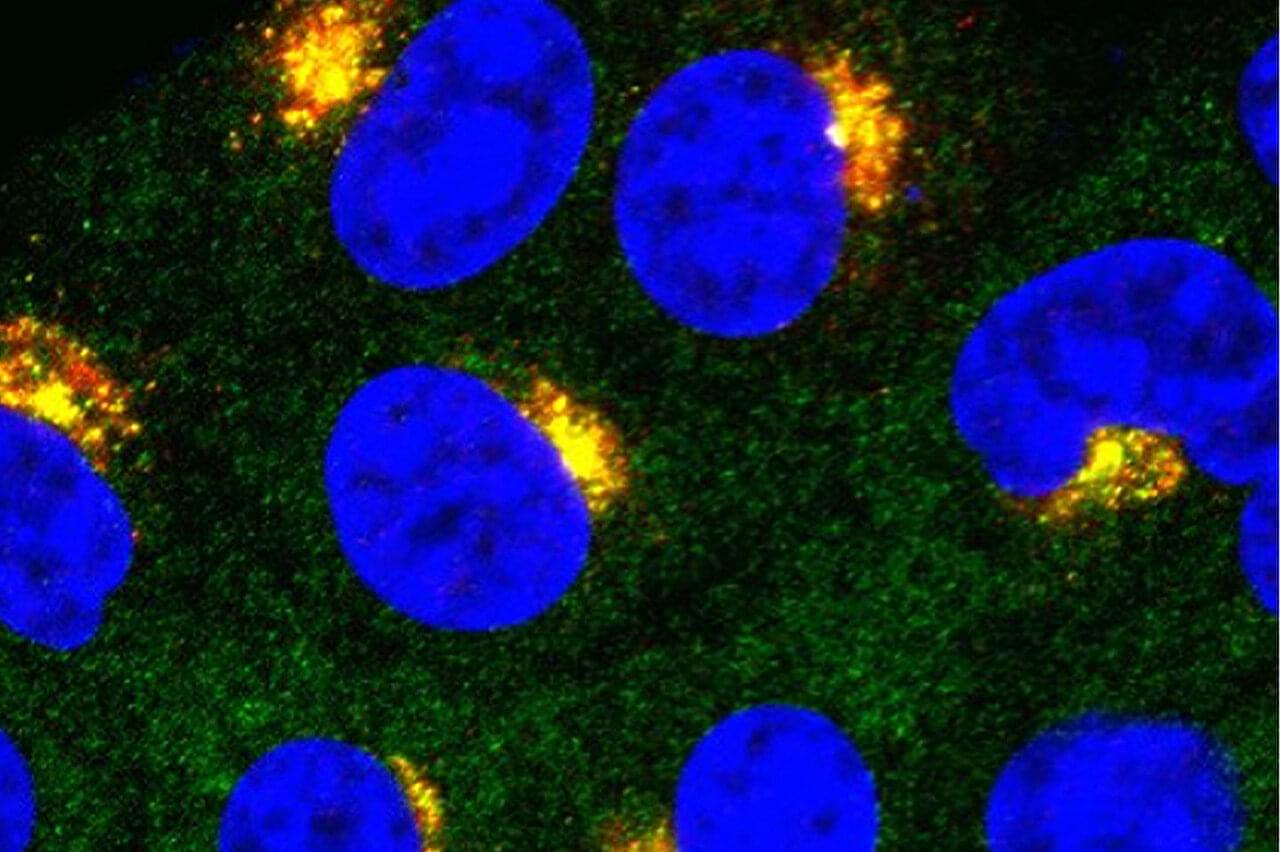
UT Southwestern Medical Center researchers have identified two lipids that work together with a quintessential protein known as stimulator of interferon genes (STING) to launch an immune response in the human body. Their findings, detailed in two papers published concurrently in Nature, could lead to new ways to manipulate the immune system to fight infections, cancer, autoimmune disorders, and neurodegenerative diseases.
“These studies reveal additional levels of regulation of the cGAS-STING pathway, underscoring the importance of controlling the activity of this pathway so the body can mount an effective immune response against infections while avoiding autoimmune reactions to self-tissues. Dysregulation of this pathway has been shown to cause a variety of autoimmune and inflammatory diseases,” said Zhijian “James” Chen, Ph.D., Professor of Molecular Biology and Director of the Center for Inflammation Research at UT Southwestern.
Dr. Chen, one of the world’s leading researchers on innate immunity, is a co-author on one study and senior author on the other. His discovery of cGAS, an enzyme that produces a molecule called cGAMP to activate STING, has been recognized with numerous top honors including the 2026 Japan Prize in Life Sciences, the 2024 Albert Lasker Basic Medical Research Award, and the 2019 Breakthrough Prize in Life Sciences.