Toggle light / dark theme

Get the latest international news and world events from around the world.

Log in for authorized contributors

An old jeweler’s trick could unlock next-generation nuclear clocks

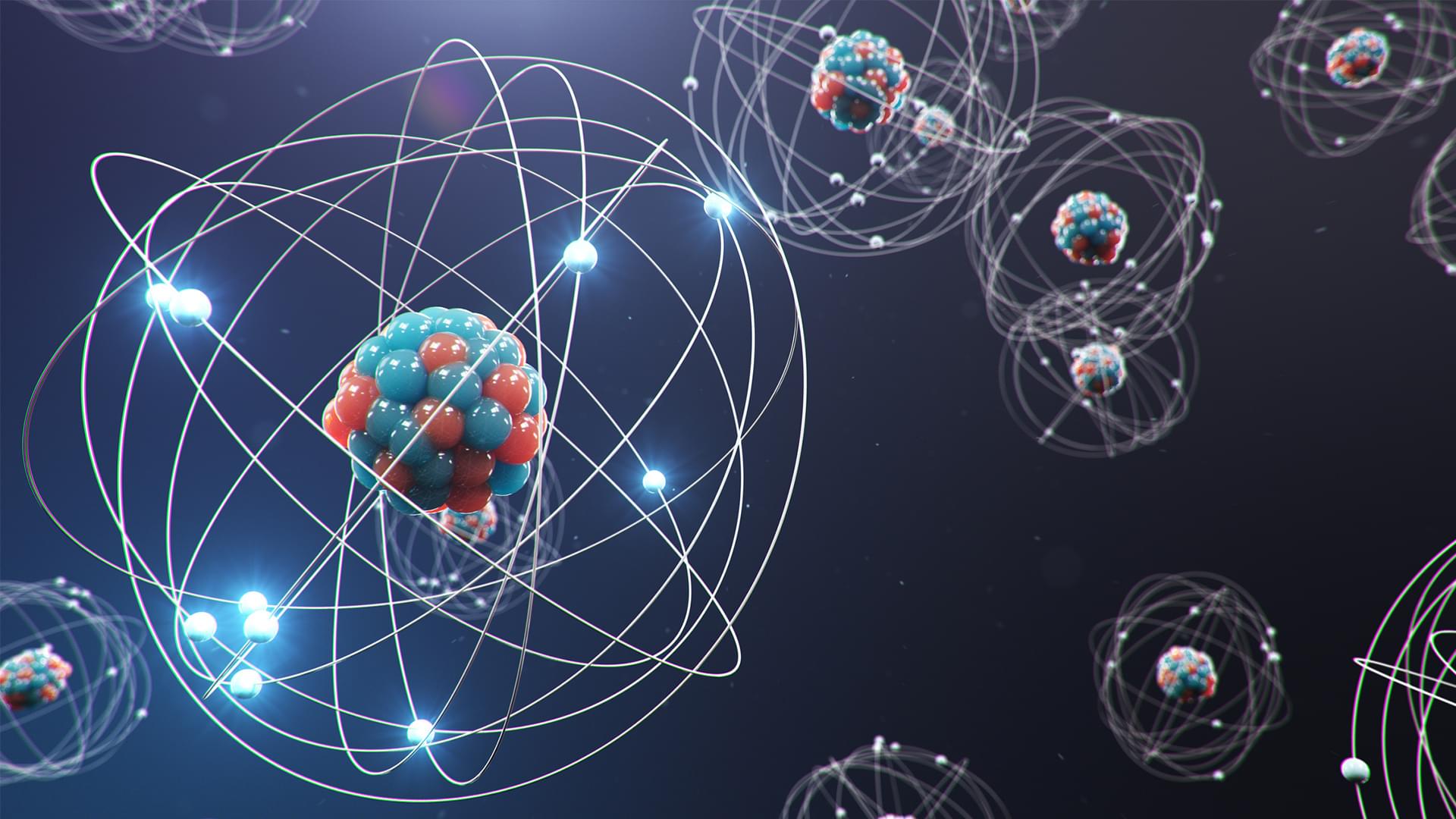
In 2008, a team of UCLA-led scientists proposed a scheme to use a laser to excite the nucleus of thorium atoms to realize extremely accurate, portable clocks. Last year, they realized this longstanding goal by bombarding thorium atoms embedded in specialized fluoride crystals with a laser. Now, they have found a way to dramatically simplify and strengthen the process by replacing the specialized crystals with thorium electroplated onto steel.

They observe, for the first time, that laser excitation of the thorium nucleus in this system leads to a measurable electric current, which can be used to miniaturize the nuclear clock. The advance is needed for smaller, more efficient atomic clocks, which have long been sought to improve navigation, GPS, power grids, and communications. It will also allow for some of the tightest tests ever of fundamental physics.

The rhythm of swarms: Tunable particles synchronize movement like living organisms

A collaboration between the University of Konstanz and Forschungszentrum Jülich has achieved the first fully tunable experimental realization of a long predicted “swarmalator” system. The study, published in Nature Communications, shows how tiny, self-propelled particles can simultaneously coordinate their motion and synchronize their internal rhythms—a behavior reminiscent of flashing fireflies, Japanese tree frogs or schooling fish.

The results underline how collective dynamics can arise from simple interactions, without overarching leadership or control. Possible applications include autonomous robotic swarms.

Swarmalators—short for swarming oscillators—are systems in which each individual not only moves but also oscillates, with motion and rhythm influencing one another.

Quantum machine learning nears practicality as partial error correction reduces hardware demands

Imagine a future where quantum computers supercharge machine learning—training models in seconds, extracting insights from massive datasets and powering next-gen AI. That future might be closer than you think, thanks to a breakthrough from researchers at Australia’s national research agency, CSIRO, and The University of Melbourne.

Until now, one big roadblock stood in the way: errors. Quantum processors are noisy, and quantum machine learning (QML) models need deep circuits with hundreds of gates. Even tiny errors pile up fast, wrecking accuracy. The usual fix—quantum error correction—may work, but it’s expensive. We’re talking millions of qubits just to run one model. That’s way beyond today’s hardware.

So, what’s the game-changer? The team discovered that you don’t need to correct everything.

Direct observation reveals ‘two-in-one’ roles of plasma turbulence

Producing fusion energy requires heating plasma to more than one hundred million degrees and confining it stably with strong magnetic fields. However, plasma naturally develops fluctuations known as turbulence, and they carry heat outward and weaken confinement. Understanding how heat and turbulence spread is therefore essential.

Conventional theory has assumed that heat and turbulence move gradually from the center toward the edge. Yet experiments have sometimes shown heat and turbulence spreading much faster, similar to American football players passing a ball quickly across long distances so that a local change influences the entire field almost at once. Clarifying the cause of this rapid, long-range response has been a long-standing challenge.

A research team from the National Institute for Fusion Science carried out short-duration heating of the plasma core in the Large Helical Device and used high-precision diagnostic instruments, based on electromagnetic waves of various wavelengths, to measure temperature, turbulence, and heat propagation with fine spatial and temporal resolution.

Polarized light boosts accuracy of wearable health sensors for all skin tones

Photoplethysmography (PPG) is an optical sensing technique that measures blood volume changes and underpins devices ranging from hospital-grade pulse oximeters to consumer wearables that track heart rate, sleep, and oxygenation.

Despite its widespread use, PPG accuracy can vary significantly across individuals, particularly by skin tone. Darker skin contains more melanin, which absorbs and scatters light, often leading to less reliable readings. This disparity has been linked to inaccuracies in blood-oxygen measurements among people with more melanin.

Theoretical results could lead to faster, more secure quantum technology

University of Iowa researchers have discovered a method to “purify” photons, an advance that could make optical quantum technologies more efficient and more secure.

The work is published in the journal Optica Quantum.

The researchers investigated two nagging challenges to creating a steady stream of single photons, the gold standard method for realizing photonic quantum computers and secure communication networks. One obstacle is called laser scatter, which occurs when a laser beam is directed at an atom, causing it to emit a photon, which is a single unit of light. While effective, the technique can yield extra, redundant photons, which hampers the optical circuit’s efficiency, much like a wayward current in an electrical circuit.

LHC delivers a record number of particle collisions in 2025

All experiments broke records in the final full operating year of the third run of the LHC.

After a few final laps around the ring, the beams of the Large Hadron Collider (LHC) were paused at 6.00 a.m. on Monday, 8 December for the usual year-end technical stop. Launched on 5 May, the LHC’s 11th year-long run of high-energy physics broke a new record for integrated luminosity by delivering 125 fb-1 to both the ATLAS and the CMS experiments. Over the full lifetime of the LHC, ATLAS and CMS have now each delivered an integrated luminosity of 500 fb-1, equating to approximately 50 million billion particle collisions.

All four LHC experiments performed extremely well throughout the 2025 proton run, detecting more collisions than in any previous year and reporting data-taking efficiencies of more than 90%. LHCb continued to benefit from the significant upgrades that were completed in 2023, further increasing its recorded luminosity to a new record of 11.8 fb-1 in 2025.

/* */