Toggle light / dark theme

Get the latest international news and world events from around the world.

Log in for authorized contributors

Fecal transplant capsules show promising results in clinical trials for multiple types of cancer

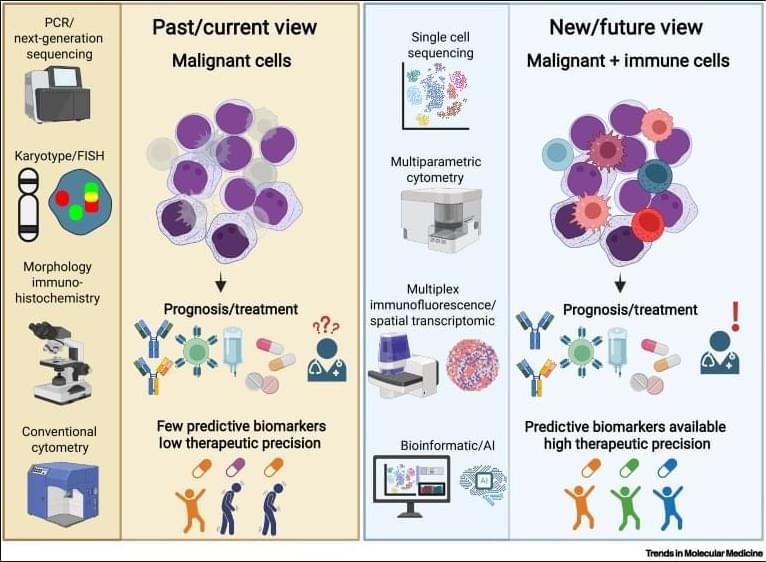
Fecal microbiota transplants (FMT) can dramatically improve cancer treatment, suggest two groundbreaking studies published in the Nature Medicine journal. The first study shows that the toxic side effects of drugs to treat kidney cancer could be eliminated with FMT. The second study suggests FMT is effective in improving the response to immunotherapy in patients with lung cancer and melanoma.

The findings represent a giant step forward in using FMT capsules—developed at Lawson Research Institute (Lawson) of St. Joseph’s Health Care London and used in clinical trials at London Health Sciences Centre Research Institute (LHSCRI) and Centre de recherche du Centre hospitalier de l’Université de Montréal (CRCHUM)—for safe and effective cancer treatment.

A Phase I clinical trial was conducted by scientists at LHSCRI and Lawson to determine if FMT is safe when combined with an immunotherapy drug to treat kidney cancer. The team found that customized FMT may help reduce toxic side effects from immunotherapy. The clinical trial involved 20 patients at the Verspeeten Family Cancer Centre at London Health Sciences Centre (LHSC).

Scientists discover hidden geometry that bends electrons like gravity

Researchers have discovered a hidden quantum geometry inside materials that subtly steers electrons, echoing how gravity warps light in space. Once thought to exist only on paper, this effect has now been observed experimentally in a popular quantum material. The finding reveals a new way to understand and control how materials conduct electricity and interact with light. It could help power future ultra-fast electronics and quantum technologies.

In its second-largest ever acquisition, US tech giant acquires Q.ai amid effort to break into wearables market; 30% of firm’s staff were called up to reserve duty on Oct. 7…

Q.ai is tight-lipped in public about its technology, but patents it filed show tech being used in headphones or glasses using ‘facial skin micro movements’ for nonverbal communication, according to the FT.

Apple’s vice president of hardware, Johnny Srouji, said in a statement that the startup is ‘pioneering new and creative ways to use imaging and machine learning.’

The move may be a component of Apple’s strategy for ‘wearable’ products, such as smart glasses. Software that reads facial expressions could potentially make way for a hands-free user interface that doesn’t require talking out loud, reports noted.

Spaceflight causes astronauts’ brains to shift, stretch and compress in microgravity

Spaceflight takes a physical toll on astronauts, causing muscles to atrophy, bones to thin and bodily fluids to shift. According to a new study published in the journal PNAS, we can now add another major change to that list. Being in microgravity causes the brain to change shape.

Here on Earth, gravity helps to keep the brain anchored in place while the cerebrospinal fluid that surrounds it acts as a cushion. Scientists already knew that, without gravity’s steady pull, the brain moves upward, but this new research showed that it is also stretched and compressed in several areas.

Brains on the move Researchers led by Rachel Seidler at the University of Florida reached this conclusion after studying MRI scans of 26 astronauts taken before and after their missions to the International Space Station. These were compared with scans from 24 volunteers who participated in a head-down tilt bed rest experiment. They spent 60 days lying at a six-degree downward angle to mimic how weightlessness causes bodily fluids and organs to move toward the head.

New 3D map of the sun’s magnetic interior could improve predictions of disruptive solar flares

For the first time, scientists have used satellite data to create a 3D map of the sun’s interior magnetic field, the fundamental driver of solar activity. The research, published in The Astrophysical Journal Letters, should enable more accurate predictions of solar cycles and space weather that affects satellites and power grids.

The sun is more than just a fiery hot ball of hydrogen and helium gas. It is a giant magnetic star. Beneath the surface is a magnetic layer that is responsible for everything from the dark spots we see on its face to violent flares that erupt into space. Because of the disruption caused by solar storms, we need to know what is going on inside. We can’t directly observe the interior, so to date we have relied on models that depend on simplified assumptions. But these can be inaccurate.

To get a better idea of what is going on inside the sun, researchers from India fed 30 years of daily magnetic maps from satellites (from 1996 to 2025) into a sophisticated 3D model of the solar dynamo, the physical process that generates the sun’s magnetic field. By using this real-world data, they could track how magnetic fields move deep beneath the surface, where satellites cannot penetrate.

Geometry behind how AI agents learn revealed

A new study from the University at Albany shows that artificial intelligence systems may organize information in far more intricate ways than previously thought. The study, “Exploring the Stratified Space Structure of an RL Game with the Volume Growth Transform,” has been published online through arXiv.

For decades, scientists assumed that neural networks encoded data on smooth, low-dimensional surfaces known as manifolds. But UAlbany researchers found that a transformer-based reinforcement-learning model instead organizes its internal representations in stratified spaces—geometric structures composed of multiple interconnected regions with different dimensions. Their findings mirror recent results in large language models, suggesting that stratified geometry might be a fundamental feature of modern AI systems.

“These models are not living on simple surfaces,” said Justin Curry, associate professor in the Department of Mathematics and Statistics in the College of Arts and Sciences. “What we see instead is a patchwork of geometric layers, each with its own dimensionality. It’s a much richer and more complex picture of how AI understands the world.”

/* */