Researchers identify a distinct blood viral profile in Crohn’s disease, suggesting circulating bacteriophages may serve as a novel disease marker.
Spinosaurs have sometimes been portrayed as swimmers or divers, but a new species of these dinosaurs bolsters the idea that they were more like gigantic herons
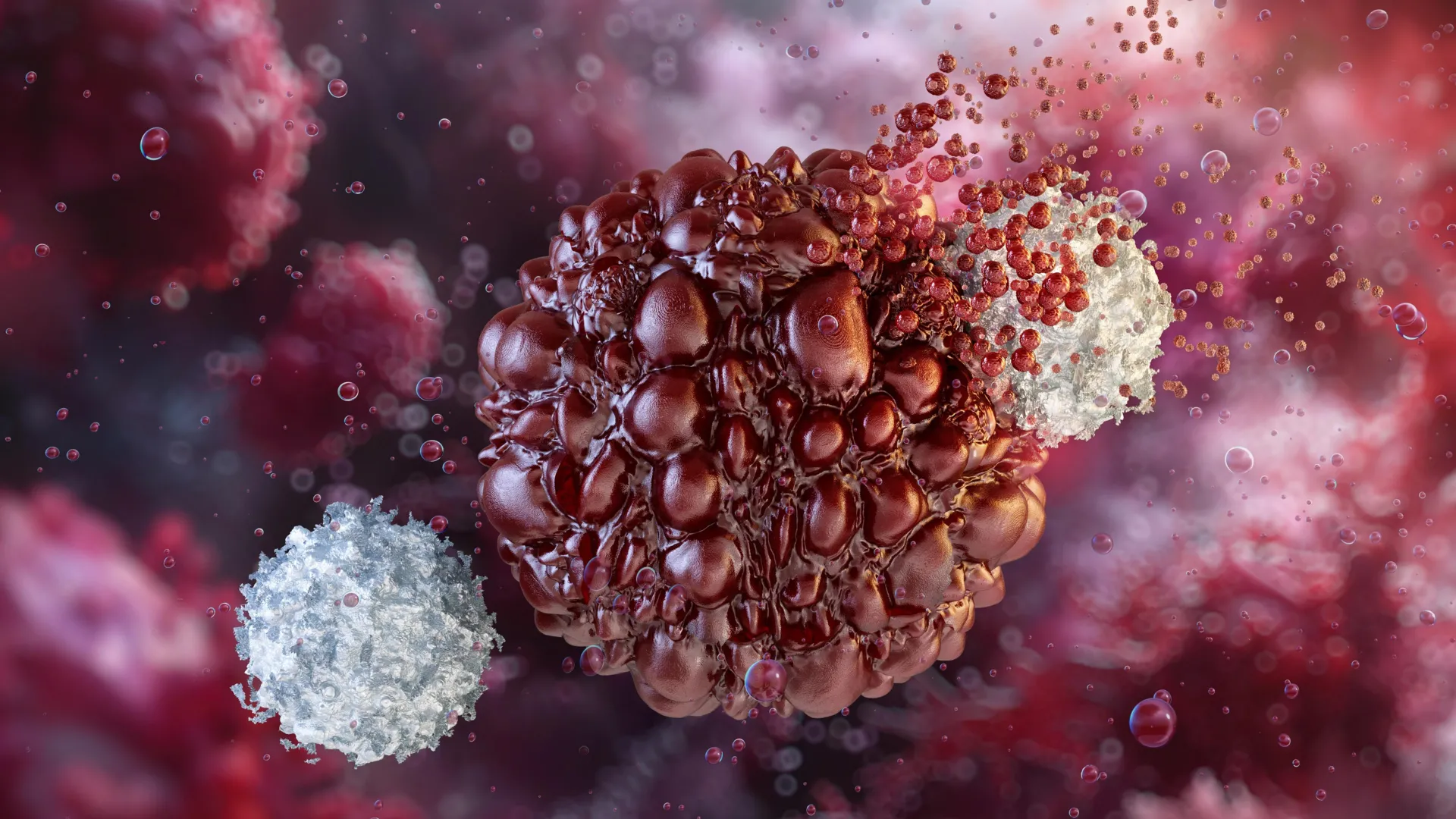
Scientists in China have unveiled a breakthrough way to mass-produce powerful cancer-fighting immune cells in the lab. By engineering early-stage stem cells from cord blood—rather than trying to modify mature natural killer (NK) cells—they created a streamlined process that generates enormous numbers of highly potent NK cells, including CAR-equipped versions designed to hunt specific cancers.
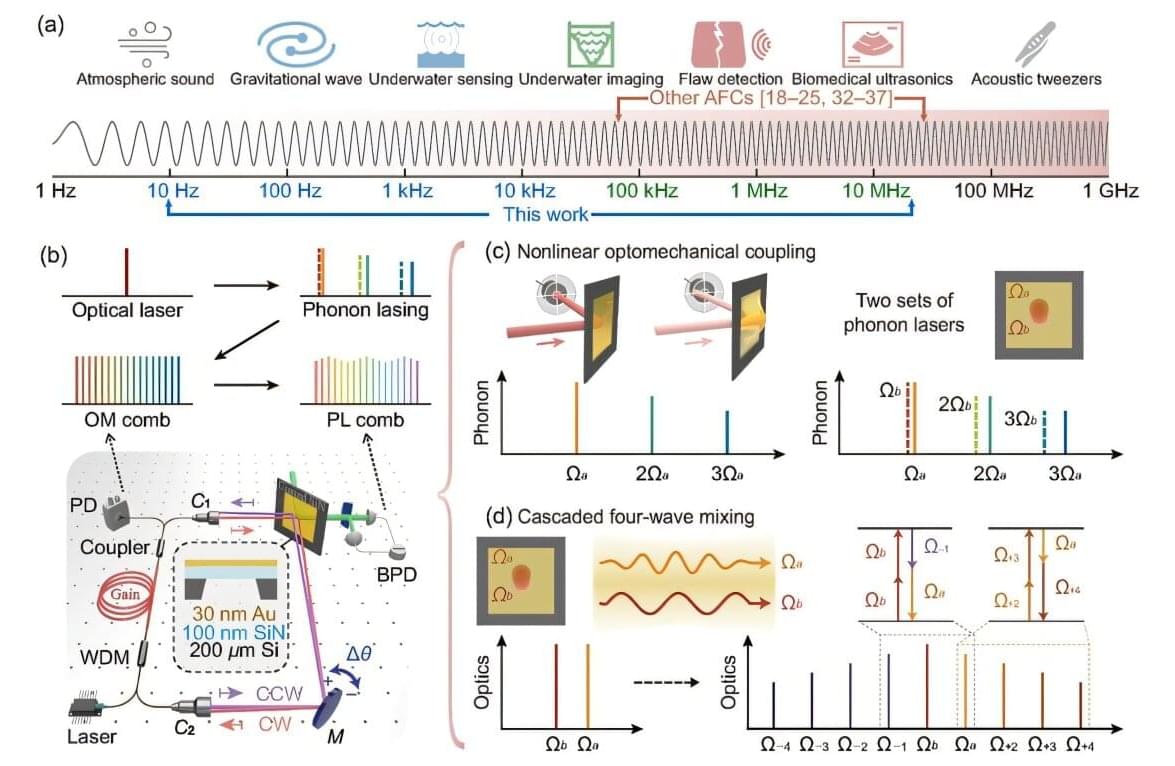
Acoustic frequency combs organize sound or mechanical vibrations into a series of evenly spaced frequencies, much like the teeth on a comb. They are the acoustic counterparts of optical frequency combs, which consist of equally spaced spectral lines and act as extraordinarily precise rulers for measuring light.
While optical frequency combs have revolutionized fields such as precision metrology, spectroscopy, and astronomy, acoustic frequency combs utilize sound waves, which interact with materials in fundamentally different ways and are well-suited for various sensing and imaging applications.
However, existing acoustic frequency combs operate only at very high, inaudible frequencies above 100 kHz and typically produce no more than a few hundred comb teeth, limiting their applicability.
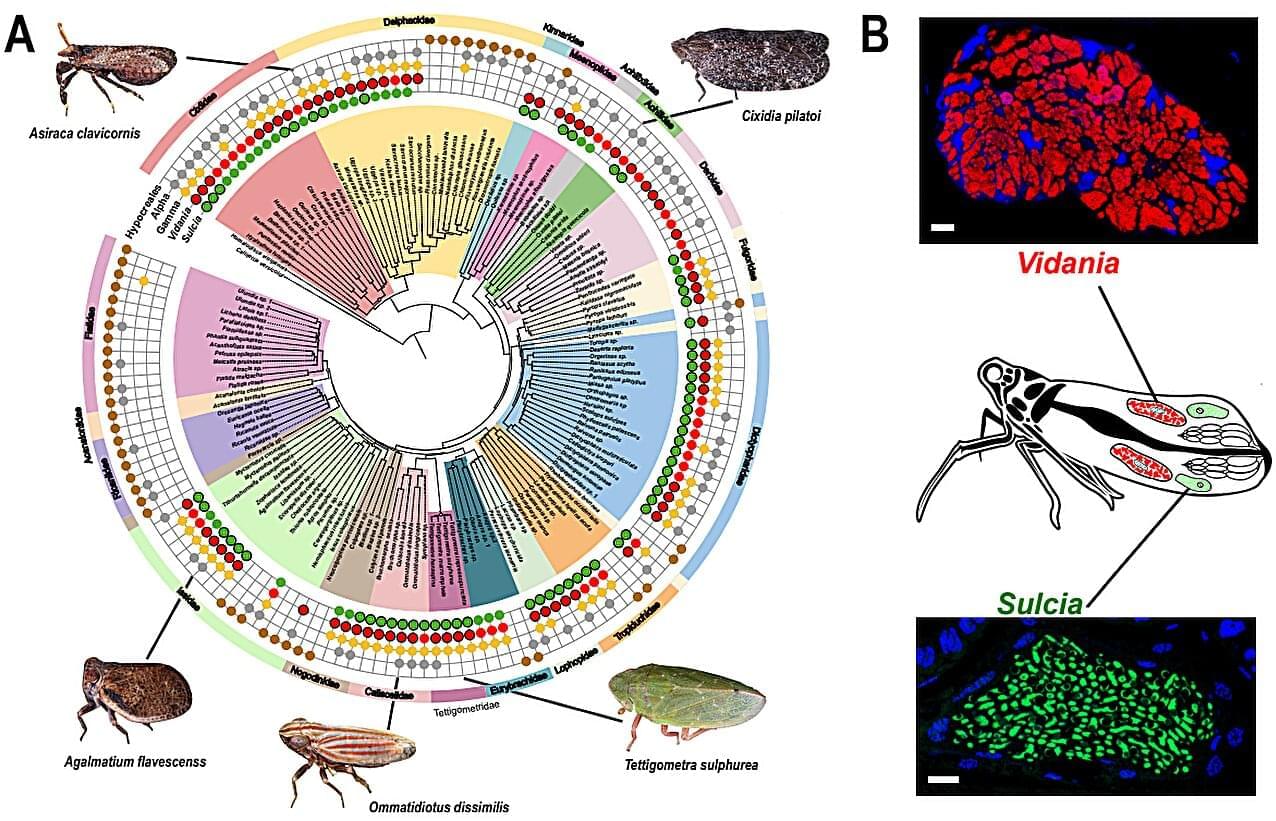
Many insects rely on heritable bacterial endosymbionts for essential nutrients that they cannot get through their diet. A new study, published in Nature Communications, indicates that the genomes of these symbiotic bacteria often shrink over time. Some of these bacteria, which live inside certain insect cells, have lost so many genes that they have broken the record for the tiniest genome ever found—almost blurring the lines between organelle and bacteria.
Endosymbiotic relationships are common in many insects, and in sap-sucking insects, like planthoppers and cicadas, they are essential for the insect’s survival. Because the sap of plants does not typically contain certain amino acids or vitamins, the insect must get them another way. Over hundreds of millions of years, these insects have co-evolved with bacteria that provide these additional nutrients.
Sulcia and Vidania are two examples of bacterial endosymbionts, which have co-evolved with planthoppers for more than 260 million years. These bacteria live in specialized cells within the planthopper abdomen. The new study has found that, along with their hosts, these endosymbionts have evolved—or devolved—in some unexpected ways.
Neutron stars are ultra-dense remnants of massive stars that collapsed after supernova explosions and are made up mostly of subatomic particles with no electric charge (i.e., neutrons). When two neutron stars collide, they are predicted to produce gravitational waves, ripples in the fabric of spacetime that travel at the speed of light.
Gravitational waves typically take the form of oscillations, periodically and temporarily influencing the universe’s underlying fabric (i.e., spacetime). However, general relativity suggests that for some cosmological events, in addition to the oscillatory displacement of test masses (as produced by the passage of a gravitational wave train), there exists a final permanent displacement of them via a phenomenon referred to as “gravitational wave memory.”
Researchers at the University of Illinois at Urbana-Champaign, the Academy of Athens, the University of Valencia and Montclair State University recently carried out a study exploring the gravitational wave memory effects that would arise from neutron star mergers.
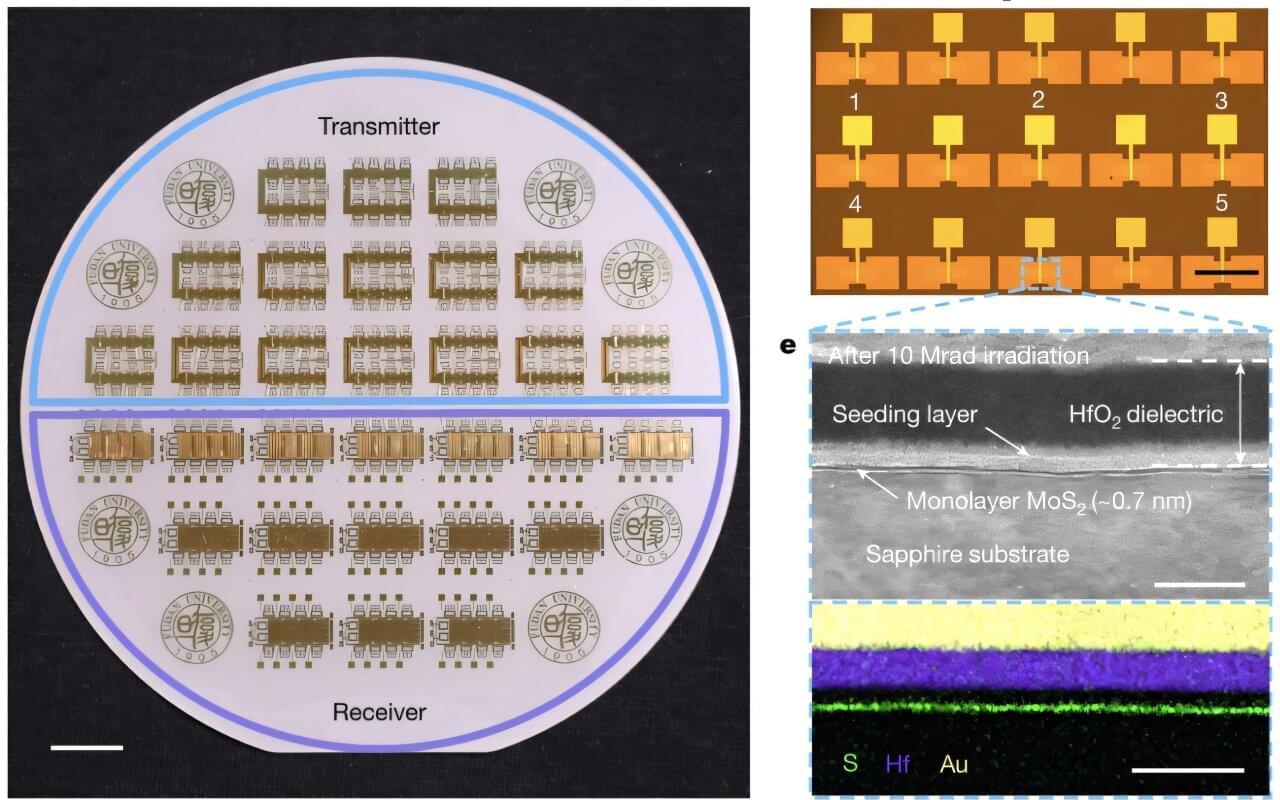
Atom-thick layers of molybdenum disulfide are ideally suited for radiation-resistant spacecraft electronics, researchers in China have confirmed. In a study published in Nature, Peng Zhou and colleagues at Fudan University put a communications system composed of the material through a gauntlet of rigorous tests—including the transmission of their university’s Anthem—confirming that its performance is barely affected in the harsh environment of outer space.
Beyond the protection of Earth’s magnetic field, the electronic components of modern spacecraft are extremely vulnerable to constant streams of cosmic rays and heavy ions. While onboard systems can be shielded with radiation-protective materials, this approach takes up valuable space and adds weight to spacecraft.
That extra mass drives up launch costs and can limit the payload available for scientific instruments or communications hardware. A far better solution would be to fabricate the electronics themselves from materials that are intrinsically resistant to radiation damage.
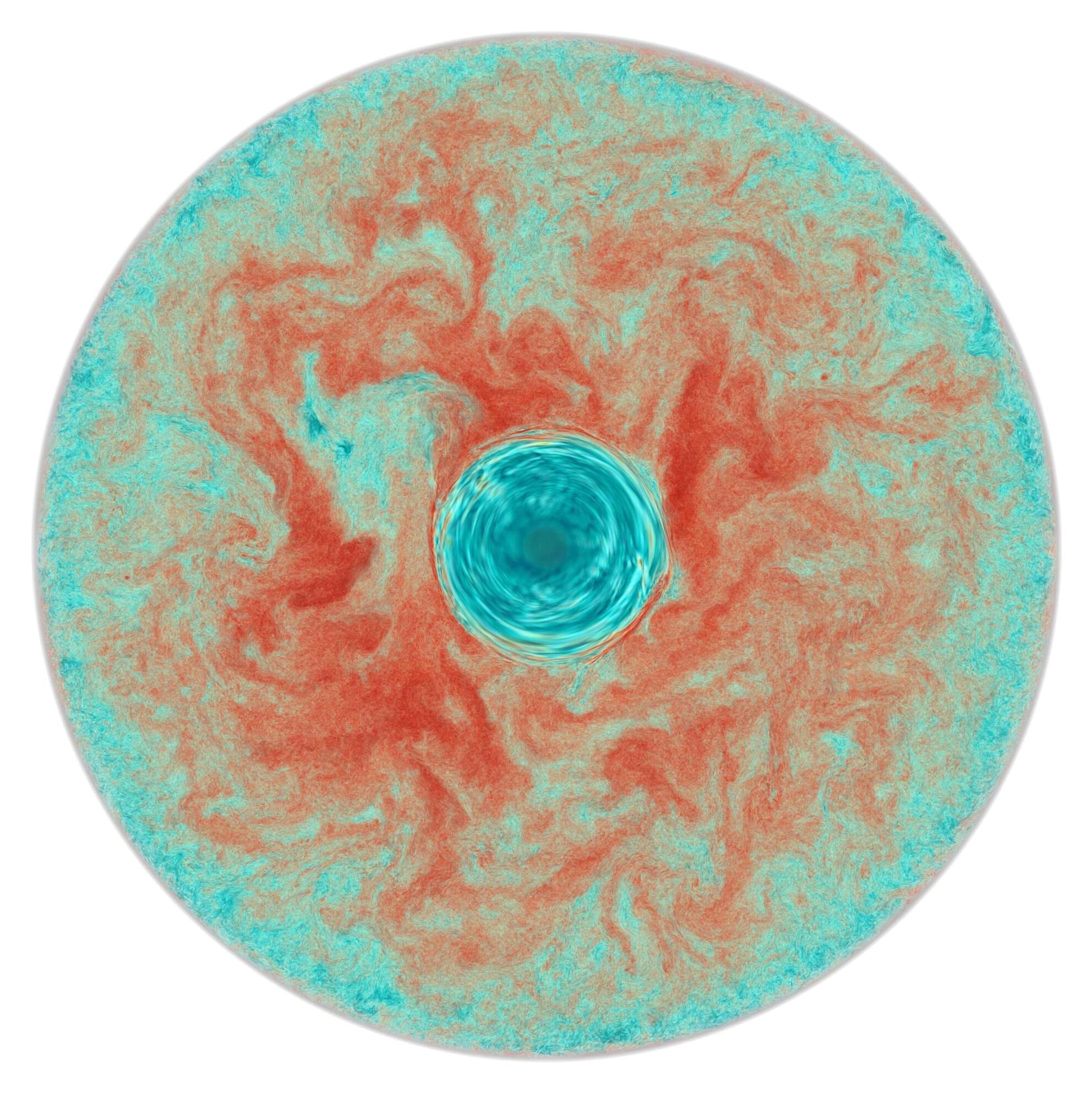
Advances in supercomputing have made solving a long‐standing astronomical conundrum possible: How can we explain the changes in the chemical composition at the surface of red giant stars as they evolve?
For decades, researchers have been unsure exactly how the changing chemical composition at the center of a red giant star, caused by nuclear burning, connects to changes in composition at the surface. A stable layer acts as a barrier between the star’s interior and the outer connective envelope, and how elements cross that layer remained a mystery.
In a Nature Astronomy paper, researchers at the University of Victoria’s (UVic) Astronomy Research Center (ARC) and the University of Minnesota solved the problem.
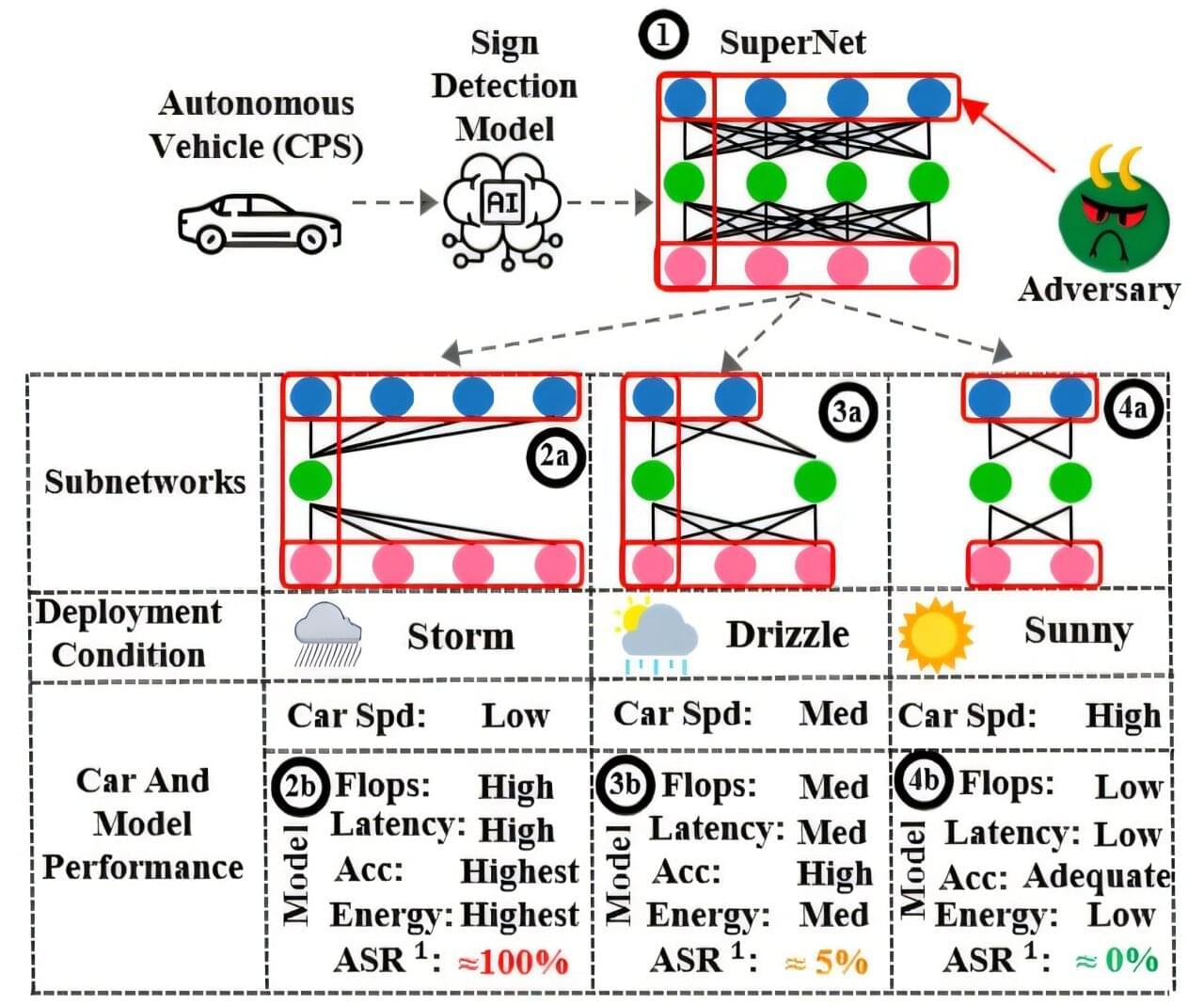
A newly discovered vulnerability could allow cybercriminals to silently hijack the artificial intelligence (AI) systems in self-driving cars, raising concerns about the security of autonomous systems increasingly used on public roads. Georgia Tech cybersecurity researchers discovered the vulnerability, dubbed VillainNet, and found it can remain dormant in a self-driving vehicle’s AI system until triggered by specific conditions. Once triggered, VillainNet is almost certain to succeed, giving attackers control of the targeted vehicle.
The research finds that attackers could program almost any action within a self-driving vehicle’s AI super network to trigger VillainNet. In one possible scenario, it could be triggered when a self-driving taxi’s AI responds to rainfall and changing road conditions. Once in control, hackers could hold the passengers hostage and threaten to crash the taxi.
The researchers discovered this new backdoor attack threat in the AI super networks that power autonomous driving systems.