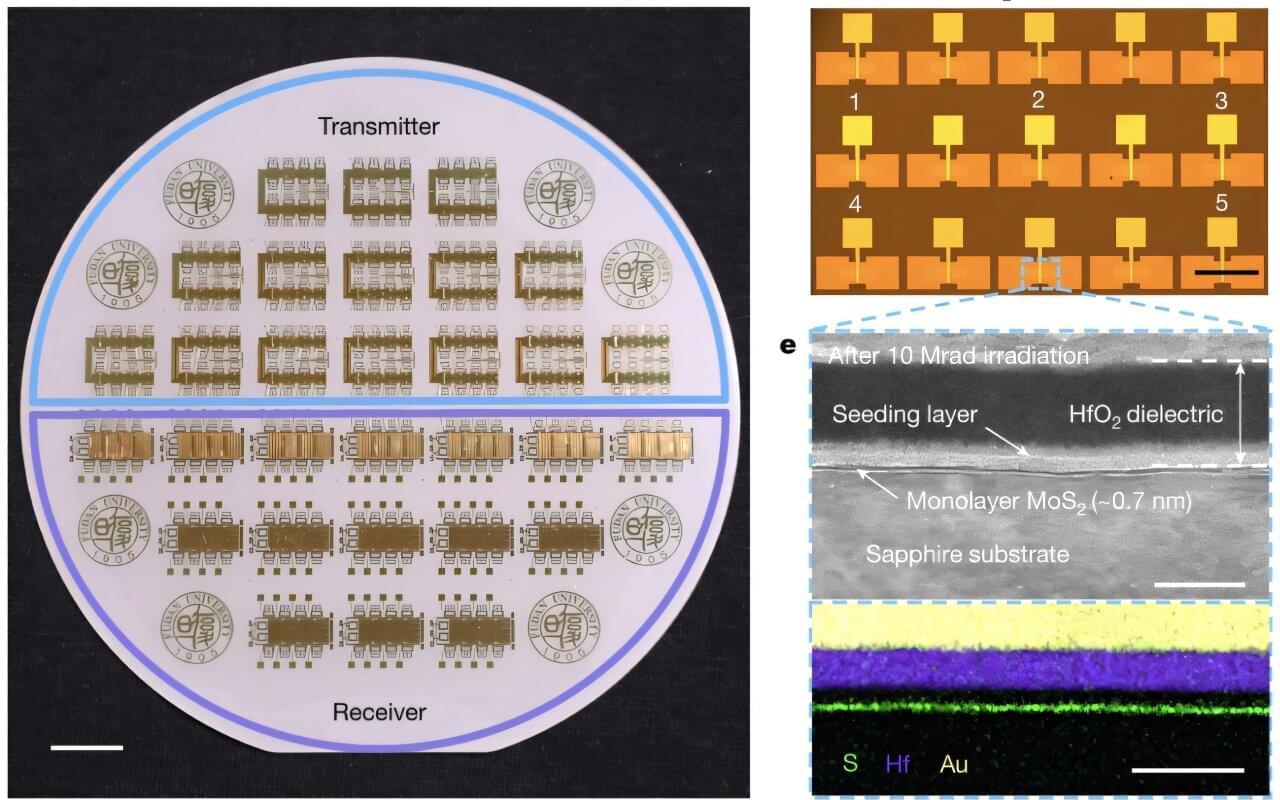
Atom-thick layers of molybdenum disulfide are ideally suited for radiation-resistant spacecraft electronics, researchers in China have confirmed. In a study published in Nature, Peng Zhou and colleagues at Fudan University put a communications system composed of the material through a gauntlet of rigorous tests—including the transmission of their university’s Anthem—confirming that its performance is barely affected in the harsh environment of outer space.
Beyond the protection of Earth’s magnetic field, the electronic components of modern spacecraft are extremely vulnerable to constant streams of cosmic rays and heavy ions. While onboard systems can be shielded with radiation-protective materials, this approach takes up valuable space and adds weight to spacecraft.
That extra mass drives up launch costs and can limit the payload available for scientific instruments or communications hardware. A far better solution would be to fabricate the electronics themselves from materials that are intrinsically resistant to radiation damage.