Toggle light / dark theme

Get the latest international news and world events from around the world.

Log in for authorized contributors

Water’s local asymmetry drives proton hopping between molecules, simulations reveal

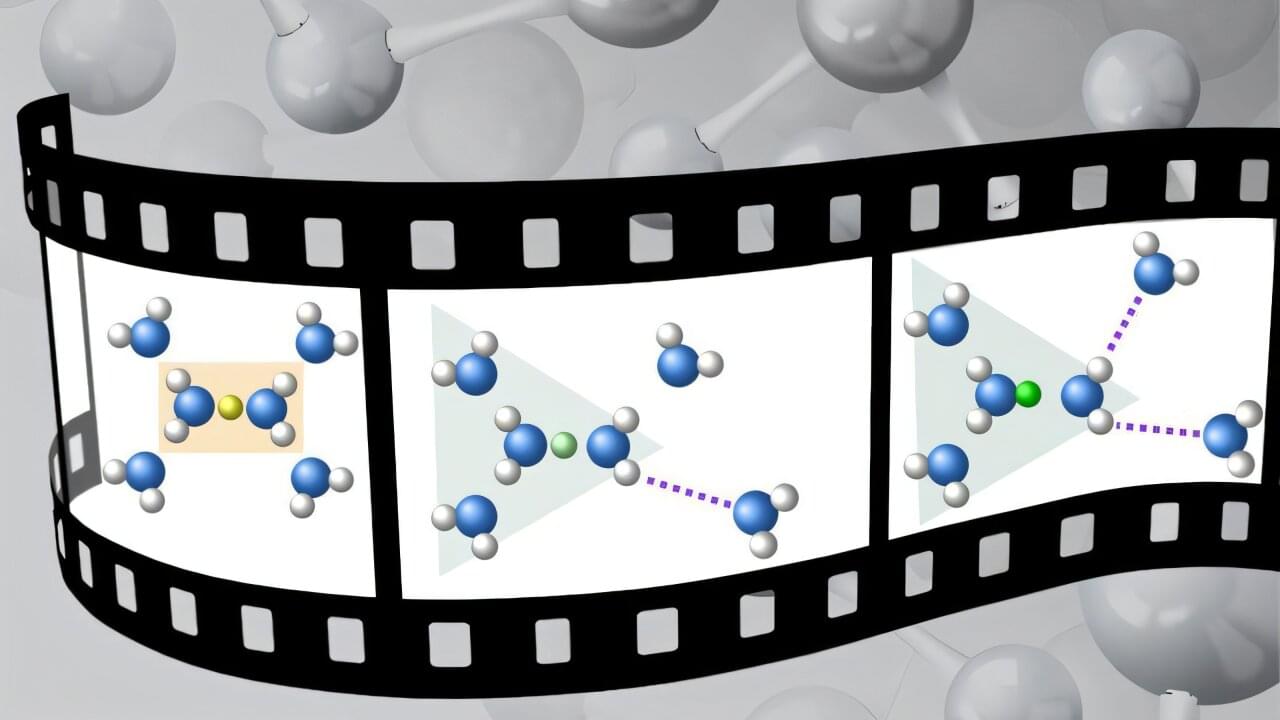
Complex simulations—the most intricate of their kind to date—carried out by an international research team led by scientists at Heidelberg University’s Institute for Physical Chemistry, have revealed how water governs the way protons move through it. Using their modeling, researchers from Cambridge (U.K.), Bochum, Dijon (France) and Heidelberg were able to trace, in full quantum detail, the movements of a proton shared among six water molecules. At its core, the work addresses how a proton moves through water: not as a single particle drifting along, but by “hopping” from one molecule to the next.

This “hopping” motion has been known since the 19th century. When an acid dissolves in water, the released proton—a positively charged hydrogen ion—does not remain bound to a single water molecule. It is highly mobile and constantly jumps from one molecule to the next.

Thin films ‘dance’ with substrates that are no longer inert, opening path toward 3D chips

Many of today’s electronic devices—from the semiconductors in your cell phone to the photovoltaic cells in your solar panels—are built on thin-film substrates. The thin film is an electrically conductive material, while the substrate is an inert material. Or is it?

Physicists and materials scientists have long assumed substrates do not react to electrical stimuli, but new research from the University of California San Diego and a team of collaborators has shown that substrates are not inert after all. The discovery has the potential to help engineers build the dense, three-dimensional, brain-inspired computer chips needed for more energy-efficient computing. This work appears in Science.

The research began four years ago in UC San Diego Associate Professor of Physics Alex Frañó’s lab. Frañó is a principal investigator and assistant director at the Quantum Materials for Energy-Efficient Neuromorphic Computing (Q-MEEN-C), one of the U.S. Department of Energy’s Energy Frontier Research Centers. One of the goals of Q-MEEN-C is to develop quantum materials that can be used in neuromorphic, or “brain-like,” computing.

Quantum neural networks get their first hardware test

Neural networks have transformed how machines find patterns in data, from recognizing faces in photos to predicting the shapes of proteins. So far, all of this progress has been made on ordinary classical computers, but with quantum computers now edging into practical use, there is a real possibility that neural networks could tap into distinctly quantum effects and operate in ways that classical machines never could. So far, however, neural networks have proven far more difficult to run on quantum hardware.

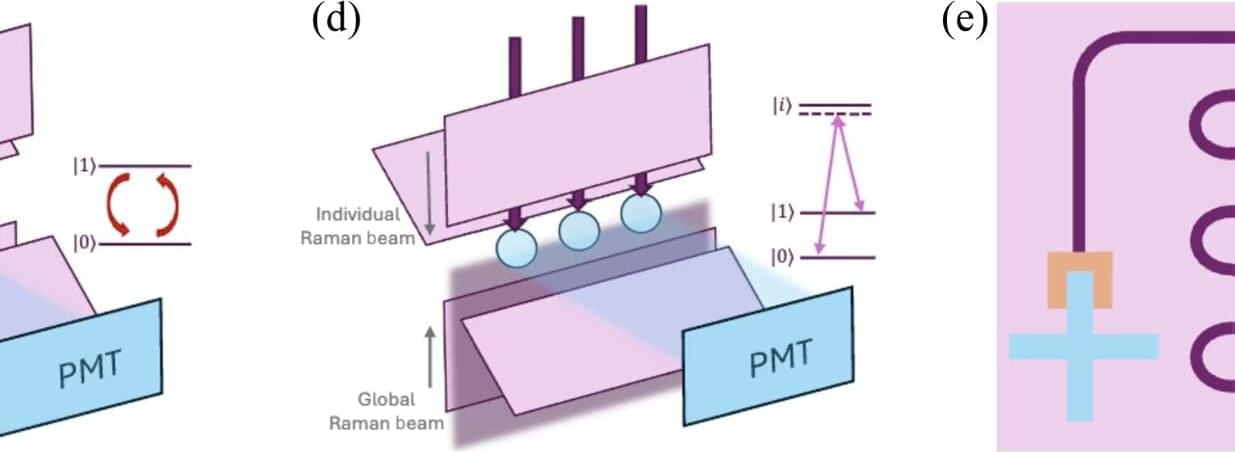
Through new research published in Physical Review Letters, Djamil Lakhdar-Hamina and colleagues at the University of Maryland, College Park, have built a neural network that runs on two different types of quantum computer, allowing them to test directly whether these systems can live up to their theoretical promise.

New thermodynamic framework explains pressure and edge currents in spinning active particles

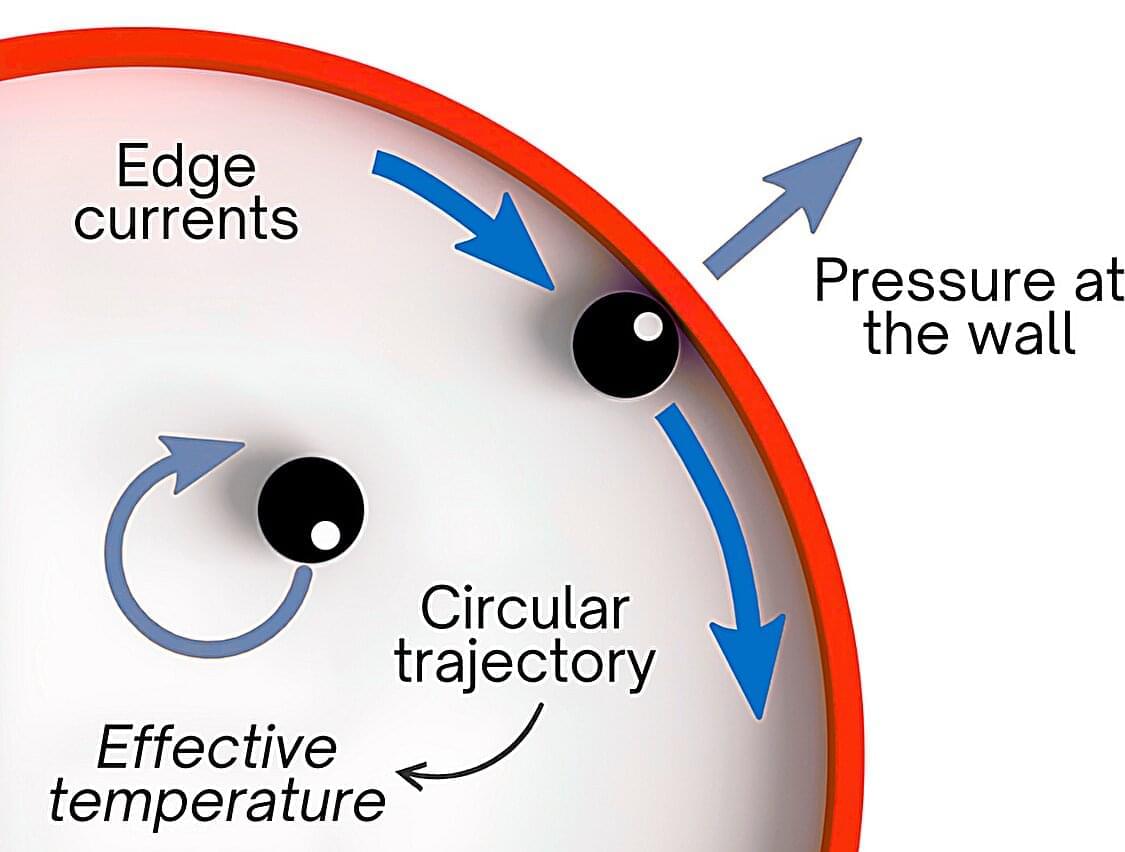
Physicists from Heinrich Heine University Düsseldorf (HHU), the Technical University of Darmstadt, Sapienza University in Rome and the University of Camerino (both in Italy) have calculated the fundamental laws of thermodynamics for a gas composed of spinning particles. In the scientific journal Proceedings of the National Academy of Sciences (PNAS), they demonstrate that the pressure of this gas is similar to that of a normal gas but at an elevated temperature. In addition, localized surface currents arise that can be used for targeted particle transport.

The so-called ideal gas law is one of the fundamentals of thermodynamics and states that the pressure of a gas is proportional to its density and temperature. From a microscopic perspective, pressure is the average force per unit area exerted by incoming particles on impact and reflection. At a higher temperature, the particles move more quickly and therefore exert greater pressure on impact.

A research team led by Dr. Hartmut Löwen from the Institute for Theoretical Physics II at HHU asked whether the ideal gas law also applies to self-propelled, so-called “active” particles or whether the nonequilibrium state results in significant differences. In addition to the physicists in Düsseldorf, colleagues from Rome, Camerino and Darmstadt were also involved.

When darkness fell during the total solar eclipse, zoo animals responded in wildly different ways

Imagine a bright, sunny day suddenly turning dark as a solar eclipse sweeps across the sky. Even though humans have watched and recorded eclipses for thousands of years and now understand the science behind them, experiencing a spell of darkness during the day can still evoke awe and surprise.

A rare total eclipse in 2024, which a significant portion of North America witnessed, created an exciting opportunity for researchers to understand how zoo animals behave during a total solar eclipse. They were curious whether the sudden changes in light and temperature caused by the eclipse would trigger different reactions in various captive species.

Most zoo animals showed very little change in their behavior during the total eclipse, but a few reactions stood out. Japanese macaques, zebras, camels and some birds displayed signs of stress, such as climbing high in trees, stopping their usual activities, becoming more active and showing increased alertness as the eclipse unfolded.

Membrane nanostructures reshape in water, revealing route to better ion transport

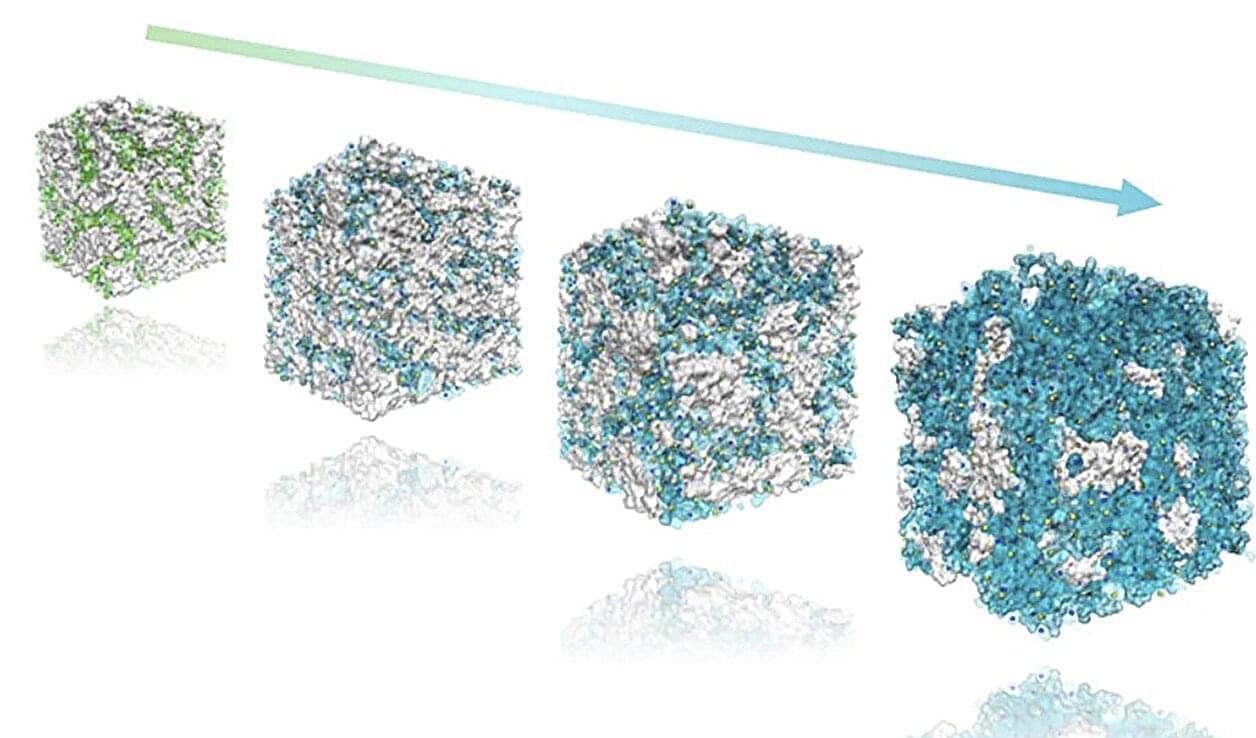
Next-generation energy devices like fuel cells and water electrolyzers depend on ion-exchange membranes that allow only water and certain ions to pass through.

The design of these membranes affects how efficient these devices can be. Understanding how the materials used in them influence their performance is key to advancing these technologies.

At the University of Chicago Pritzker School of Molecular Engineering (UChicago PME), researchers collaborated with scientists at New York University to study the backbone chemistry of different types of ion-exchange membranes to better understand how their chemical makeup governs their structure and performance.

New quantum chip architecture could use built-in vibrations to link distant qubits

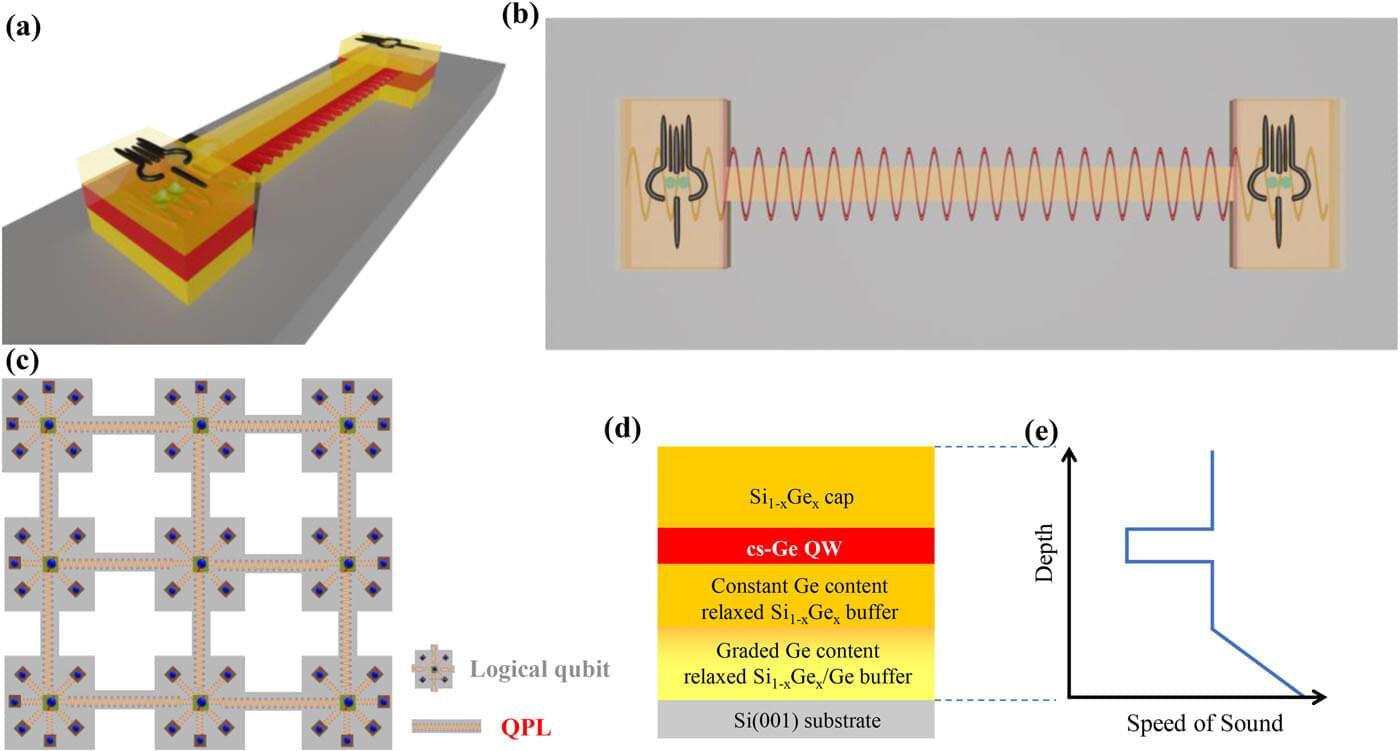
A new concept from Warwick researchers could help solve one of the biggest challenges to building large-scale quantum computers: enabling communication between vast numbers of quantum bits (qubits) over long distances across a single chip.

Published in APL Quantum, researchers from the University of Warwick and NRC Canada introduce the concept of Quantum Phononic Links (QPLs), a new approach to communication between qubits. It uses sound-like vibrations traveling through a specially engineered material to carry quantum information between qubits that are physically far apart.

Today’s leading quantum chips typically allow only neighboring qubits to communicate directly with each other. To build useful quantum computers, engineers expect to need to coordinate millions of qubits spread across an entire semiconductor chip, not just clusters of adjacent qubits. The team’s proposed approach uses sound vibrations, known as phonons, as an inherent communication system, allowing qubits to exchange quantum information over much greater distances than currently possible.

Simple semiconductor films break light’s front-back symmetry

Light typically interacts with a material the same way whether it enters through the front or the back—like polarized sunglasses that work the same from either side. Cornell researchers have demonstrated a simple route to breaking that symmetry, opening new possibilities for photonics and quantum information processing.

Optical reciprocity, the principle that a system responds identically regardless of which side faces the light, underlies most lenses, mirrors and other optical devices. A new study published in Nature Materials demonstrates that some materials can be engineered to exhibit nonreciprocal absorption and emission of linearly polarized light.

“Imagine window blinds with sunlight coming through their horizontal slats, but from the opposite side, the same blinds let light through as if the slats were vertical, completely inverted,” said corresponding author Richard Robinson, professor of materials science and engineering in the Cornell Duffield College of Engineering. “To get this type of behavior, you typically need complex metamaterials or external magnetic fields, but we show that it can be achieved in simple, solution-processed semiconductor nanoclusters.”

New sensing method measures laser-cutting depth by tracking vaporization recoil

Laser dicing, a technique that uses focused laser pulses to separate individual chips from a semiconductor wafer, is increasingly favored over mechanical blade cutting because it can process delicate, low-strength materials with minimal physical stress. However, achieving proper yield requires precise control over the process.

If pulses fall short, they leave a wafer only partially cut, while excessive pulses can damage the material or the tape used to hold it. While techniques for monitoring processing depth exist, most are too slow or fragile for use on production lines.

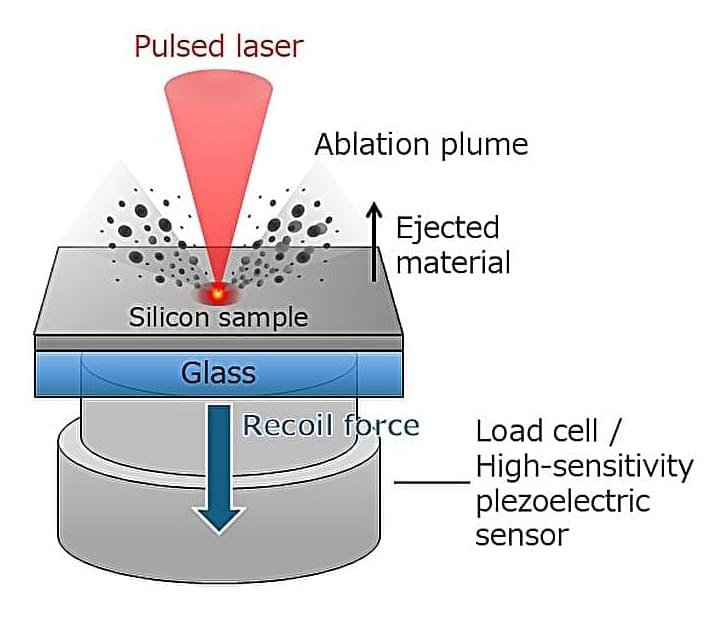
Now, a team of researchers led by Professor Hirofumi Hidai from the Graduate School of Engineering, Chiba University, Japan, focused on a different signal: recoil force. Recoil force is the minute reaction force generated on a material’s surface when it is rapidly heated and vaporized by a laser pulse.

Light reveals transient electronic step behind a hidden state in metal-organic framework

A fleeting photoinduced electronic state and the subsequent formation of a photoinduced hidden state in a metal–organic framework were captured in just 30 femtoseconds by researchers at Science Tokyo, Tohoku University and Nagoya Institute of Technology, Japan. By combining ultrafast laser spectroscopy with theoretical analysis, the researchers found that a transient electronic state plays a key role in this process. The findings provide new insights into controlling material properties with light for future applications.

When materials absorb light, they can enter unusual states with properties that differ from their normal behavior. These photoinduced states offer scientists a way to control material properties beyond what can be achieved through heating or cooling. Understanding how such states emerge on ultrafast timescales is essential for designing future photoresponsive materials and advanced optical technologies.

However, the earliest stages of photoinduced state formation can occur on the femtosecond (fs) timescale (a millionth of a billionth of a second), making it extremely difficult to observe and understand the process. To overcome this, a research team led by Assistant Professor Tadahiko Ishikawa from the Department of Chemistry, School of Science, Institute of Science Tokyo (Science Tokyo), Japan, along with doctoral student Samiran Banu (currently a Special Postdoctoral Researcher at RIKEN), conducted a study in collaboration with researchers from Tohoku University and Nagoya Institute of Technology, Japan.

/* */