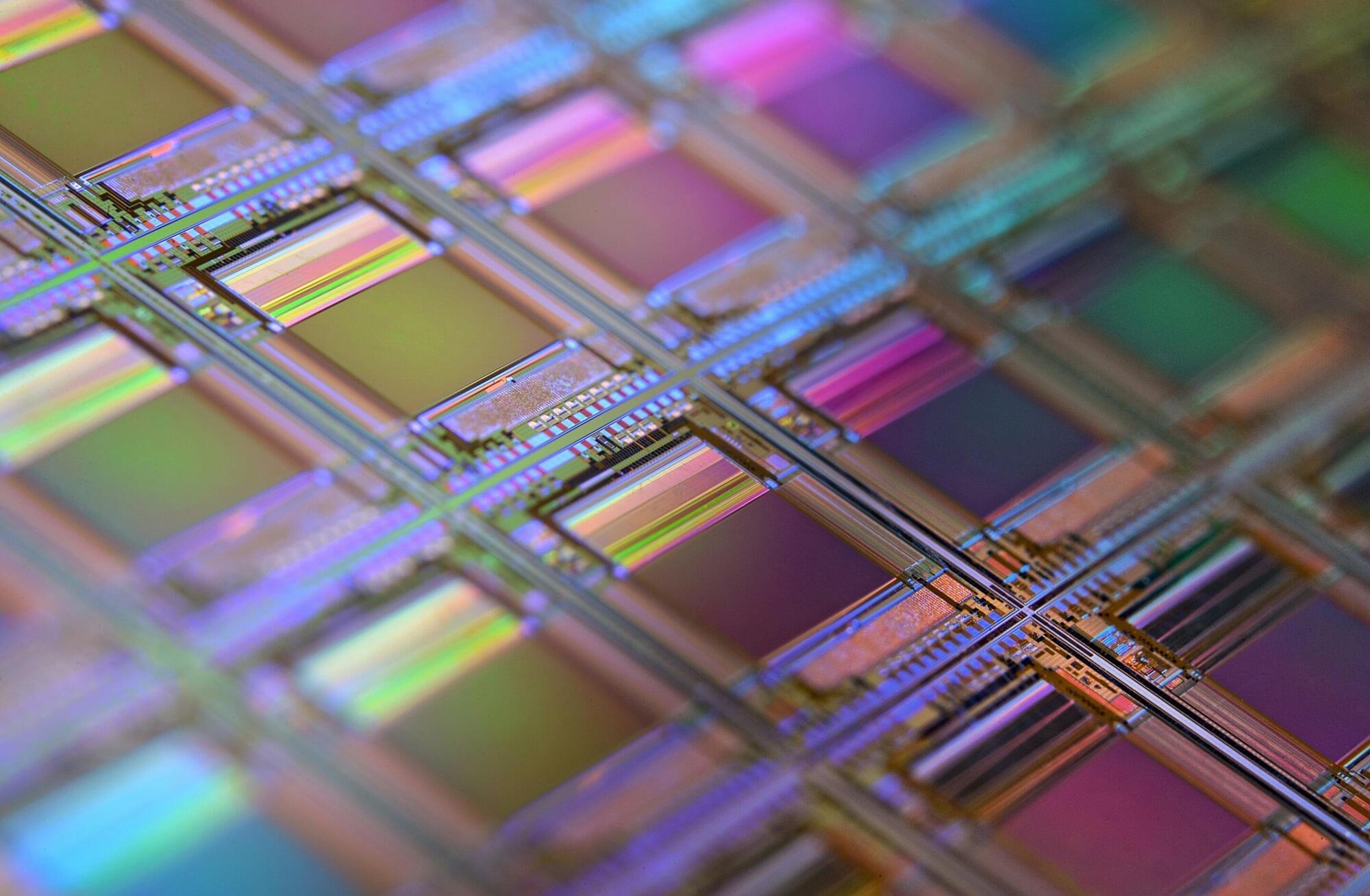
Many of today’s electronic devices—from the semiconductors in your cell phone to the photovoltaic cells in your solar panels—are built on thin-film substrates. The thin film is an electrically conductive material, while the substrate is an inert material. Or is it?
Physicists and materials scientists have long assumed substrates do not react to electrical stimuli, but new research from the University of California San Diego and a team of collaborators has shown that substrates are not inert after all. The discovery has the potential to help engineers build the dense, three-dimensional, brain-inspired computer chips needed for more energy-efficient computing. This work appears in Science.
The research began four years ago in UC San Diego Associate Professor of Physics Alex Frañó’s lab. Frañó is a principal investigator and assistant director at the Quantum Materials for Energy-Efficient Neuromorphic Computing (Q-MEEN-C), one of the U.S. Department of Energy’s Energy Frontier Research Centers. One of the goals of Q-MEEN-C is to develop quantum materials that can be used in neuromorphic, or “brain-like,” computing.