Toggle light / dark theme

Get the latest international news and world events from around the world.

Log in for authorized contributors

Glymphatic influx is negatively correlated with cerebral blood volume in male mice

Li et al. use multimodal MRI to show that cerebral blood volume is inversely correlated with glymphatic influx across six brain states. Lower CBV is associated with expanded extra-ventricular CSF space, and caffeine produces a similar pattern in awake mice, suggesting CBV as a tonic vascular factor complementing pulsation and vasomotion.

Quantum circuit test finally exposes what has been warping performance

Quantum computers could someday solve pressing problems that are too convoluted for classical computers, such as modeling complex molecular interactions to streamline drug discovery and materials development.

But to build a superconducting quantum computer that is large and resilient enough for real-world applications, scientists must precisely engineer thousands of quantum circuits so they perform operations with the lowest possible error rate.

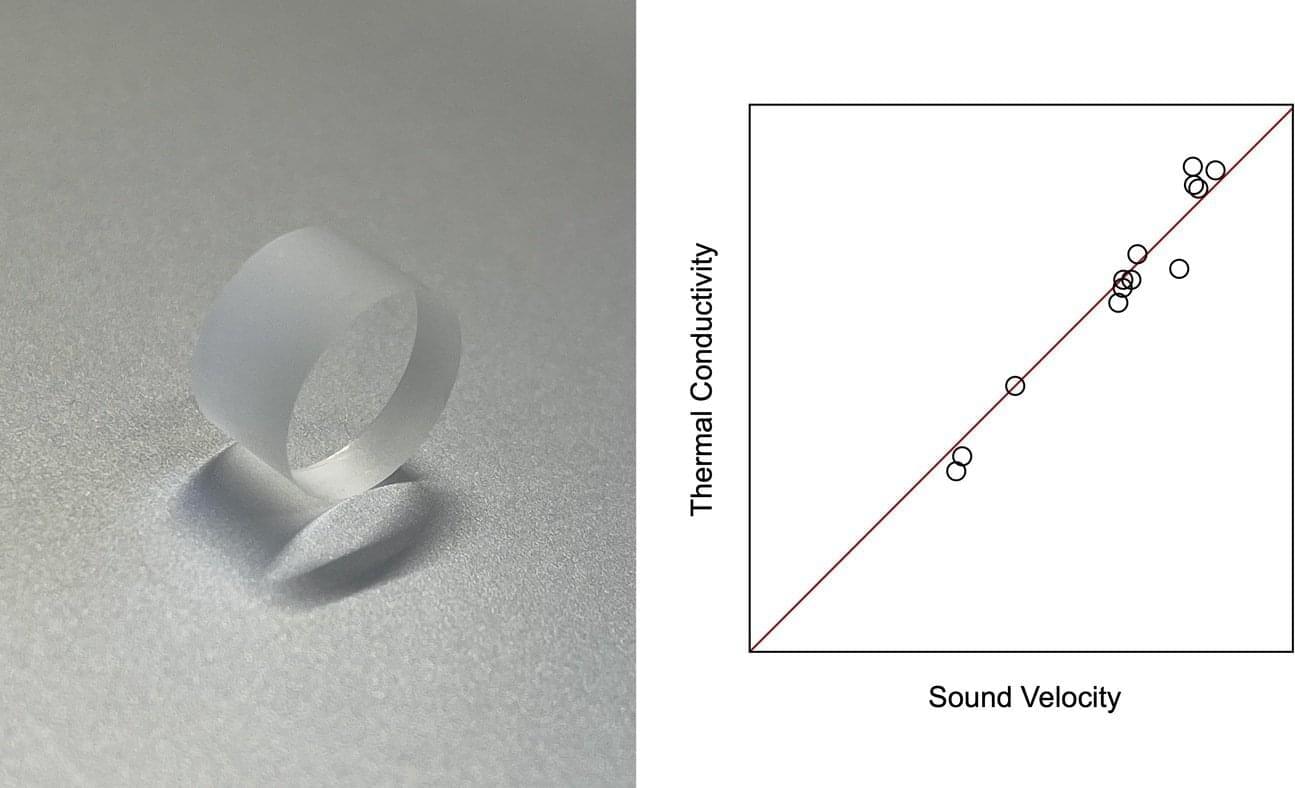
To help scientists design more predictable circuits, researchers from MIT and Lincoln Laboratory developed a technique to measure a property that can unexpectedly cause a superconducting quantum circuit to deviate from its expected behavior. Their analysis revealed the source of these distortions, known as second-order harmonic corrections, leading to underperforming circuit architectures.

Hidden cell ‘message route’ could shift cancer research

A team at Huntsman Cancer Institute at the University of Utah (the U) has uncovered a previously unrecognized molecular mechanism by which cells send signals to one another—an insight that could help researchers better understand how cancers form and, over time, inform new treatment strategies.

In the study, published in Nature Structural & Molecular Biology, the researchers focus on the Hedgehog signaling pathway, an essential communication system in human development that is frequently disrupted in cancer.

“Cell signaling is like a conversation happening constantly inside our bodies,” says Benjamin Myers, Ph.D., investigator at Huntsman Cancer Institute, associate professor of oncological sciences at the U, and senior author of the study. “We uncovered a new way that this pathway transmits signals at the molecular level—and that opens the door to new ways of thinking about how these messages go wrong in disease.”

Glioblastoma Vaccines as Promising Immune-Therapeutics: Challenges and Current Status

Glioblastoma (GBM) is the most common and aggressive malignant brain tumor. Standard treatments including surgical resection, radiotherapy, and chemotherapy, have failed to significantly improve the prognosis of glioblastoma patients. Currently, immunotherapeutic approaches based on vaccines, chimeric antigen-receptor T-cells, checkpoint inhibitors, and oncolytic virotherapy are showing promising results in clinical trials. The combination of different immunotherapeutic approaches is proving satisfactory and promising. In view of the challenges of immunotherapy and the resistance of glioblastomas, the treatment of these tumors requires further efforts. In this review, we explore the obstacles that potentially influence the efficacy of the response to immunotherapy and that should be taken into account in clinical trials.

Qatsi Director Godfrey Reggio: We Are in the Cyborg State!

Thirteen years ago, I sat down with a filmmaker who had spent his life warning us about a future we are now living inside.

Godfrey Reggio is the director of Koyaanisqatsi, Powaqqatsi, and Naqoyqatsi, the Qatsi trilogy. Koyaanisqatsi is a Hopi word. It means life out of balance.

In our conversation, he said something I have never been able to shake:

“It’s our behavior that determines the content of our mind. We become what we do. We become what we see. We become the routine that we are a part of.”

Read that again. Slowly.

Now look at your phone. Look at your feed. Look at the average screen time of the people around you, including yourself.

Chronic obstructive pulmonary disease develops over decades — and we are missing the window to prevent it

Although cigarette smoking remains the main driver of COPD, e-cigarettes are also raising concerns. Vaping aerosols can contain nicotine, ultrafine particles and flavouring chemicals that may irritate the lungs and contribute to inflammation. The long-term effects are still unclear because these products are relatively new.

That matters particularly for younger people. In Great Britain, recent survey data suggest that 7% of 11-to 17-year-olds currently vape. While that does not mean they will go on to develop COPD, it does mean more young lungs are being exposed to substances whose long-term effects are not yet fully understood.

COPD is often diagnosed only after major lung damage has already occurred. Because it develops so gradually, people may dismiss early breathlessness, coughing or mucus production as a consequence of getting older, being unfit or smoking. Respiratory organisations warn that symptoms such as cough, phlegm and shortness of breath should not be treated as a normal part of ageing, while studies show that COPD remains widely underdiagnosed, including among people with respiratory symptoms.

Organic luminescent radicals enable bright circularly polarized light in the near-infrared region

Circularly polarized light has properties that make it useful in a growing range of technologies, from next-generation 3D displays to bioimaging tools that can detect signals deep within living tissues. One way to produce this kind of light is with the help of chiral molecules—compounds that have a mirror-image form to which they cannot be perfectly superimposed. Among these, small organic molecules (SOMs) offer tunable emission wavelengths.

Luminescent radicals represent a promising type of SOM for red and near-infrared circularly polarized luminescence (CPL) emission. One particular family of radicals, tris(2,4,6‑trichlorophenyl)methyl (TTM)‑based radicals, is inherently chiral and a natural candidate for CPL.

In practice, however, these molecules fall short on multiple fronts, with tradeoffs between stable chirality, high emission efficiency, and durability under operating conditions.

/* */