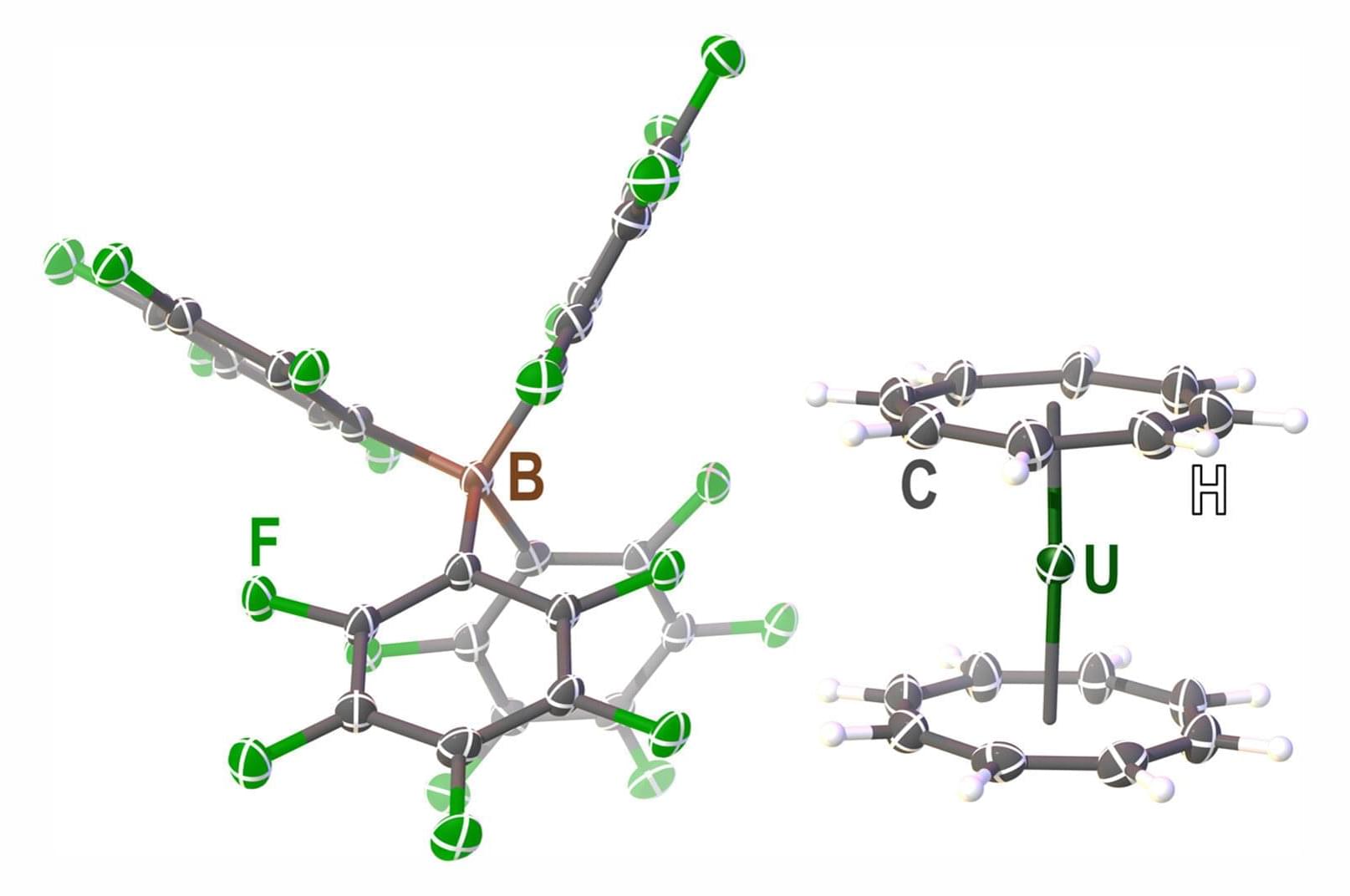
The ATLAS Collaboration reports the first observation of the Bc*+ meson, an excited counterpart of a particle made up of a charm quark and a bottom antiquark.
Written by:
ATLAS Collaboration.
—
Hi all, you should check out this human enhancement game created by Anton Kulaga and his team! You’ll learn about various genetic factors with potential for increasing human capabilities. The content is all rooted in scientific literature! Once you design a character, you can also get a 3D printed shape sent to you which is influenced by your choices.
Build your post-human character from real genes — tardigrade radiation shields, naked-mole-rat cancer resistance, Greenland shark longevity — backed by scientific evidence tiers and real citations. Spend enhancement credits and 3D-print the result.
What if aging isn’t just “getting older” but the gradual breakdown of the biological systems protecting our DNA? Scientists are now exploring therapies designed to directly lengthen telomeres, the protective caps linked to cellular aging itself. The future of longevity may be far more programmable than we thought.
#cybersecurity #suppychains #ai #tech
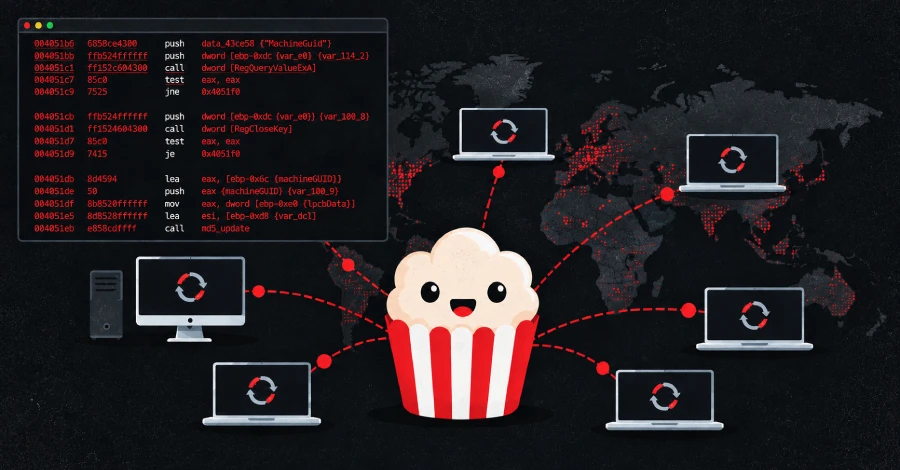
Supply chains are a primary target for cybercriminals and provide the foundation of global commerce in the hyper-connected digital ecosystem of today. Artificial intelligence (AI) simultaneously exacerbates vulnerabilities as it revolutionizes operations through predictive analytics, automation, and real-time visibility. Sophisticated threat actors, ransomware groups, and nation-state actors employ AI to exploit the vulnerable links in intricate, multi-tiered supply networks.
Artificial intelligence can create dual-use dynamics. It promotes efficiency by facilitating real-time data transfers and hyper-connected operations, while simultaneously significantly expanding the attack surface. Compromises of a single vendor or update have been shown to have a cascading effect on economies, governments, and critical infrastructure through supply chain attacks.
In The AI Era, Supply Chains Are Prime Targets.
The complexity of supply chains is inherent, as they encompass continents, jurisdictions, and a multitude of third-party vendors, contractors, and software components. Each link—whether it be legacy systems, unvetted code, IoT devices, or 5G-enabled connections—provides potential entry points. AI exacerbates these risks by allowing attackers to automate reconnaissance, create polymorphic malware that evades detection, create personalized phishing campaigns, and identify vulnerabilities quicker than defenders can apply patches.
Redwire’s latest whitepaper examines the challenges and opportunities associated with scaling orbital data centers (ODCs), with a focus on power generation and thermal management. ODCs could eventually surpass terrestrial data centers by leveraging abundant solar energy in space and avoiding Earth-based infrastructure limitations.
The whitepaper examines the scaling of power and thermal systems for ODCs within a single-spacecraft architecture and highlights how the future success of ODCs will depend on treating power and thermal management as primary architectural drivers from the earliest stages of design.
Drawing on decades of Redwire’s spaceflight heritage in deployable structures, high-power solar arrays, and thermal management systems, the in-depth study also highlights how existing flight-proven technologies can support practical and scalable orbital compute architectures.
Scientists just spotted a mysterious quantum “dance” that could rewrite superconductivity—and reshape future tech. For the first time, researchers have directly visualized the quantum behavior that drives superconductivity, a state in which paired electrons allow electricity to flow with zero resistance at very low temperatures.
But what they observed came as a surprise.
In a study published April 15 in Physical Review Letters, the team captured images of individual atoms forming pairs inside a specially prepared gas cooled to nearly absolute zero — the unreachable limit to how cold anything can get. This system, known as a Fermi gas, lets scientists replace electrons with atoms so they can study superconductivity in a highly controlled environment.