Toggle light / dark theme

Get the latest international news and world events from around the world.

Log in for authorized contributors

Peripheral neuropathy protection by mitochondrial transfer from glia to neurons

For millions living with nerve pain, even a light touch can feel unbearable. Scientists have long suspected that damaged nerve cells falter because their energy factories known as mitochondria don’t function properly.

Now research published in Nature suggests a way forward: supplying healthy mitochondria to struggling nerve cells.

Using human tissue and mouse models, researchers found that replenishing mitochondria significantly reduced pain tied to diabetic neuropathy and chemotherapy-induced nerve damage. In some cases, the relief lasted up to 48 hours.

Instead of masking symptoms, the approach could fix what the team sees as the root problem — restoring the energy flow that keeps nerve cells healthy and resilient.

“By giving damaged nerves fresh mitochondria — or helping them make more of their own — we can reduce inflammation and support healing,” said the study’s senior author. “This approach has the potential to ease pain in a completely new way.

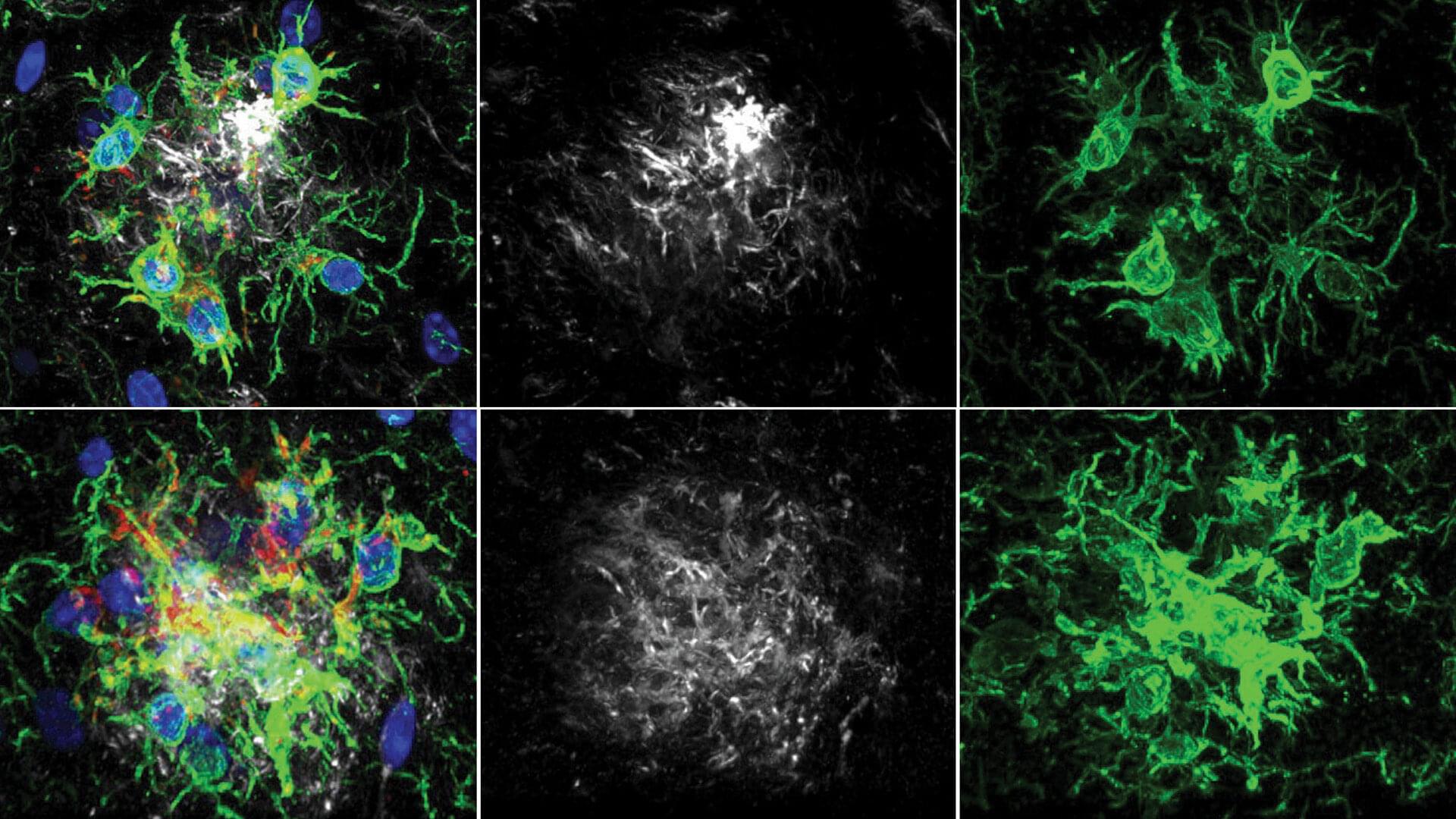
The work highlights a previously undocumented role for satellite glial cells, which appear to deliver mitochondria to sensory neurons through tiny channels called tunnelling nanotubes.

When this mitochondrial handoff is disrupted, nerve fibers begin to degenerate — triggering pain, tingling and numbness, often in the hands and feet, the distal ends of the nerve fibers.

Plant Discovery Could Transform How Medicines Are Made

Plants produce protective chemicals called alkaloids as part of their natural defenses. People have used these compounds for a long time, including in pain relief medicines, treatments for various diseases, and familiar household products such as caffeine and nicotine.

Scientists want to learn exactly how plants build alkaloids. With that knowledge, they hope to create new and improved medicine-related chemicals faster, at lower cost, and with less harm to the environment.

In a study at the University of York, researchers examined a plant called Flueggea suffruticosa, which makes an especially strong alkaloid known as securinine. As they traced how securinine is produced, the team found a surprise: a key step depends on a gene that resembles bacterial genes more than typical plant genes.

Enormous freshwater reservoir discovered off the East Coast may be 20,000 years old and big enough to supply NYC for 800 years

“The important part was we collected all the samples we need to address our primary questions,” Dugan said. “When we’re done drilling and we pull our equipment out, the holes collapse back in and seal themselves up.”

Now, scientists are studying the reservoir in finer detail, including any microbes, rare earth elements, pore space — which can help researchers better estimate the reservoir’s size — and the age of the sediments, which will help narrow down when it formed. More definitive results about how and when the reservoir formed are expected in about one month’s time, Dugan said.

“Our goal is to provide an understanding of the system so if and when somebody needs to use it, they have information to start from, rather than recreating information or making an ill-informed choice,” he said.

Meet the new biologists treating LLMs like aliens

How large is a large language model? Think about it this way.

In the center of San Francisco there’s a hill called Twin Peaks from which you can view nearly the entire city. Picture all of it—every block and intersection, every neighborhood and park, as far as you can see—covered in sheets of paper. Now picture that paper filled with numbers.

That’s one way to visualize a large language model, or at least a medium-size one: Printed out in 14-point type, a 200-­billion-parameter model, such as GPT4o (released by OpenAI in 2024), could fill 46 square miles of paper—roughly enough to cover San Francisco. The largest models would cover the city of Los Angeles.

We now coexist with machines so vast and so complicated that nobody quite understands what they are, how they work, or what they can really do—not even the people who help build them. “You can never really fully grasp it in a human brain,” says Dan Mossing, a research scientist at OpenAI.

That’s a problem. Even though nobody fully understands how it works—and thus exactly what its limitations might be—hundreds of millions of people now use this technology every day. If nobody knows how or why models spit out what they do, it’s hard to get a grip on their hallucinations or set up effective guardrails to keep them in check. It’s hard to know when (and when not) to trust them.

Whether you think the risks are existential—as many of the researchers driven to understand this technology do—or more mundane, such as the immediate danger that these models might push misinformation or seduce vulnerable people into harmful relationships, understanding how large language models work is more essential than ever.


Using AI to understand how emotions are formed

Emotions are a fundamental part of human psychology—a complex process that has long distinguished us from machines. Even advanced artificial intelligence (AI) lacks the capacity to feel. However, researchers are now exploring whether the formation of emotions can be computationally modeled, providing machines with a deeper, more human-like understanding of emotional states.

In this vein, Assistant Professor Chie Hieida from the Nara Institute of Science and Technology (NAIST), Japan, in collaboration with Assistant Professor Kazuki Miyazawa and then-master’s student Kazuki Tsurumaki from Osaka University, Japan, explore computational approaches to model the formation of emotions.

The team built a computational model that aims to explain how humans may form the concept of emotion. The study was published in the journal IEEE Transactions on Affective Computing.

NASA supercomputer just predicted Earth’s hard limit for life

Scientists have used a NASA-grade supercomputer to push our planet to its limits, virtually fast‑forwarding the clock until complex organisms can no longer survive. The result is a hard upper bound on how long Earth can sustain breathable air and liquid oceans, and it is far less about sudden catastrophe than a slow suffocation driven by the Sun itself. The work turns a hazy, far‑future question into a specific timeline for the end of life as we know it.

Instead of fireballs or rogue asteroids, the simulations point to a world that quietly runs out of oxygen, with only hardy microbes clinging on before even they disappear. It is a stark reminder that Earth’s habitability is not permanent, yet it also stretches over such vast spans of time that our immediate crises still depend on choices made this century, not on the Sun’s distant evolution.

The new modeling effort starts from a simple premise: if I know how the Sun brightens over time and how Earth’s atmosphere responds, I can calculate when conditions for complex life finally fail. Researchers fed a high‑performance system with detailed physics of the atmosphere, oceans and carbon cycle, then let it run through hundreds of thousands of scenarios until the planet’s chemistry tipped past a critical point. One study describes a supercomputer simulation that projects life on Earth ending in roughly 1 billion years, once rising solar heat strips away most atmospheric oxygen.

Smart Golden Cities of the Future: 1 Hour Exploring Nature & Sci-Fi Innovation in 2050

Step into the future with “Smart Golden Cities of the Future”, a 1-hour journey exploring how technology and nature will merge to create sustainable, intelligent cities by 2050. In this immersive video, we’ll dive deep into a world where urban spaces are powered by Sci-Fi innovation, green infrastructure, and advanced technologies. From eco-friendly architecture to autonomous transportation systems, discover how the cities of tomorrow will function in harmony with the environment. Imagine a future with clean energy, smart public services, and a thriving connection to nature—where sustainability and futuristic technology drive every aspect of life. Join us for an hour-long exploration of the Smart Cities of 2050, as we uncover the incredible possibilities and challenges of creating urban spaces that work for both people and the planet. ✨ This video was created with passion and love for sharing creative production using AI tools such as: • 🧠 Research: ChatGPT • 🖼️ Image Creation: Leonardo, Midjourney, ImageFX • 🎬 Video Production: Veo 3.1, Runway ML • 🎵 Music Generation: Suno AI • ✂️ Video Editing: CapCut Pro 💡 Note: All of the above AI tools are subscription-based. This project combines imagination and creativity from my perspective as a mechanical engineer who loves exploring the future. 🙏🏻 Please Support: • ✅ Subscribe • 👍 Like • 💬 Comment Thank you so much for watching!I hope you enjoy this journey and gain inspiration from this creative experience ❤️ #SmartCities #Sustainability #FutureOfLiving #SciFiInnovation #EcoFriendlyCities #midjourney #veo3 #sunoai

/* */