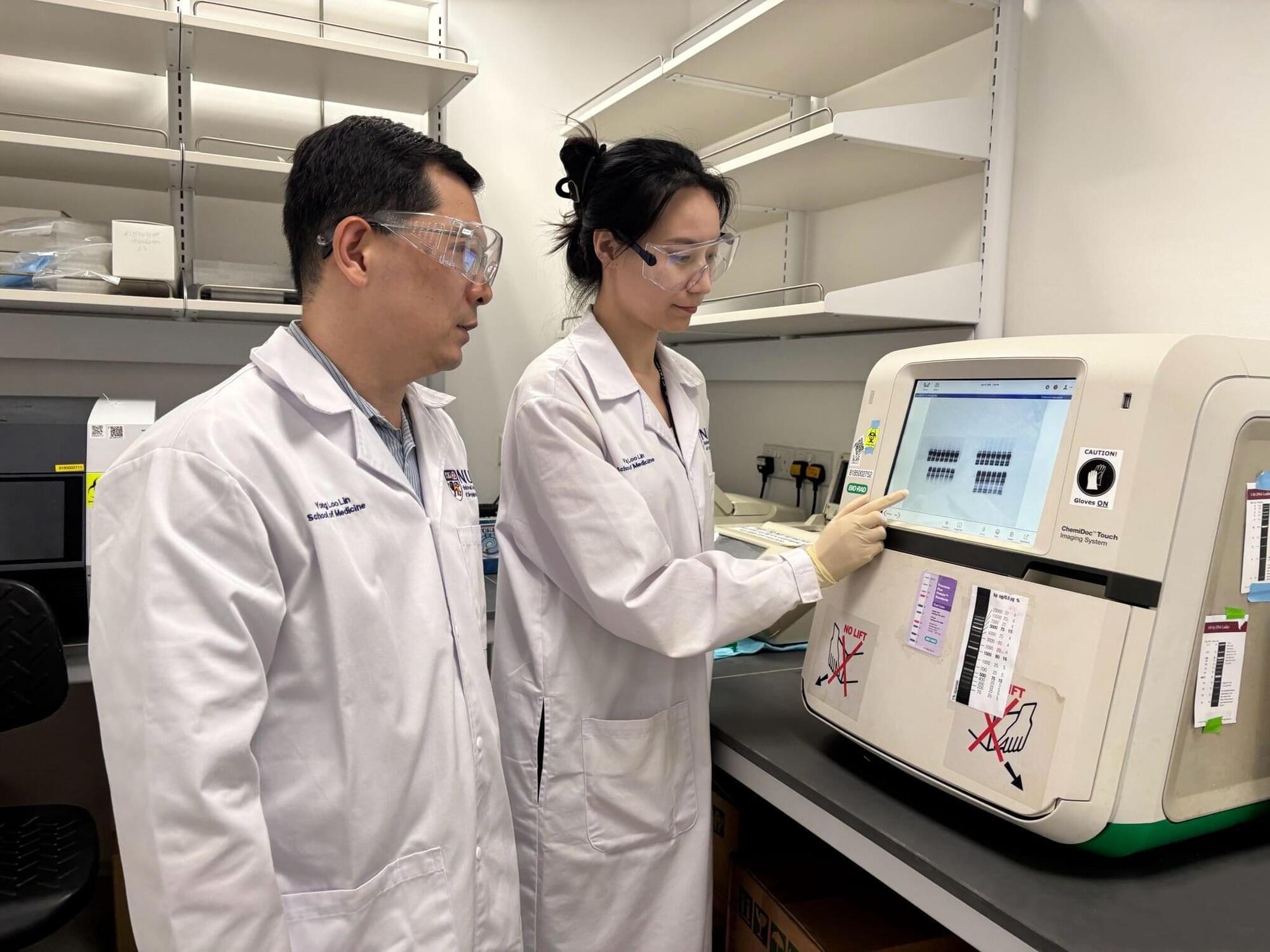
Researchers at the Yong Loo Lin School of Medicine, National University of Singapore (NUS Medicine), have found that a key protein can help to regenerate neural stem cells, which may improve aging-associated decline in neuronal production of an aging brain.
Published in Science Advances, the study identified a transcription factor in the brain, cyclin D-binding myb-like transcription factor 1 (DMTF1), as a critical driver of neural stem cell function during the aging process. Transcription factors are proteins that regulate genes to ensure that they are expressed correctly in the intended cells.
The study, led by Assistant Professor Ong Sek Tong Derrick and first author Dr. Liang Yajing, both from the Department of Physiology and the Healthy Longevity Translational Research Program at NUS Medicine, sought to identify biological factors that influence the degeneration of neural stem cell function often associated with aging, and guide the development of therapeutic approaches to mitigate the adverse effects of neurological aging.