It found 800 previously undiscovered ‘cosmic anomalies.’
The platypus is one of evolution’s lovable, oddball animals. The creature seems to defy well-understood rules of biology by combining physical traits in a bizarre way. They’re egg-laying mammals with duck bills and beaver-like tails, and the males have venomous spurs on their hind feet. In that regard, it’s only fitting that astronomers describe some newly discovered oddball objects as “Astronomy’s Platypus.”
The discovery consists of nine galaxies that also have unusual properties and seem to defy categorization. The findings were recently presented at the 247th meeting of the American Astronomical Society in Phoenix. The results are also in new research titled “A New Population of Point-like, Narrow-line Objects Revealed by the James Webb Space Telescope,” posted to the arXiv preprint server. The lead author is Haojing Yan from the University of Missouri-Columbia.
“We report a new population of objects discovered using the data from the James Webb Space Telescope, which are characterized by their point-like morphology and narrow permitted emission lines,” the authors write in their research. “Due to the limitation of the current data, the exact nature of this new population is still uncertain.”
Scientists at Oregon State University have developed a new nanomaterial that triggers a pair of chemical reactions inside cancer cells, killing the cells via oxidative stress while leaving healthy tissues alone. The study led by Oleh and Olena Taratula and Chao Wang of the OSU College of Pharmacy appears in Advanced Functional Materials.
The findings advance the field of chemodynamic therapy (CDT), an emerging treatment approach based on the distinctive biochemical environment found in cancer cells. Compared to healthy tissues, malignant tumors are more acidic and have elevated concentrations of hydrogen peroxide, the scientists explain.
Conventional CDT works by using the tumor microenvironment to trigger the chemical production of hydroxyl radicals—molecules, made up of oxygen and hydrogen—with an unpaired electron. These reactive oxygen species are able to damage cells through oxidation by stealing electrons from molecules like lipids, proteins, and DNA.
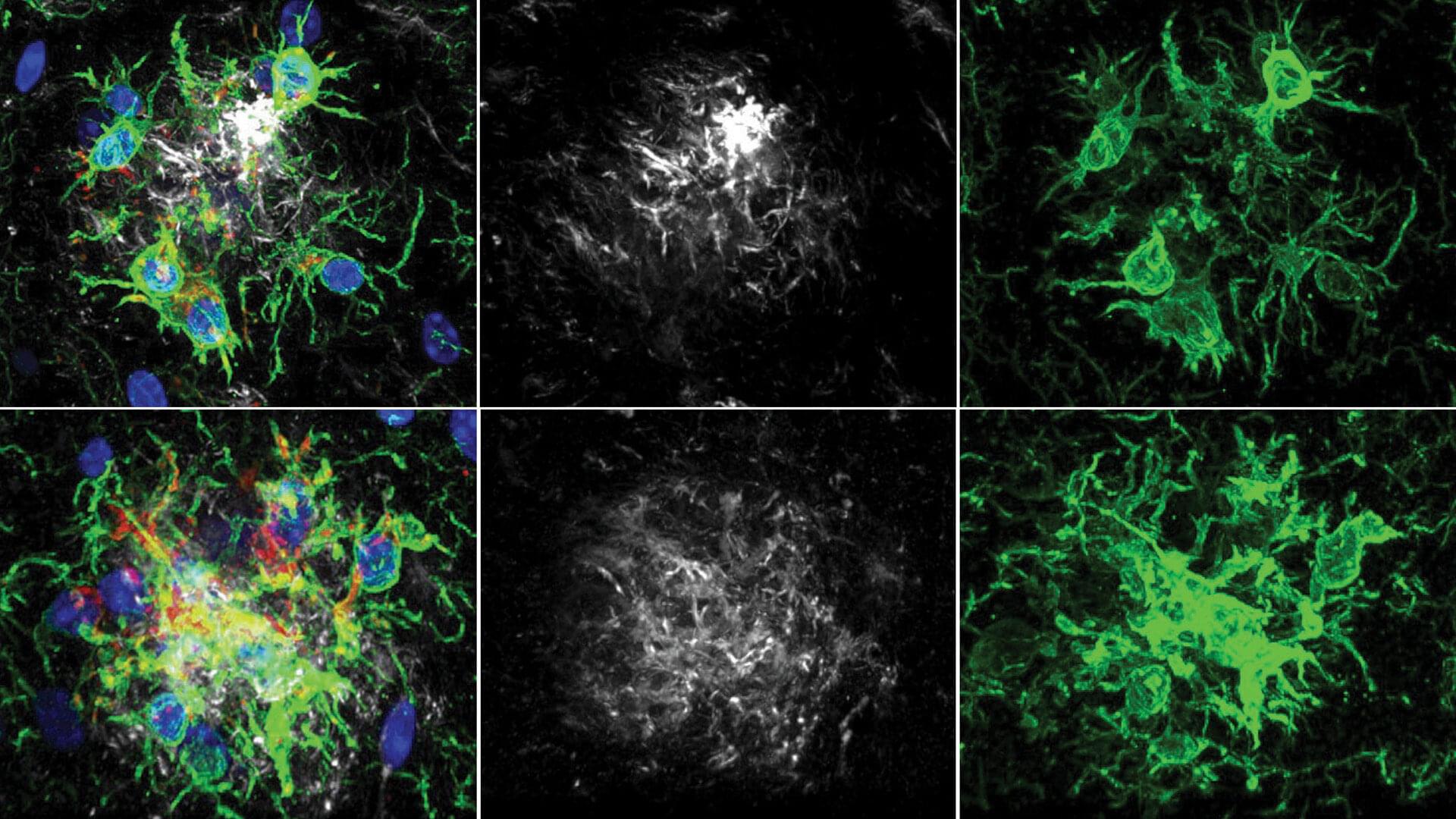
Stowers scientists expand their pivotal discovery on the form and function of amyloids
Computer simulations carried out by astronomers from the University of Groningen in collaboration with researchers from Germany, France and Sweden show that most of the (dark) matter beyond the Local Group of galaxies (which includes the Milky Way and the Andromeda galaxy) must be organized in an extended plane. Above and below this plane are large voids. The observed motions of nearby galaxies and the joint masses of the Milky Way and the Andromeda galaxy can only be properly explained with this “flat” mass distribution. The research, led by Ph.D. graduate Ewoud Wempe and Professor Amina Helmi, is published in Nature Astronomy.
Almost a century ago, astronomer Edwin Hubble discovered that virtually all galaxies are moving away from the Milky Way. This is important evidence for the expansion of the universe and for the Big Bang. But even in Hubble’s time, it was clear that there were exceptions. For example, our neighboring galaxy, Andromeda, is moving toward us at a speed of about 100 kilometers per second.
In fact, for half a century, astronomers have been wondering why most large nearby galaxies—with the exception of Andromeda—are moving away from us and do not seem to be affected by the mass and gravity of the so-called Local Group (the Milky Way, the Andromeda galaxy and dozens of smaller galaxies).
The generous contribution will be dedicated to Blender core development.