Toggle light / dark theme

Get the latest international news and world events from around the world.

Log in for authorized contributors

The Non-Physical Beings that Ingress Into Material Reality

Michael Levin’s novel biology demonstrates how material bodies access non-physical patterns. What if we examined these patterns from their own perspective: do they actively seek to ingress into the physical world? Furthermore, how does this framework relate to the concept of angels in religious traditions?

Find the full podcast: • The Hidden Realm of Patterns Animating Lif…

My first conversation with Michael Levin: • Memory Engrams, DNA, Evolution, Platonic R…

Podcast playlist with scientists from Michael Levin’s lab: • Michael Levin+.

Silver nanoparticles enable assembly of a theorized, previously unobserved crystal metallic structure

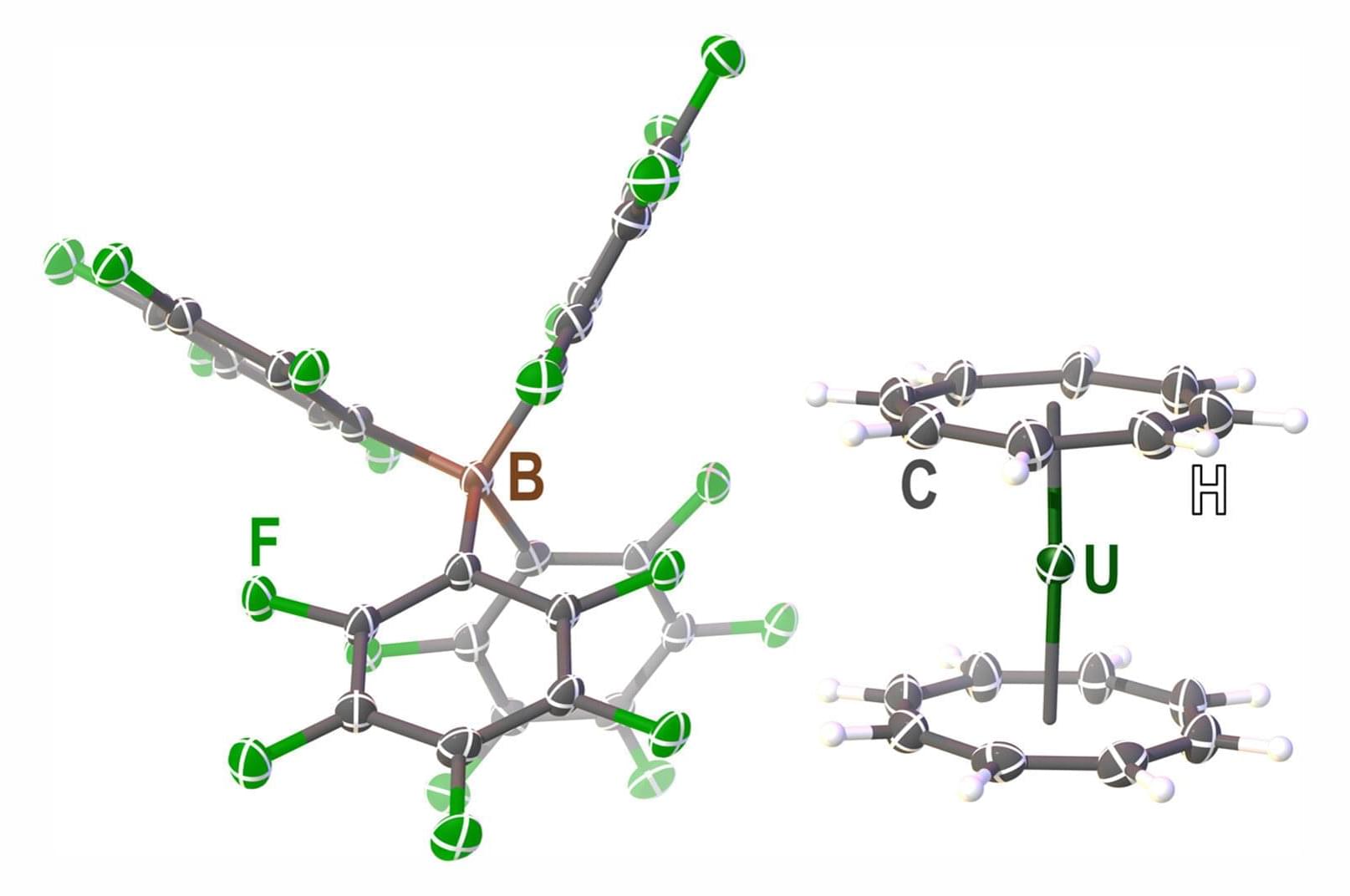
Using finely tuned nanoscale building blocks, researchers from Brown University and the University of Michigan College of Engineering have stabilized a fleeting structural phase of matter that had been predicted theoretically but never before stabilized in a physical material.

The new nanoparticle superlattice, described in the journal Science, freezes an elusive intermediate state between two of nature’s most common crystal metallic arrangements. Beyond describing new details about how this transition works, the new structure exhibits extraordinary optical properties that could be useful in quantum computing or other quantum information systems.

More broadly, the work provides a new recipe for using custom-shaped nanoparticles to engineer entirely new classes of materials with tailored properties.

Threat Actors Exploit Critical FortiClient EMS Flaw to Deploy Credential Stealer

Threat actors are continuing to exploit a critical, now-patched security flaw impacting FortiClient Endpoint Management Server (EMS) deployments to deliver credential-stealing malware.

“The campaign abused trusted endpoint management infrastructure to deliver malware across managed endpoints,” Arctic Wolf said. “Threat actors disguised the credential stealer payload as a Fortinet endpoint update, silently executing the malicious executable through PowerShell.”

The activity, observed by the cybersecurity company in May 2026, involves the exploitation of CVE-2026–35616 (CVSS score: 9.1), a critical pre-authentication API access bypass leading to privilege escalation. The issue was addressed by Fortinet in FortiClient EMS 7.4.7 and later.

GreyVibe hackers use ChatGPT, Gemini to power cyberattacks

A likely Russian threat group tracked as GreyVibe has been using AI-generated lures and a rich set of custom malware tools to target entities in the military, government, civilian, and business sectors.

The cyberespionage campaign has been active since at least August 2025 and appears to align with Russian state interests, although researchers cannot confidently classify it as a nation-state operation.

Cybersecurity company WithSecure discovered the activity in January this year and determined that its focus is on Ukrainian or Ukraine-related organizations.

BTMOB Android malware service generates custom phishing payloads

An Android remote access trojan named BTMOB is offered to cybercriminals with a builder interface for generating malware payloads tailored to phishing lures.

The malware provides a wide set of features that includes stealing specific data, intercepting financial transactions, capturing screenshots, and remote control capabilities.

Cybersecurity company ESET says that BTMOB is openly advertised on the clearweb and operates as a malware-as-a-service (MaaS) platform. The APK builder included in the offer provides easy customization of the payload without any need to code.

/* */