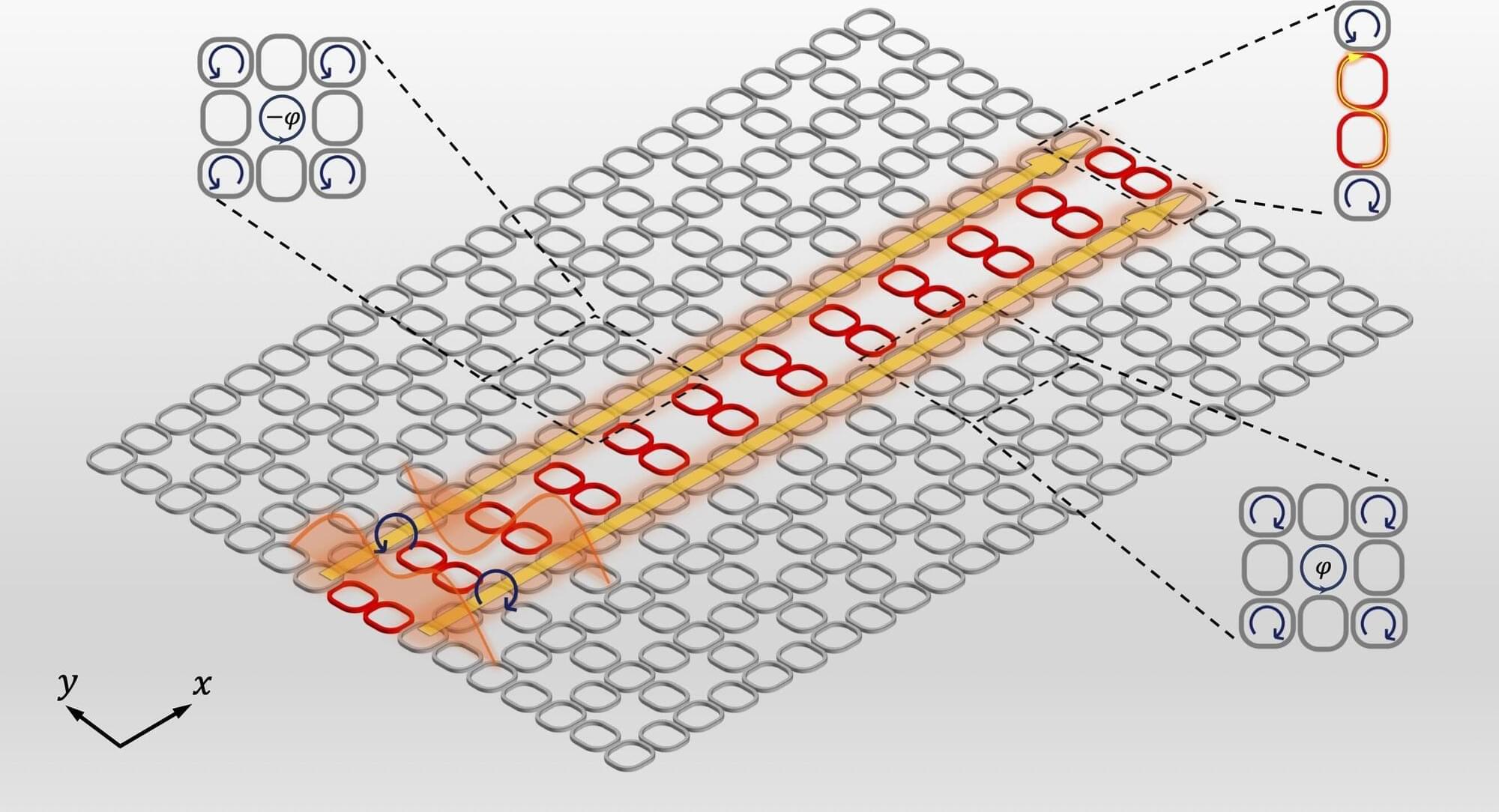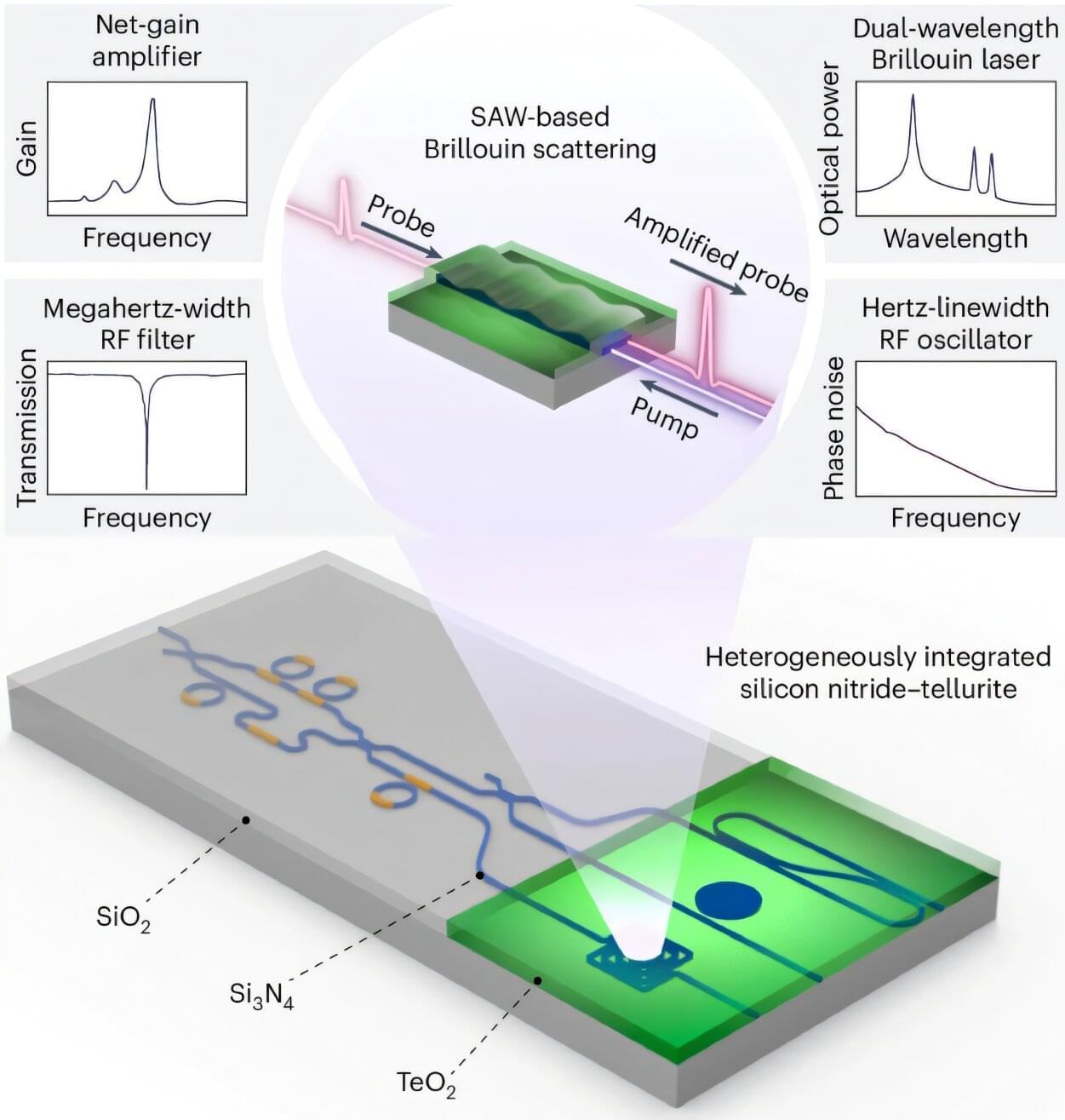
From GPS satellites to mobile networks, modern technology relies on ultra-precise radio signals. Engineers have long tried to generate them on chips using interactions between light and sound, but the effect was too weak. University of Twente researchers now show in a paper published in Nature Photonics that a thin glass layer creates “mini-earthquake” surface acoustic waves, which make the effect more than 200 times stronger. This enables ultra-pure signals and record-sharp filters on a device thousands of times smaller.
Every time you make a phone call, your signal is filtered out of a crowded radio spectrum using radio frequency filters. These components let through only the frequencies you want and block everything else. The sharper the filter, the cleaner the call. The same principle applies in radar, satellite navigation and future wireless networks like 6G.