Toggle light / dark theme

Get the latest international news and world events from around the world.

Log in for authorized contributors

A hormone can access the brain by ‘hitchhiking’ on extracellular vesicles, researchers discover

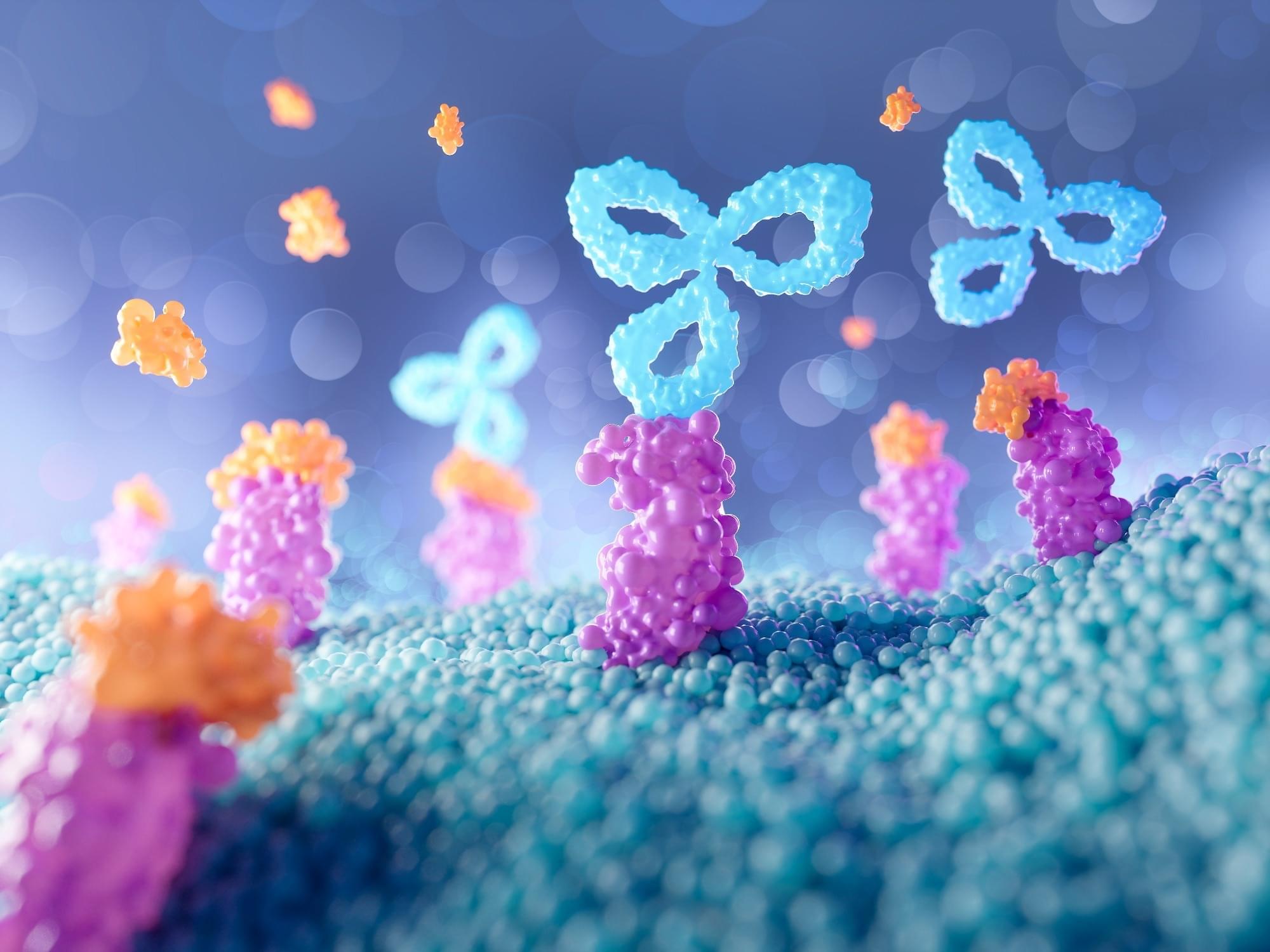
Researchers at Touro University Nevada have discovered that tiny particles in the blood, called extracellular vesicles (EVs), are a major player in how a group of hormones are shuttled through the body. Physical exercise can stimulate this process.

The findings, published in the journal Proceedings of the National Academy of Sciences, open the door to deeper understanding of hormone circulation and access to the brain, how exercise may trigger changes in energy balance, mental health, and immune function, and circulation of certain drugs.

Blood and other body fluids are teeming with EVs—tiny particles that exist outside of cells. EVs transmit signals from cell-to-cell within tissues and a long distance across organ systems by delivering biological cargo such as proteins, lipids, and nucleic acids into cells. They also remove cell waste.

New sprayable powder forms instant gel barrier to stop severe bleeding in seconds

The leading cause of death due to injuries in war is excessive bleeding. A KAIST research team, in which an Army Major participated, has tackled this issue head-on. By developing a next-generation powder-type hemostatic agent that stops bleeding just by spraying it, they have presented an innovative technology that will change the paradigm of combatant survivability.

A joint research team led by Professor Steve Park from the Department of Materials Science and Engineering and Professor Sangyong Jon from the Department of Biological Sciences has developed a powder-type hemostatic agent that forms a powerful hydrogel barrier within approximately one second when sprayed on a wound.

The research was published in Advanced Functional Materials.

A Greenland Glacier Is Cracking Open — and Scientists Are Watching It Drain in Real Time

Repeated, rapid drainages from a meltwater lake on Greenland’s 79°N Glacier are exposing how warming-driven fractures and hidden channels may be pushing the glacier into an unfamiliar and potentially unstable state. Since the mid-1990s, the Greenland ice sheet has steadily lost mass, and only thr

NASA’s Roman telescope will observe thousands of newfound cosmic voids

Our universe is filled with galaxies, in all directions as far as our instruments can see. Some researchers estimate that there are as many as 2 trillion galaxies in the observable universe. At first glance, these galaxies might appear to be randomly scattered across space, but they’re not. Careful mapping has shown that they are distributed across the surfaces of giant cosmic “bubbles” up to several hundred million light-years across. Inside these bubbles, few galaxies are found, so those regions are called cosmic voids. NASA’s Nancy Grace Roman Space Telescope will allow us to measure these voids with new precision, which can tell us about the history of the universe’s expansion.

“Roman’s ability to observe wide areas of the sky to great depths, spotting an abundance of faint and distant galaxies, will revolutionize the study of cosmic voids,” said Giovanni Verza of the Flatiron Institute and New York University, lead author on a paper published in The Astrophysical Journal.

Cosmic recipe The cosmos is made of three key components: normal matter, dark matter, and dark energy. The gravity of normal and dark matter tries to slow the expansion of the universe, while dark energy opposes gravity to speed up the universe’s expansion. The nature of both dark matter and dark energy is currently unknown. Scientists are trying to understand them by studying their effects on things we can observe, such as the distribution of galaxies across space.

/* */