Toggle light / dark theme

Get the latest international news and world events from around the world.

Log in for authorized contributors

Self-learning AI separates particle jets from background noise in simulated heavy-ion collisions

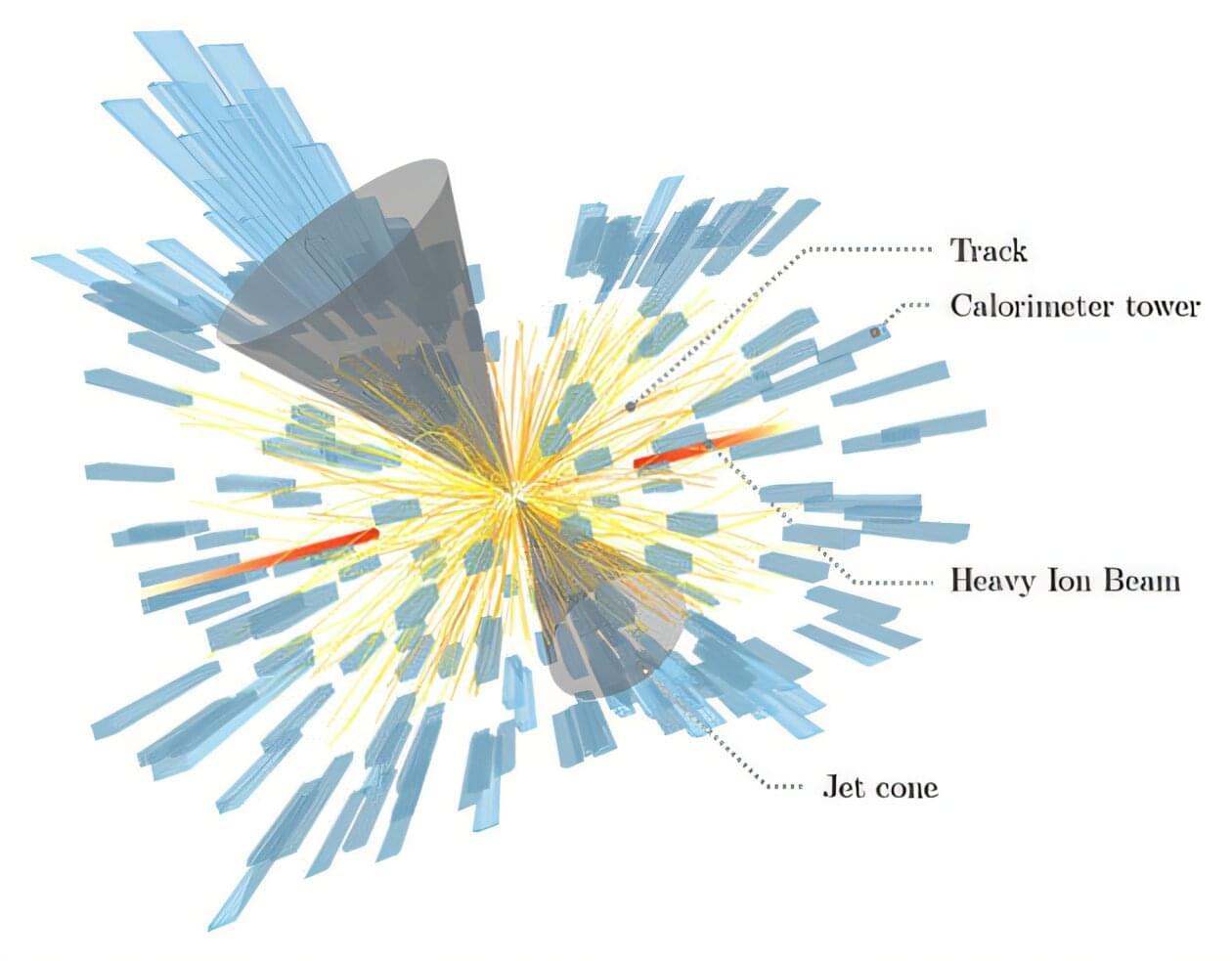
A team of physicists and computer scientists led by researchers at the U.S. Department of Energy’s (DOE) Brookhaven National Laboratory developed a new artificial intelligence (AI) approach that learns on its own to separate important high-energy particle jet signals from the enormous background of particles recorded in relativistic heavy-ion collisions, where two beams of heavy ions collide at near the speed of light.

The advance could help scientists make more precise measurements of the quark-gluon plasma (QGP), a hot, dense state of matter that existed a microsecond after the Big Bang.

At Brookhaven Lab, physicists recreated early-universe conditions that produce the QGP, a “soup” of free quarks and gluons, in heavy-ion collisions at the Relativistic Heavy Ion Collider (RHIC), a DOE Office of Science user facility for nuclear physics research that completed operations in early 2026. Physicists use jets—collimated sprays of high-energy particles produced in relativistic heavy-ion collisions—as one of the best probes of the QGP to glean more about how quarks and gluons behave and about the strongest force in nature that binds them together.
Light-activated molecules in porous crystals show potential for quantum chemical sensing

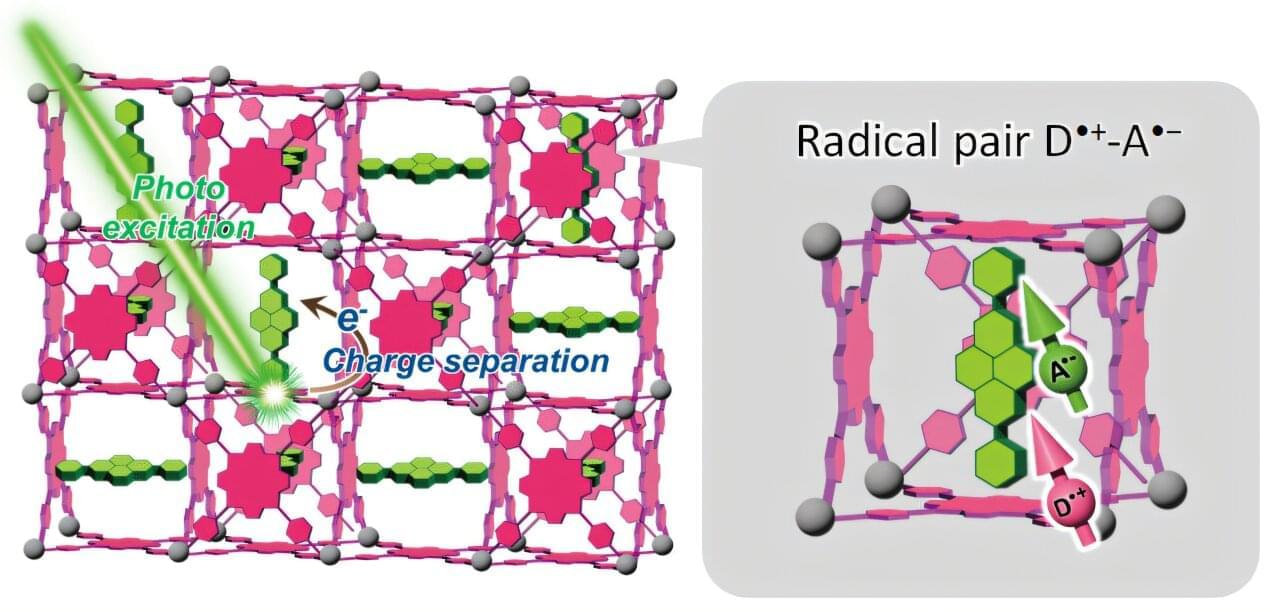
An international research team led by Nobuhiro Yanai from the University of Tokyo and Michael R. Wasielewski from Northwestern University has created polarized radical pairs, molecules with unpaired electrons whose spins align, in metal–organic frameworks (MOFs), porous materials consisting of metal ions linked by organic molecules.

Because of the quantum properties of polarized radical pairs, this achievement could provide the foundation for future quantum chemical sensing technologies and improve the sensitivity of existing methods such as magnetic resonance imaging (MRI).

The findings were published in the journal Nature Communications.

Scientists Crack a Decades-Old Mystery That Could Unlock Faster Internet

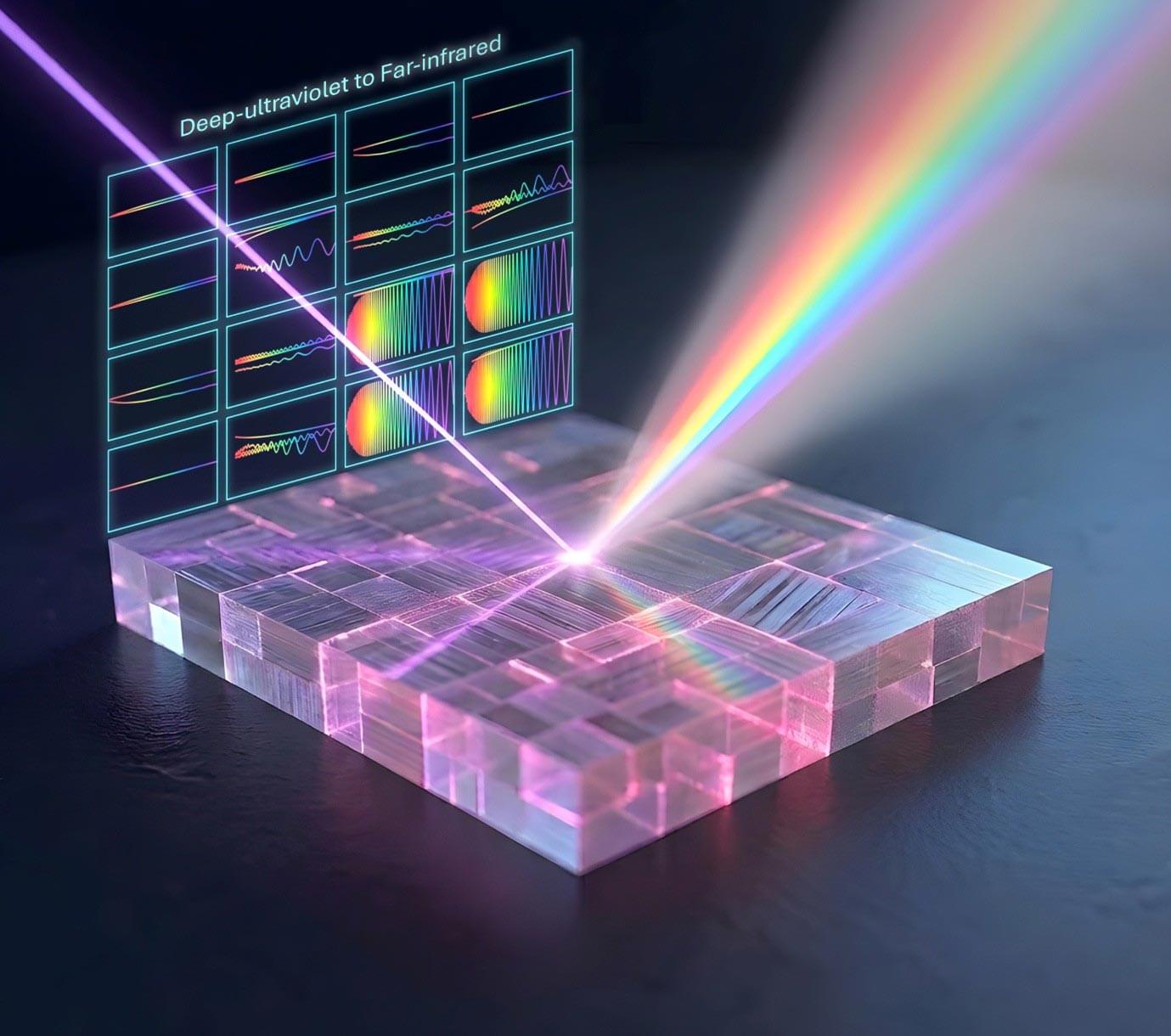
When light carries data through a communication device, absorption by the materials inside can weaken the signal. Engineers trying to build faster, more efficient devices need to predict how light will travel through those materials and how much will be lost before they commit to a design.

For a promising material called barium titanate, or BTO, those measurements have varied widely for decades. A KAIST-led research team has now clarified how it interacts with light, providing data that could help engineers design devices more reliably and reduce costly rounds of fabrication and redesign.

A Universe Without Dark Matter? Radical New Model Challenges Modern Cosmology

An older universe could give unexpectedly mature early galaxies billions more years to grow, according to a model that also reproduces galaxy rotation without dark matter.

To explain how galaxies rotate, the standard model of the universe relies on dark matter, an unseen source of gravity. A new paper published in Monthly Notices of the Royal Astronomical Society reports that an alternative model can reproduce the rotation curves of all 175 galaxies in the SPARC database without dark matter. These curves show how orbital speeds change with distance from a galaxy’s center, giving researchers a way to test the gravity their model predicts.

The galaxy study is part of a series of tests conducted during 2025 and 2026 by Rajendra Gupta, an adjunct professor in the University of Ottawa’s Department of Physics, and postdoctoral researcher Dr. Nikolaos Samaras. They compared important astronomical observations with predictions from CCC+TL, a model that puts the universe’s age at 26.7 billion years and proposes that neither dark matter nor dark energy is needed.

Operation Endgame Takes Down Gootloader, CastleRAT and StealC Servers, Seizes 6.4M Stolen Logins

An international police operation took down servers behind Gootloader, CastleRAT and StealC this week. Criminals used the three malware tools to gain access to computers, steal passwords, and launch ransomware attacks.

Police also seized about 6.4 million stolen logins belonging to more than 40,000 victims, according to Germany’s Federal Criminal Police Office (BKA).

Gootloader is a loader: once on a computer, it could download other malware, especially ransomware. It spread through fake legal documents placed on hacked websites, often WordPress sites. Criminals used SEO poisoning to push those sites high in search results.

Trezor confirms crypto-stealing implants in three wallets, releases fix

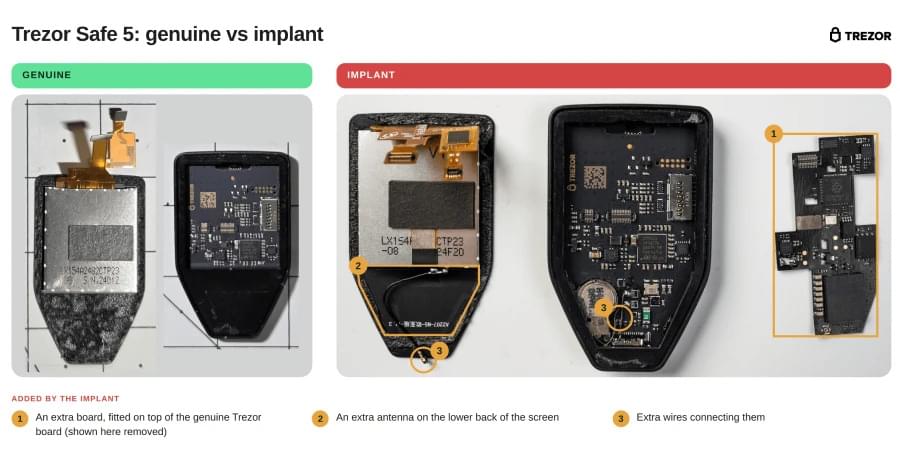
Cryptocurrency hardware wallet maker Trezor has confirmed that three Safe 5 devices sold by Southeast Asian reseller CryptoBilis contained malicious hardware implants designed to steal wallet recovery phrases and send them to attackers over cellular networks.

The findings follow an investigation into a suspected hardware implant first reported in October, when a customer discovered an unauthorized circuit board inside a Trezor Safe 5 purchased from Indonesian reseller CryptoBilis.

At the time, Trezor had not received the device for examination and could not confirm the implant’s capabilities.