Toggle light / dark theme

Get the latest international news and world events from around the world.

Log in for authorized contributors

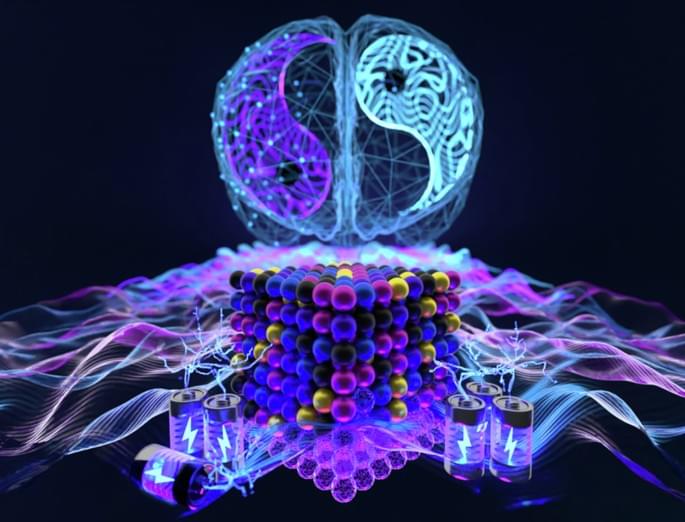
Advancing Physical Understanding with Interpretable Machine Learning

A new artificial neural-network architecture opens a window into the workings of a tool previously regarded as a black box.

Thanks to the extremely large datasets and computing power that have become available in recent years, a new paradigm in scientific discovery has emerged. This new approach is purely data driven, using large amounts of data to train machine-learning models―typically neural networks―to predict the behavior of the natural world [1]. The most prominent achievement of this new methodology has arguably been the AlphaFold model for predicting protein folding (see Research News: Chemistry Nobel Awarded for an AI System That Predicts Protein Structures) [2]. But despite such successes, these data-driven approaches suffer a major drawback in that they are generally “black boxes” that offer no human-accessible understanding of how they make their predictions. This shortcoming also extends to the models’ inputs: It is often desirable to build known domain knowledge into these models, but the data-driven approach excludes that option.

Hubble captures rare collision in nearby planetary system

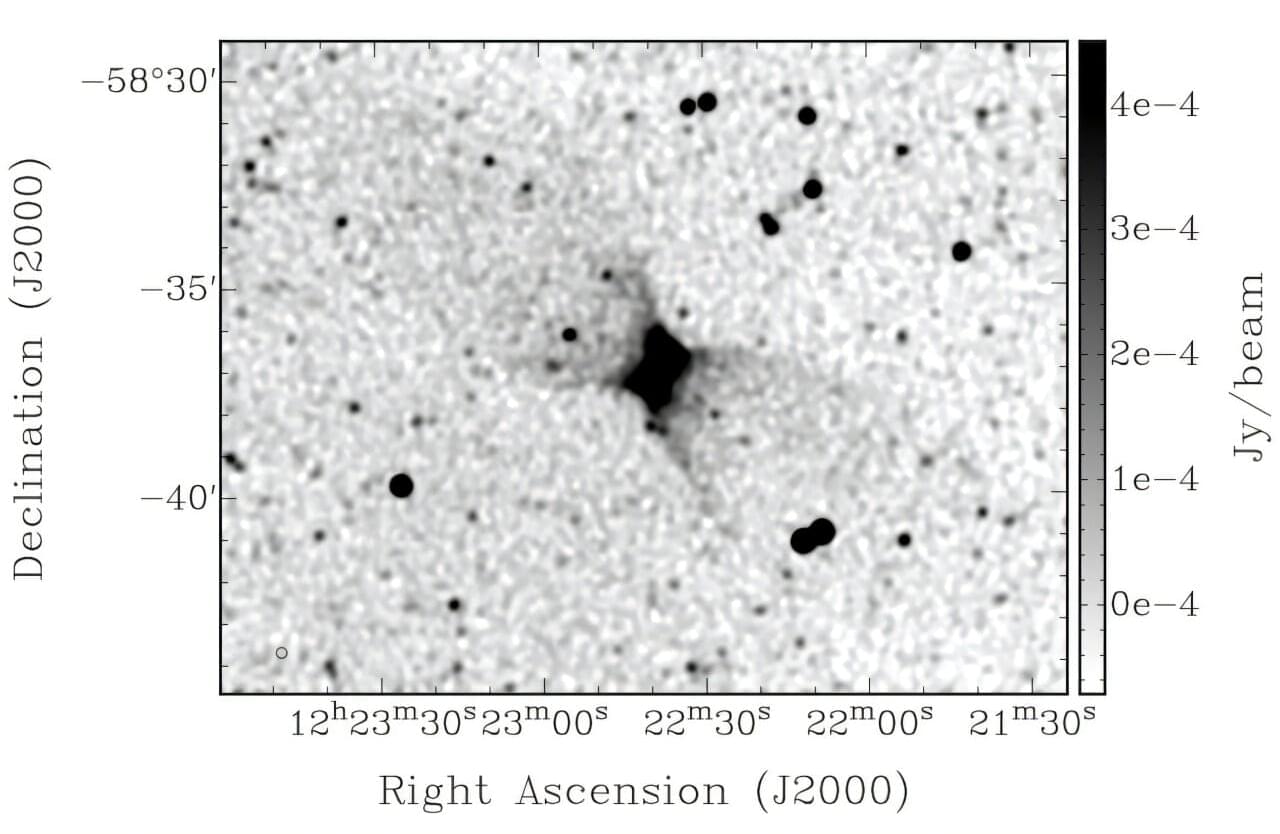
In an unprecedented celestial event, NASA’s Hubble Space Telescope (HST) captured the dramatic aftermath of colliding space rocks within a nearby planetary system.

When astronomers initially spotted a bright object in the sky, they assumed it was a dust-covered exoplanet, reflecting starlight. But when the “exoplanet” disappeared and a new bright object appeared, the international team of astrophysicists—including Northwestern University’s Jason Wang—realized these were not planets at all. Instead, they were the illuminated remains of a cosmic fender bender.

Two distinct, violent collisions generated two luminous clouds of debris in the same planetary system. The discovery offers a unique real-time glimpse into the mechanisms of planet formation and the composition of materials that coalesce to form new worlds.

Good listeners connect more easily with strangers, study finds

With many people now heavily relying on electronic devices to communicate with others, connecting on a deeper level with others, particularly face-to-face, can prove challenging. Recent nationwide surveys and psychological studies suggest that today many people feel lonely, socially isolated and/or disconnected from others living in their same geographical area.

Understanding the factors that contribute to social connection could inform the development of more effective interventions aimed at reducing loneliness and improving people’s mental health or overall well-being. As communication is generally crucial for the formation of social bonds, listening behaviors and an openness towards what others share might be key drivers of social connection.

Researchers at University of North Carolina at Chapel Hill recently carried out a study aimed at testing this hypothesis by examining the behavior of strangers engaged in conversation with each other. Their findings, published in Communications Psychology, suggest that people who engage in high-quality listening behaviors tend to feel more socially connected to others, even if they are meeting them for the first time.

Are talented youth nurtured the wrong way? Top performers develop differently than assumed, says study

Traditional research into giftedness and expertise assumes that the key factors to develop outstanding achievements are early performance (e.g., in a school subject, sport, or in concerts) and corresponding abilities (e.g., intelligence, motor skills, musicality) along with many years of intensive training in a discipline. Accordingly, talent programs typically aim to select the top-performing youth and then seek to further accelerate their performance through intensive discipline-specific training.

However, this is apparently not the ideal way to promote young talent, as a team led by Arne Güllich, professor of sports science at RPTU University Kaiserslautern-Landau, has recently discovered.

The work is published in the journal Science.

Study examines oligodendrocyte dynamics throughout the progression of multiple sclerosis

Multiple sclerosis (MS) is a chronic autoimmune disease characterized by the disruption of nerve signals and various associated neurological symptoms, ranging from vision problems to numbness, weakness, fatigue and cognitive impairments. These symptoms emerge when the immune system starts to attack mature oligodendrocytes (MOLs), specialized cells that produce the protective sheath surrounding nerve fibers (i.e., myelin).

There are several subtypes of MOLs, which might exhibit different immune cell-like genetic responses in patients diagnosed with MS. While various studies have investigated the neural and molecular underpinnings of MS, how these different cell subtypes respond as the disease progresses has not yet been elucidated.

Researchers at Karolinska Institute in Sweden recently carried out a mouse study aimed at mapping how different MOL subtypes might differ in their sensitivity to neuroinflammation across different stages of MS.

Scientists unravel neural networks that guide guilt and shame-driven behaviors

Feelings of guilt and shame can lead us to behave in a variety of different ways, including trying to make amends or save face, cooperating more with others or avoiding people altogether. Now, researchers have shed light on how the two emotions emerge from cognitive processes and in turn guide how we respond to them.

Their study is published in eLife. The editors say it provides compelling behavioral, computational and neural evidence to explain the cognitive link between emotions and compensatory actions. They add that the findings have broad theoretical and practical implications across a range of disciplines concerned with human behavior, including psychology, neuroscience, public policy and psychiatry.

Private donors pledge $1 billion for world’s largest particle accelerator

Europe’s physics lab CERN on Thursday said private donors had pledged $1 billion toward the construction of a new particle accelerator that would be by far the world’s biggest.

In a first, private individuals and philanthropic foundations have backed a flagship research project at CERN, the European Organization for Nuclear Research, which seeks to unravel what the universe is made of and how it works.

The donors include the Breakthrough Prize Foundation of billionaire Silicon Valley investor Yuri Milner; the Eric and Wendy Schmidt Fund for Strategic Innovation of former Google chief executive Eric Schmidt; plus Italian Agnelli family heir John Elkann, and French telecoms tycoon Xavier Niel.

Research reinvents MXene synthesis at a fraction of the cost

MXenes (pronounced like the name “Maxine”) are a class of two-dimensional materials, first identified just 14 years ago, with remarkable potential for energy storage, catalysts, ultrastrong lightweight composites, and a variety of other purposes ranging from electromagnetic shielding to ink that can carry a current.

But manufacturing MXenes has been expensive, difficult and crude.

“MXenes have been made by a very elaborate, multi-step process that involved days of high-temperature work, followed by using dangerous chemicals like hydrofluoric acid and creating a lot of waste,” said Prof. Dmitri Talapin of the University of Chicago Pritzker School of Molecular Engineering (UChicago PME) and Department of Chemistry. “That may have been okay for early-stage research and lab exploration, but became a big roadblock for taking the next step to large-scale applications.”

Hybrid excitons: Combining the best of both worlds

Faster, more efficient, and more versatile—these are the expectations for the technology that will produce our energy and handle information in the future. But how can these expectations be met? A major breakthrough in physics has now been made by an international team of researchers from the Universities of Göttingen, Marburg, the Berlin Humboldt in Germany, and Graz in Austria.

The scientists combined two highly promising types of material—organic semiconductors and two-dimensional semiconductors—and studied their combined response to light using photoelectron spectroscopy and many-body perturbation theory.

This enabled them to observe and describe fundamental microscopic processes, such as energy transfer, at the 2D-organic interface with ultrafast time resolution, meaning one quadrillionth of a second. The combination of these properties holds promise for developing new technology such as the next generation of solar cells. The results are published in Nature Physics.

Batteries lose charge when they ‘breathe’: Understanding deterioration is a step toward longer-lasting batteries

Researchers have identified a key reason why the batteries used to power everything from smartphones to electric vehicles deteriorate over time, a critical step toward building faster, more reliable and longer-lasting batteries.

The research team from The University of Texas at Austin, Northeastern University, Stanford University and Argonne National Laboratory found that every cycle of charge and discharge causes batteries to expand and contract, similar to human breathing. This action causes battery components to warp just a tiny amount, putting strain on the battery and weakening it over time. This phenomenon, known as chemomechanical degradation, leads to reduced performance and lifespan.

The findings are published in the journal Science.

/* */