Toggle light / dark theme

Get the latest international news and world events from around the world.

Log in for authorized contributors

Microsoft to disable NTLM by default in future Windows releases

Microsoft announced that it will disable the 30-year-old NTLM authentication protocol by default in upcoming Windows releases due to security vulnerabilities that expose organizations to cyberattacks.

NTLM (short for New Technology LAN Manager) is a challenge-response authentication protocol introduced in 1993 with Windows NT 3.1 and is the successor to the LAN Manager (LM) protocol.

Kerberos has superseded NTLM and is now the current default protocol for domain-connected devices running Windows 2000 or later. While it was the default protocol in older Windows versions, NTLM is still used today as a fallback authentication method when Kerberos is unavailable, even though it uses weak cryptography and is vulnerable to attacks.

Microsoft: January update shutdown bug affects more Windows PCs

Microsoft has confirmed that a known issue preventing some Windows 11 devices from shutting down also affects Windows 10 systems with Virtual Secure Mode (VSM) enabled.

VSM is a Windows security feature that creates an isolated, protected memory region separate from the normal operating system (known as the “secure kernel”), using hardware virtualization that is extremely difficult for malware to access, even after a system compromise.

It protects sensitive credentials, encryption keys, and security tokens from kernel-level malware and pass-the-hash attacks, and it enables security features such as Credential Guard, Device Guard, and Hypervisor-Protected Code Integrity in Windows 10/11 Enterprise editions.

Russian hackers exploit recently patched Microsoft Office bug in attacks

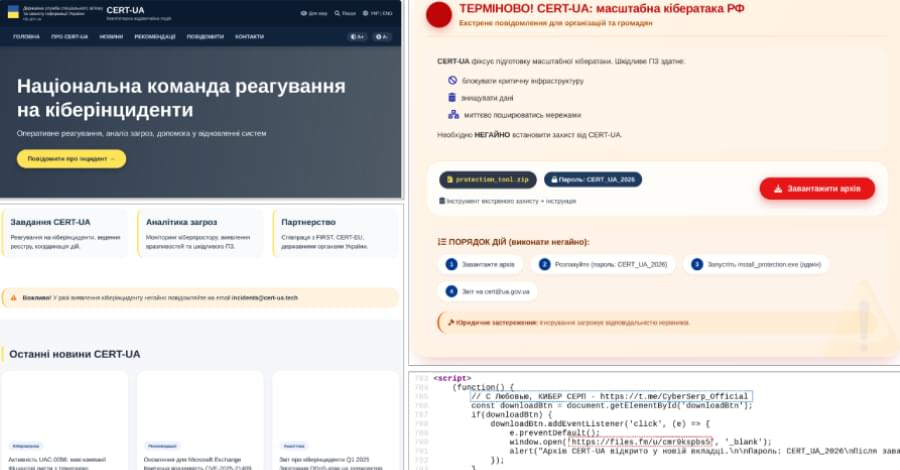
Ukraine’s Computer Emergency Response Team (CERT) says that Russian hackers are exploiting CVE-2026–21509, a recently patched vulnerability in multiple versions of Microsoft Office.

On January 26, Microsoft released an emergency out-of-band security update marking CVE-2026–21509 as an actively exploited zero-day flaw.

CERT-UA detected the distribution of malicious DOC files exploiting the flaw, themed around EU COREPER consultations in Ukraine, just three days after Microsoft’s alert.

Mozilla announces switch to disable all Firefox AI features

In response to user feedback on AI integration, Mozilla announced today that the next Firefox release will let users disable AI features entirely or manage them individually.

The new “Block AI enhancements” toggle will be available in Firefox 148 on February 24 and will help block current and future generative AI features in the desktop browser from a single location. Users will also have the option to enable specific AI tools while keeping others disabled.

“We’ve heard from many who want nothing to do with AI. We’ve also heard from others who want AI tools that are genuinely useful. Listening to our community, alongside our ongoing commitment to offer choice, led us to build AI controls,” said Firefox head Ajit Varma.

New GlassWorm attack targets macOS via compromised OpenVSX extensions

A new GlassWorm malware attack through compromised OpenVSX extensions focuses on stealing passwords, crypto-wallet data, and developer credentials and configurations from macOS systems.

The threat actor gained access to the account of a legitimate developer (oorzc) and pushed malicious updates with the GlassWorm payload to four extensions that had been downloaded 22,000 times.

GlassWorm attacks first appeared in late October, hiding the malicious code using “invisible” Unicode characters to steal cryptocurrency wallet and developer account details. The malware also supports VNC-based remote access and SOCKS proxying.

Malicious MoltBot skills used to push password-stealing malware

More than 230 malicious packages for the personal AI assistant OpenClaw (formerly known as Moltbot and ClawdBot) have been published in less than a week on the tool’s official registry and on GitHub.

Called skills, the packages pretend to be legitimate tools to deliver malware that steals sensitive data, like API keys, wallet private keys, SSH credentials, and browser passwords.

Originally named ClawdBot and switching to Moltbot and now OpenClaw in under a month, the project is a viral open-source AI assistant designed to run locally, with persistent memory and integrate with various resources (chat, email, local file system). Unless configured properly, the assistant introduces security risks.

2024–2026 Global Memory Supply Shortage

Following a severe market downturn in 2022–2023, major memory manufacturers— Samsung Electronics, SK Hynix, and Micron Technology —implemented strategic production cuts to stabilize pricing. [ 4 ] By mid-2024, the rapid expansion of generative AI services triggered unprecedented demand for specialized memory products, particularly High Bandwidth Memory (HBM) used in AI accelerators and data center GPUs. [ 5 ] [ 6 ] [ 7 ] Specialized components of chip-making technology are also experiencing supply constraints due to high demand in AI application. For example, glass cloth, a high-performance glass fiber substrate used for power efficient high speed data transfer and a crucial component of chip-making, is experiencing supply crisis as Nitto Boseki, a Japanese firm having overwhelming monopoly in its production, is not able to meet increased demands making chip-makers such as Qualcomm, Apple, Nvidia and AMD compete for securing supply for their chips. [ 8 ] [ 9 ]

A 2024 McKinsey analysis projected that global demand for AI-ready data center capacity would grow at approximately 33% annually through 2030, with AI workloads consuming roughly 70% of total data center capacity by the decade’s end. [ 10 ]

[ edit ].

Cancer-associated fibroblast-derived extracellular vesicles deliver ATP6V1C1 to promote lung adenocarcinoma metastasis via the ID1-IGFBP3 axis

Chen et al. reveal the V-ATPase subunit ATP6V1C1 as a non-canonical transcriptional repressor delivered by CAF-derived EVs to drive LUAD metastasis. By suppressing IGFBP3, ATP6V1C1 simultaneously triggers EMT and amplifies stromal IGF1 signaling, creating a potent pro-metastatic feedforward loop.

A Parasite Carried by Billions Has a Secret Life Inside the Brain

A common parasite hiding in the brain turns out to be far more active and organized than anyone realized.

A team of scientists at the University of California, Riverside, has discovered that Toxoplasma gondii, a parasite estimated to infect up to one-third of the world’s population, is far more biologically complex than previously understood. Their findings, published in Nature Communications, provide new insight into how the parasite causes disease and why it has proven so difficult to eliminate with current treatments.

How Toxoplasmosis Spreads in Humans.

/* */