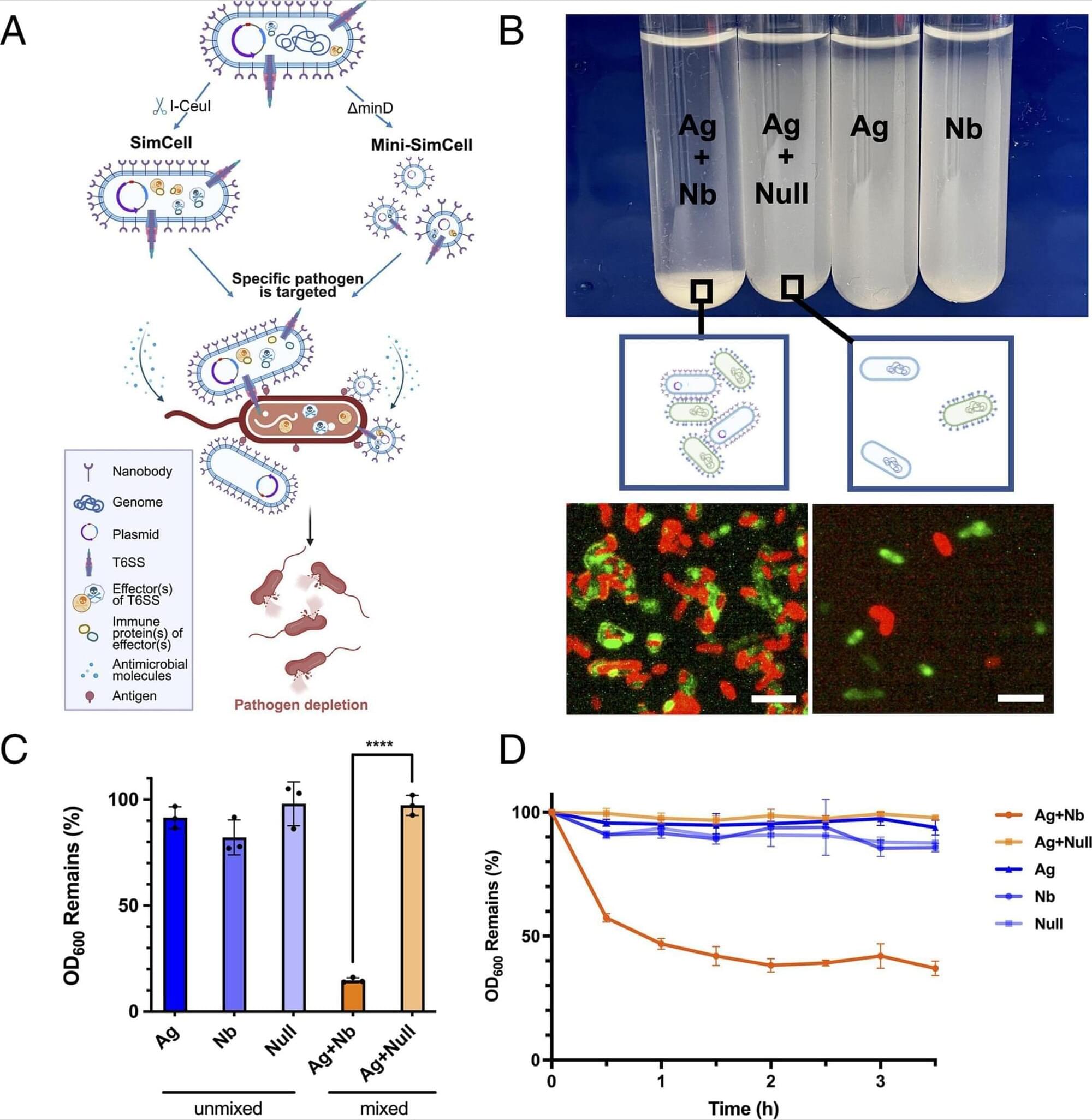
SimCells are a very exciting way of delivering toxins in a targeted fashion to antibiotic resistant bacteria. It reminds me of my past synthetic biology research in an adjacent area. Love this approach!
In addition to the T6SS system, close contact between attacker and prey cells also allows local delivery of high concentrations of antimicrobial compounds around the targeted cells. To exploit this, we introduced a constitutively expressed salicylate hydroxylase (NahG) into our system (SI Appendix, Fig. S8 A), which catalyzes the conversion of acetylsalicylic acid (aspirin) into catechol (70, 71) (Fig. 4 A). Catechol has a broad-spectrum antimicrobial activity (67 – 69) by generating hydrogen peroxide (H2O2) through auto-oxidation processes (SI Appendix, Fig. S7 A –C), during which catechol polymerizes to form cross-linked polymers without external catalysts (80 – 83) (Fig. 4 A). When 800 μM aspirin 84)] was added to the parental cell and SimCell cultures, the filtered supernatants from overnight NahG+ cultures exhibited a dark-brown color (SI Appendix, Fig. S8 B), which is associated with the oxidation products of catechol. The collected supernatants showed a significant inhibitory effect on bacterial cell growth (SI Appendix, Fig. S8 B and C). These results indicate the generation, permeability, and extracellular antimicrobial activity of SimCell-produced catechol and associated production of H2O2.
Open in Viewer.