Toggle light / dark theme

Get the latest international news and world events from around the world.

Log in for authorized contributors

3 Billionaires Are (Quietly) Deciding Our Future

Max Tegmark explains why the race to superintelligence is not inevitable, why most people don’t want it, and what we can do about it. He covers the three superpowers of AI, why tool AI can solve our biggest problems without replacing us, and the case for regulating AI like we regulate drugs and airplanes.

00:00 The Race.
00:25 Superintelligence.
01:48 The cage.
03:03 Three superpowers.
05:16 Sandwiches.
11:14 Consciousness.
13:04 Life 3.

Produced by:
https://zeino.tv/

Specific Gravity Made Easy | Float, Sink & Hydrometer Explained

In this Easy Peasy Chemistry lesson, we break down Specific Gravity in a simple and clear way!

After learning about density, it’s time to understand how substances compare to water. Why do some objects float while others sink? What does a hydrometer reading like 1.25 actually mean?

In this video, you’ll learn:

• What specific gravity really means
• How it is different from density
• Why water is used as the reference
• How floating and sinking are related
• How a hydrometer measures specific gravity
• Why specific gravity has no units.

This lesson is perfect for high school, college, pre-med, nursing, and engineering students.

Watch till the end to fully understand how scientists measure and compare densities in the lab.

Life on Mars May Be Hiding or Sleeping

Life on Mars may be hiding or dormant. See my new blog on Big Think discussing various options how life on Mars may adapt to the challenging environment. Link through my website Searchforlifeintheuniverse:

(https://www.searchforlifeintheuniverse.com/post/life-in-mars…r-sleeping)


Astrobiologist Dirk Schulze-Makuch argues that even if Mars’s surface is uninhabitable, life could persist underground, inside salt crusts, or locked in a dormant state.

Street green space can help cool cities, but it will not be enough on its own

A new IIASA-led study finds that expanding street green space can reduce urban heat stress in cities worldwide, but even ambitious greening efforts are unlikely to offset a significant share of the additional heat expected under climate change. Instead, the research shows that street greenery should be part of a broader portfolio of urban adaptation measures.

Cities are on the front line of climate change, with rising temperatures and heat stress posing growing risks to health, productivity, and livability. Street green space, such as trees and vegetation along streets, is often promoted as a practical nature-based solution because it can provide shade, cooling, and other positive benefits, for example, improving the mental health of citizens. Yet, evidence on how much cooling street greenery can deliver, to which extent the amount of vegetation can be increased, and how much cooling can be expected in future climates has remained limited, particularly when taking a global view across very different urban forms and climate zones.

In the new study published in Environmental Research Letters, a team of researchers from IIASA and VITO Belgium combined high-resolution street greenery data with 100-meter urban microclimate model outputs for 133 cities worldwide, providing a neighborhood-scale assessment with global coverage. Rather than relying on satellite-based surface temperature alone, the team assessed how street green space relates to air temperature and wet-bulb globe temperature —a measure that captures heat stress more appropriately than temperature alone because it accounts for humidity, wind, and radiation.

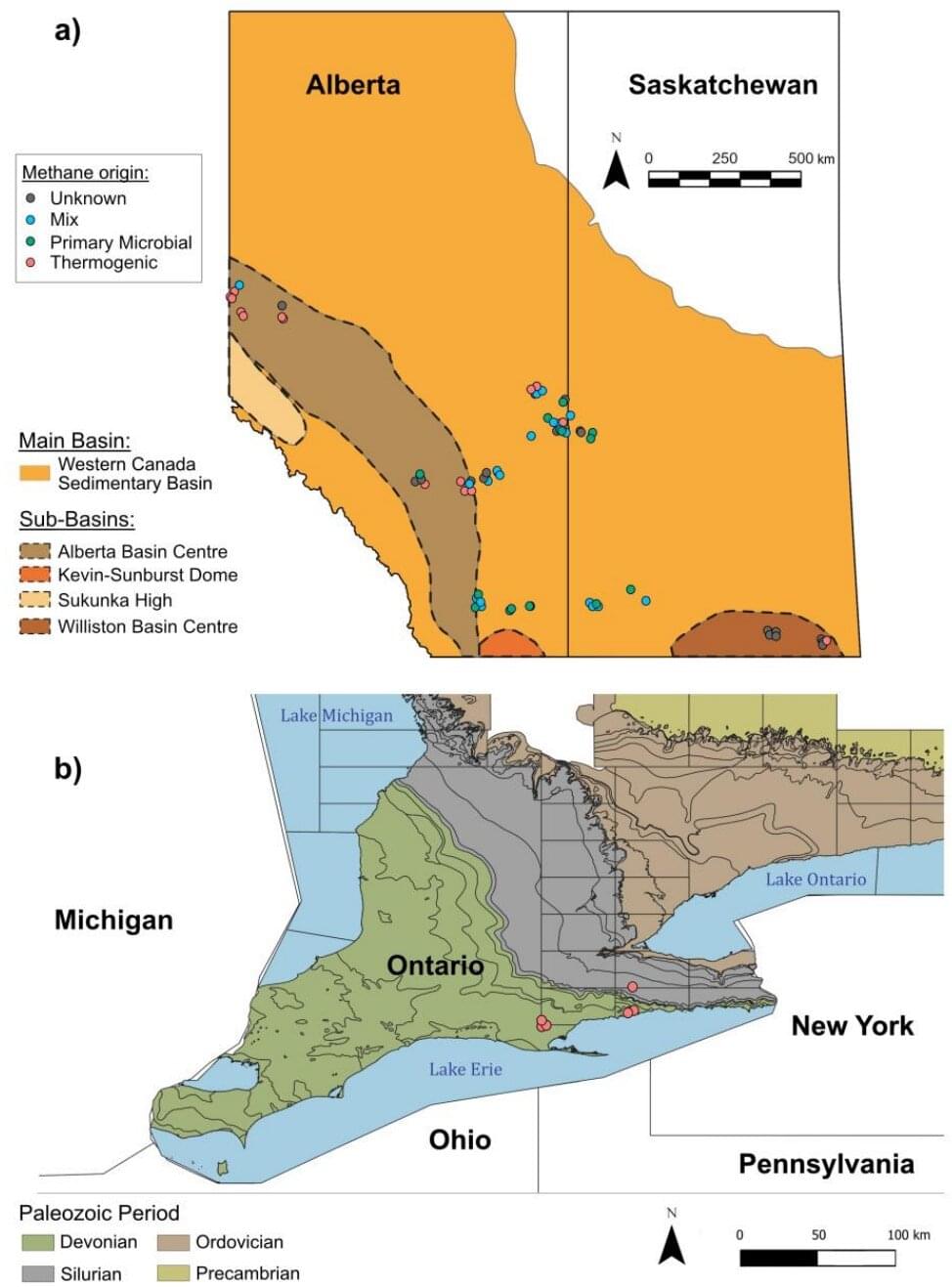
Non-producing oil and gas wells may emit microbial methane at rates 1,000 times higher than previously estimated

Microbial methane leaking from non-producing oil and gas wells is being emitted at rates about 1,000 times higher than previously estimated, according to a new study led by McGill University researchers. “Origins of Subsurface Methane Leaking from Nonproducing Oil and Gas Wells in Canada,” by Gianni Micucci and Mary Kang, is published in Environmental Science and Technology.

“Methane is a powerful greenhouse gas when released into the atmosphere, regardless of its origin. In particular, this study implies that non-producing oil and gas wells could continue to emit microbial methane long after the targeted formation has been fully depleted,” said Kang, study co-author and Associate Professor of Civil Engineering.

“However, the exact source of this methane is often unclear because the subsurface is a complex system with multiple gas-bearing formations,” she said.

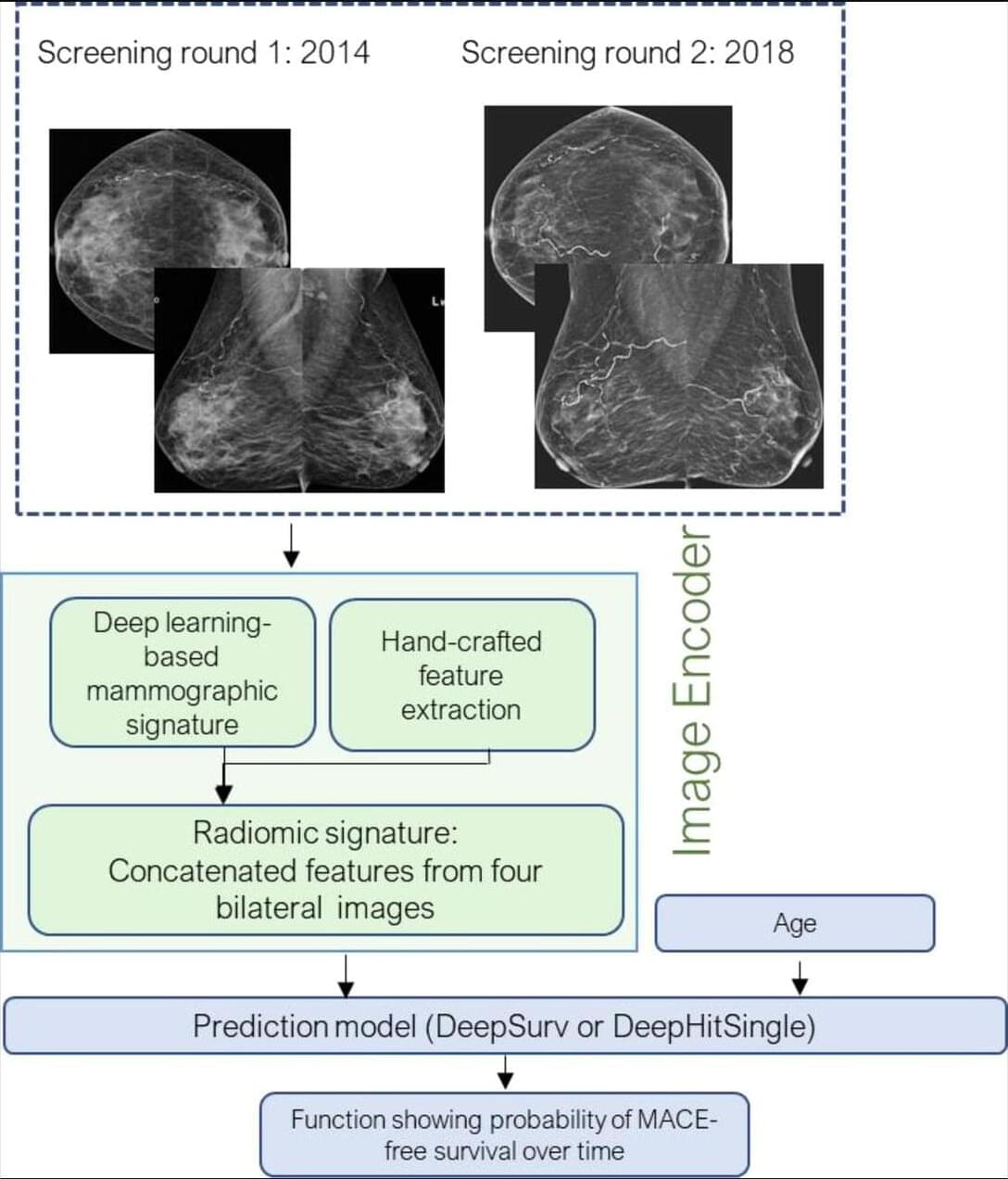
Predicting cardiovascular events from routine mammograms using machine learning

Background Cardiovascular risk is underassessed in women. Many women undergo screening mammography in midlife when the risk of cardiovascular disease rises. Mammographic features such as breast arterial calcification and tissue density are associated with cardiovascular risk. We developed and tested a deep learning algorithm for cardiovascular risk prediction based on routine mammography images.

Methods Lifepool is a cohort of women with at least one screening mammogram linked to hospitalisation and death databases. A deep learning model based on DeepSurv architecture was developed to predict major cardiovascular events from mammography images. Model performance was compared against standard risk prediction models using the concordance index, comparative to the Harrells C-statistic.

Results There were 49 196 women included, with a median follow-up of 8.8 years (IQR 7.7–10.6), among whom 3,392 experienced a first major cardiovascular event. The DeepSurv model using mammography features and participant age had a concordance index of 0.72 (95% CI 0.71 to 0.73), with similar performance to modern models containing age and clinical variables including the New Zealand ‘PREDICT’ tool and the American Heart Association ‘PREVENT’ equations.

Mitochondria power immunity against cancer

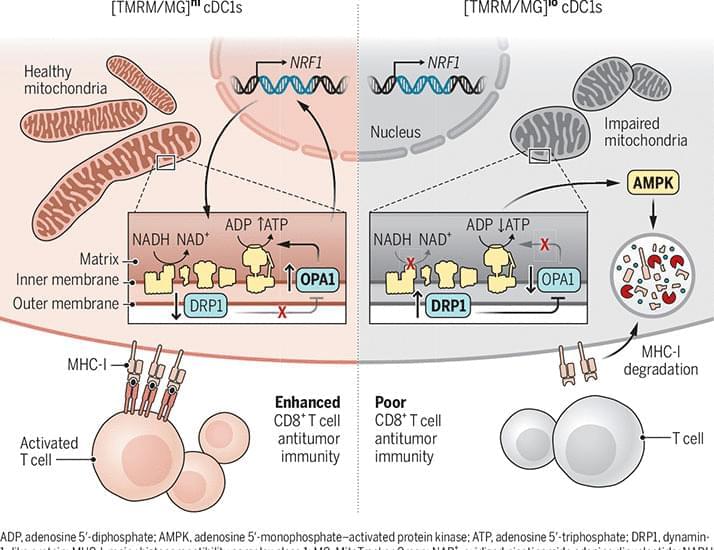
Dendritic cells are innate immune cells that regulate the quality, magnitude, and duration of antitumor responses.

Conventional type 1 dendritic cells (cDC1s) are crucial in this capacity but are paradoxically rare and functionally impaired in most solid tumors. This is a major barrier to effective immunotherapy. The molecular underpinnings of cDC1 dysfunction within the tumor microenvironment are poorly understood.

In a new Science study, researchers report that mitochondrial fitness is important for cDC1 function. They also demonstrate the therapeutic rescue of cDC1 function within the tumor microenvironment in mice, which provides a framework for metabolically reprogramming dendritic cells to restore antitumor immunity.

Learn more in a new Science Perspective.


A subset of dendritic cells relies on mitochondrial fitness to trigger antitumor responses in mice.

Irene S. Molina and Malay Haldar Authors Info & Affiliations

/* */