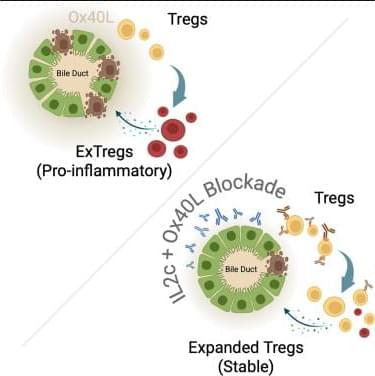
Kimura and Wong et al. have demonstrated how Tregs influence bile duct response to liver injury. Combinational immunotherapy that increases Treg number and stability is required for a more efficient bile duct repair program.
Current smoking was linked to a higher risk for all-cause dementia, especially vascular dementia, with the strongest effects seen in those younger than 85 years and women. It was not significantly associated with the risk for Alzheimer’s dementia. Former smoking was associated with an increased risk for vascular dementia only in men, particularly those younger than 85 years.
Current smoking is associated with an elevated risk for all-cause dementia, particularly vascular dementia, with the strongest associations seen in participants younger than 85 years.
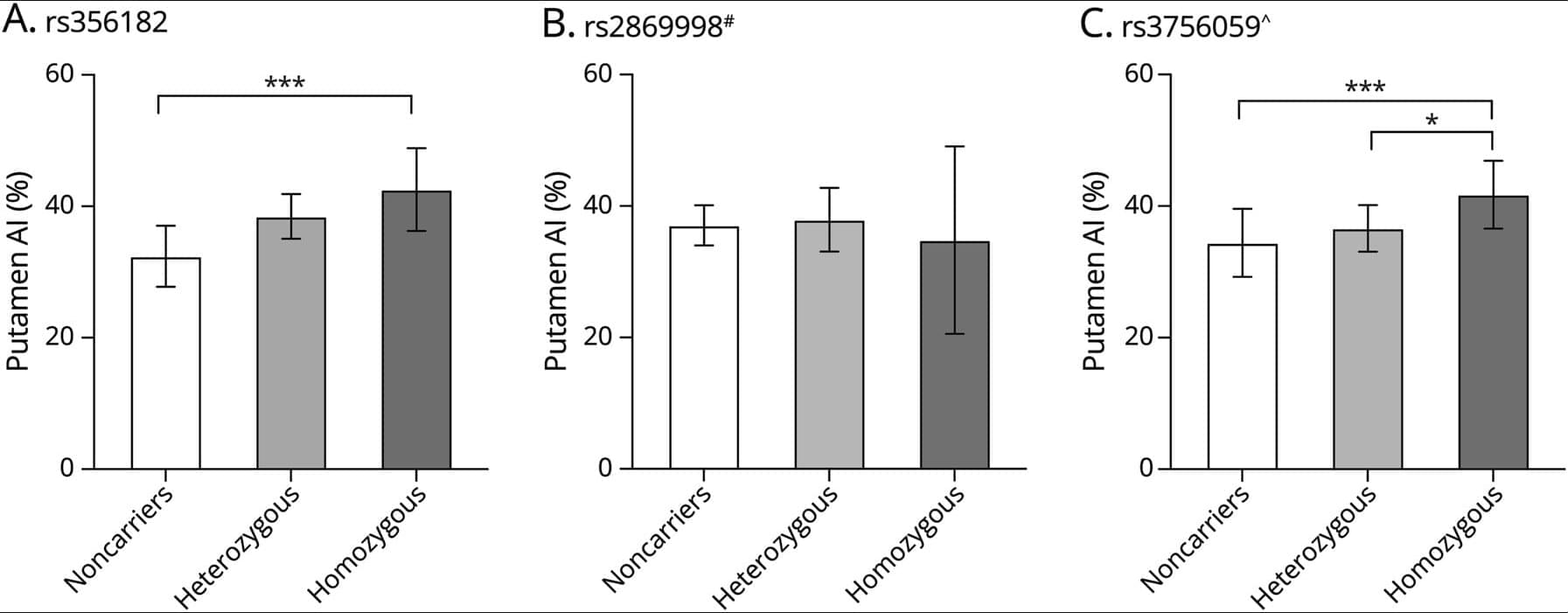
This study assessed the endophenotypic potential of striatal dopamine transporter uptake in carriers of Parkinson disease–associated SNCA genetic risk variants.
ObjectivesThe aim of this study was to investigate the endophenotypic potential of striatal dopamine transporter (DAT) uptake in carriers of Parkinson disease (PD)–associated SNCA genetic risk variants. MethodsWe analyzed 381 patients with de novo PD from the Parkinson’s Progression Markers Initiative (PPMI). The genotype of previously identified PD-related SNCA risk variants was extracted and used to compute an individual PD-specific SNCA genetic risk score (GRS). Striatal DAT uptake was quantified using 123 I‐FP‐CIT SPECT and assessed at baseline and 24-month follow-up. Mixed models were applied to explore the relationship between striatal 123 I‐FP‐CIT SPECT specific binding ratios (SBRs) and PD SNCA risk variants.

When Heidi Tarr was a teenager, she used a tanning bed several times a week with her friends because they all wanted to glow like a celebrity.
“It was just the thing to do—everyone wanted that nice, dark, tan skin,” the 49-year-old market researcher told AFP via video call from Chicago.
Then one day in her 30s, Tarr noticed a strange mole on her back.
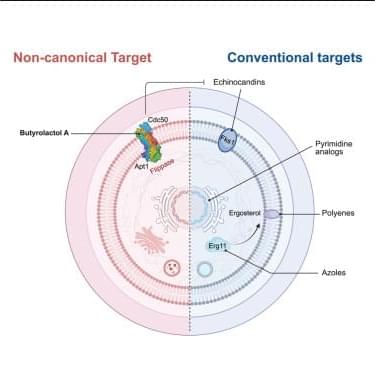
Chen et al. identify the natural product butyrolactol A as an inhibitor of the phospholipid flippase Apt1-Cdc50, which it locks in a nonfunctional state. By disrupting membrane homeostasis and enhancing drug uptake, butyrolactol A restores echinocandin efficacy against intrinsically resistant fungal pathogens, including Cryptococcus and Candida auris.
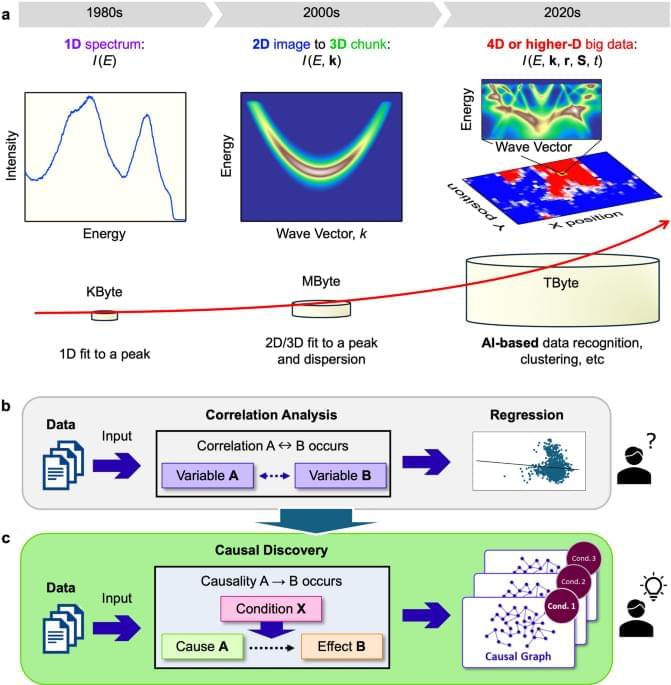
Scientific Reports volume 15, Article number: 43,291 (2025) Cite this article.
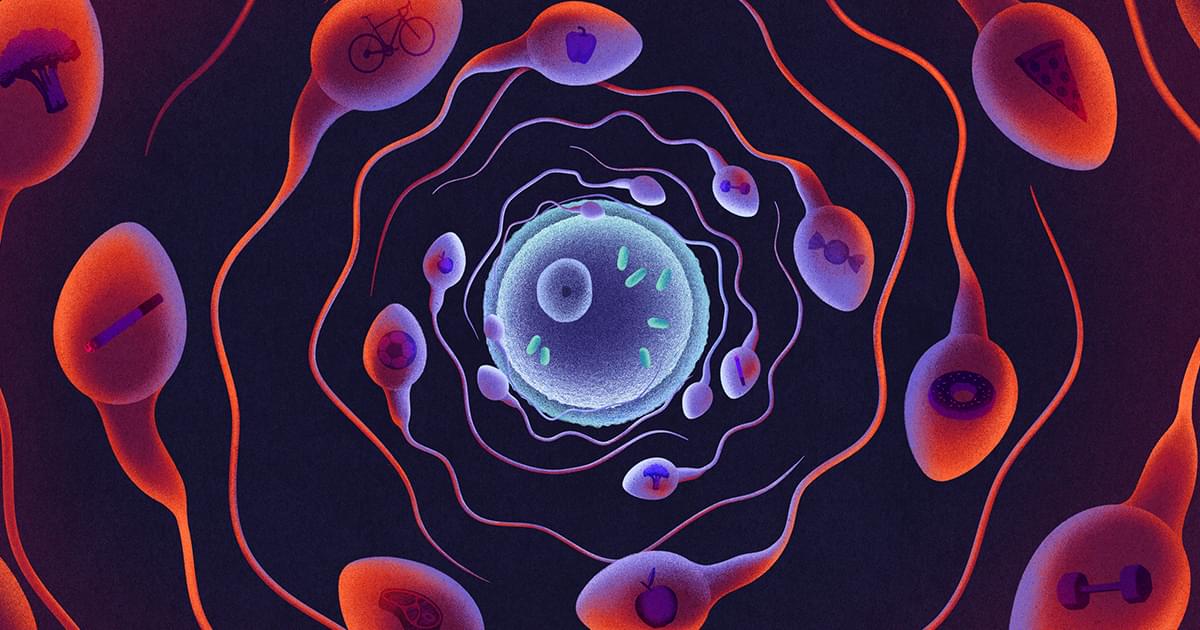
We tend to emphasize the maternal role in development: an egg cell is enormous compared to a sperm cell, and a mother gestates the embryo. But a growing body of research suggests that sperm cells carry more than just genetic information.
Research into how a father’s choices — such as diet, exercise, stress, nicotine use — may transfer traits to his children has become impossible to ignore.

Build your website in minutes with Odoo — free domain for the first year + your first app free for life!
Start here: https://www.odoo.com/r/PR8
…
When people hear the word “paradox,” they usually think of something like a logic puzzle or a brain teaser. Something strange, but mostly harmless. But in quantum physics, paradoxes aren’t just puzzles. They point to something much deeper—a place where our understanding of reality breaks down.
1:13 Quantum Paradox.
8:53 The Quantum Eraser Paradox.
13:52 Wigner’s Friend (Observer vs. Observer)
19:50 Time Symmetry and Retrocausality.
26:26 Quantum Pseudo-Telepathy.
32:28 Quantum Cheshire Cat.
38:18 The Quantum Suicide Twist.
44:20 The Black Hole Information Paradox.
51:02 The Measurement Problem.
57:42 Closing the Loop.
Thank you for watching, and don’t forget to subscribe smile
Einstein never liked the idea that nature is uncertain and he once said “does that mean the Moon is not there when I am not looking at it”. He believed we live in an orderly Universe which is fundamentally rational and that there should always be a reason why thing happen. But there is a way to have the objective Universe of Einstein and the uncertainty of quantum physics and that is by explaining quantum mechanics as the physics of ‘time’ with the future as an emergent property.
In this radical theory the mathematics of quantum mechanics represents the physics of ‘time’ as a physical process with classical physics representing process over a period of time as in Newton’s differential equations. This is a process formed by the spontaneous absorption and emission of light photon energy. This forms a continuous process of energy exchange that forms the ever changing world of our everyday life.
The Universe is a continuum with the future coming into existence photon by photon with each new photon electron coupling or dipole moment. This forms the movement of positive and negative charge with the continuous flow of electromagnetic fields.
Consciousness in the form of electrical activity in the brain is the most advanced part of this process and can therefore comprehend this process as ‘time’. With a past that has gone forever and a future that is always uncertain in the form of a probability function or quantum wave particle function that is explained mathematically by Schrödinger’s wave equation Ψ. Therefore each individual is in the centre of their own reference frame as an interactive part of this process. With their own time line from the past into the future being able to look back in time in all directions at the beauty of the stars! It is this personalization of the brain being in ‘the moment of now’ in the center of its own reference frame that gives us the concept of ‘mind’ with each one of us having our own personal view of the beauty and uncertainty of life.
It is not that there is uncertainty if the Moon is there or not if nobody looks. It is that the physical act of looking will form new light photon oscillations or vibrations relative to the actions of the observer in a continuous flow of cause and effect. The wave particle duality of light is acting like the bits or zeros and ones of a computer. This forms an interactive process continuously forming a blank canvas that we can interact with turning the possible into the actual! Any observation of the Moon will be over a period of time with the wave nature of light explaining diffraction, interference, reflection and refraction. But the particle nature of light the ‘photon’ will only come into existence when the light comes in contact with the lenses and mirrors of the telescope being used. And finally with new photons be formed in the eye of the observer the uncertainty of the observation will be completed using both the wave and particle nature of light!
What we see in our everyday life as an uncertain future is formed by a physical process that at the smallest scale is represented mathematically by Heisenberg’s Uncertainty Principle ∆×∆p×≥h/4π with the Planck constant ħ=h/2π being a constant of action in the dynamics geometry of space and time! This theory takes quantum potential, electrical potential and gravitational potential and combines them into one universal process. That explains why we all have a potential future in our everyday life that is always uncertain. This is done by making the future an emergent property energy ∆E slows the rate that time ∆t flows creating a future relative to the energy and momentum of each object or life form. For in this theory creation is truly in the hand and eye of the beholder with an objective reality in the form of a dynamic interactive process that forms an infinity of possibilities. Please share and subscribe it will help the promotion of this theory!